Mercosur projected to overtake US as China’s top corn supplier in 2026/27
China is projected to import at least 6.0 million tonnes of South American corn in 2026/27, led by Brazil and Argentina. The shift would place Mercosur ahead of the United States as Beijing promotes domestic production and restrains grain imports.
South American supply gains ground
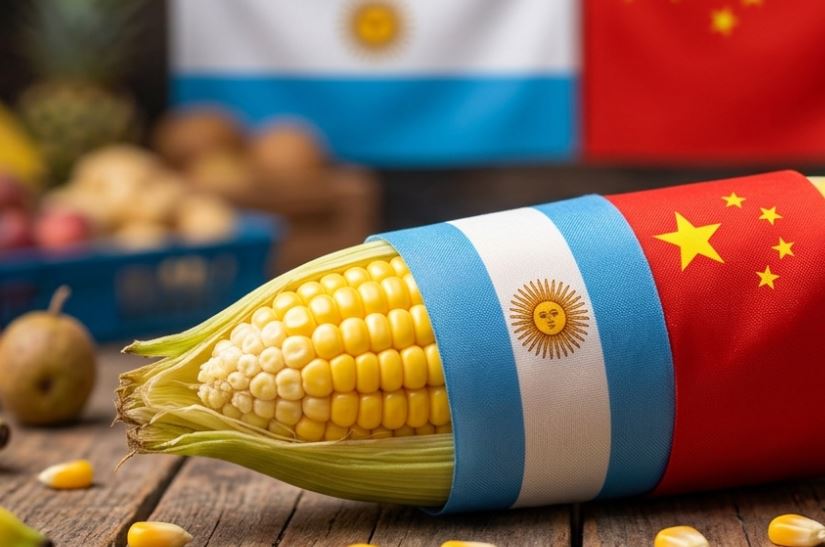
Mercosur is projected to become China’s leading source of imported corn in the 2026/27 marketing year, displacing the United States as Brazil and Argentina expand shipments. A Rosario Finanzas summary of reporting by Bichos de Campo cites projections from the USDA office in Beijing showing that China could purchase at least 6.0 million tonnes of South American corn during the cycle.
The projected volume compares with 4.0 million tonnes and 1.82 million tonnes in the two previous seasons. The increase would strengthen South America’s position in China even as Beijing seeks to encourage domestic grain production and limit imports. According to the report, the Chinese government is using subsidies and tenders at reduced prices to contain domestic inflation and support local supply.
The figures indicate that China’s efforts to manage import demand are not preventing a change in the origin of the corn it continues to buy. South American exporters are increasing their presence, while US corn is described as less competitive even before an additional 10% tariff is taken into account.
Brazil leads shipments and opens the DDGS market
Brazil has been China’s largest foreign corn supplier since 2023 and remains the main driver of Mercosur’s advance. Brazilian corn shipments reached 360,000 tonnes in September, while more than 710,000 tonnes were expected for October, according to the report.
Brazil has also started supplying China with distillers dried grains with solubles, or DDGS, a corn-processing co-product used in animal feed. Chinese imports of Brazilian DDGS reached 265,141 tonnes through July 2026, with another 170,000 tonnes expected in October. The report identifies Brazil as China’s sole supplier of the product.
This combination gives Brazilian exporters access to two related markets: whole corn and a feed ingredient generated by corn processing. It also broadens the commercial value of Brazil’s corn chain at a time when China is trying to balance livestock-feed requirements with policies intended to protect domestic grain producers.
Argentina enters China’s corn trade
Argentina began exporting corn to China in 2026 and quickly became a significant supplier. China imported 344,384 tonnes of Argentine corn through July, followed by another 200,000 tonnes between August and September. The report ranks Argentina as China’s third-largest supplier, behind Russia.
Russia’s corn exports to China increased by 38% during the first seven months of 2026. Its position shows that the change is broader than a direct contest between Mercosur and the United States, although the strongest projected growth comes from Brazil and Argentina.
For Argentina, additional Chinese demand has direct relevance for Rosario, one of the country’s principal agricultural export hubs. Higher shipments can give producers, grain handlers and exporters another large destination, reducing dependence on existing outlets. The opportunity will still depend on maintaining price competitiveness and grain quality as the volume of South American supply rises.
Implications for the global corn market
A 6.0-million-tonne South American presence would redraw the supplier mix in one of the world’s most closely watched grain markets. Brazil’s established access, Argentina’s entry and the reduced competitiveness of US corn could redirect trading relationships and logistics even if China keeps overall imports under policy pressure.
The projection does not mean Chinese demand will expand without limits. Subsidies, discounted tenders and support for domestic output remain constraints on foreign suppliers. Within that restricted market, however, Mercosur appears positioned to capture a larger share, giving Brazilian and Argentine exporters a stronger role in setting the commercial terms for corn delivered to China.