Mekong Delta expands coded fruit-growing areas to strengthen export access
Vietnam’s Mekong Delta has nearly 6,000 registered growing-area codes as importing markets tighten traceability, phytosanitary and food-safety rules. The system is supporting exports while pushing farms, cooperatives and packers toward more controlled production.
Traceability becomes a condition of market access
Vietnam’s Mekong Delta has nearly 6,000 registered growing-area codes as its provinces seek to protect and expand overseas sales of fruit. Phụ Nữ Việt Nam reports that China, the United States, Japan, South Korea, Australia and the European Union are tightening requirements covering traceability, plant quarantine and food safety. The codes identify approved production areas and allow authorities, exporters and buyers to trace crops back to their origin.
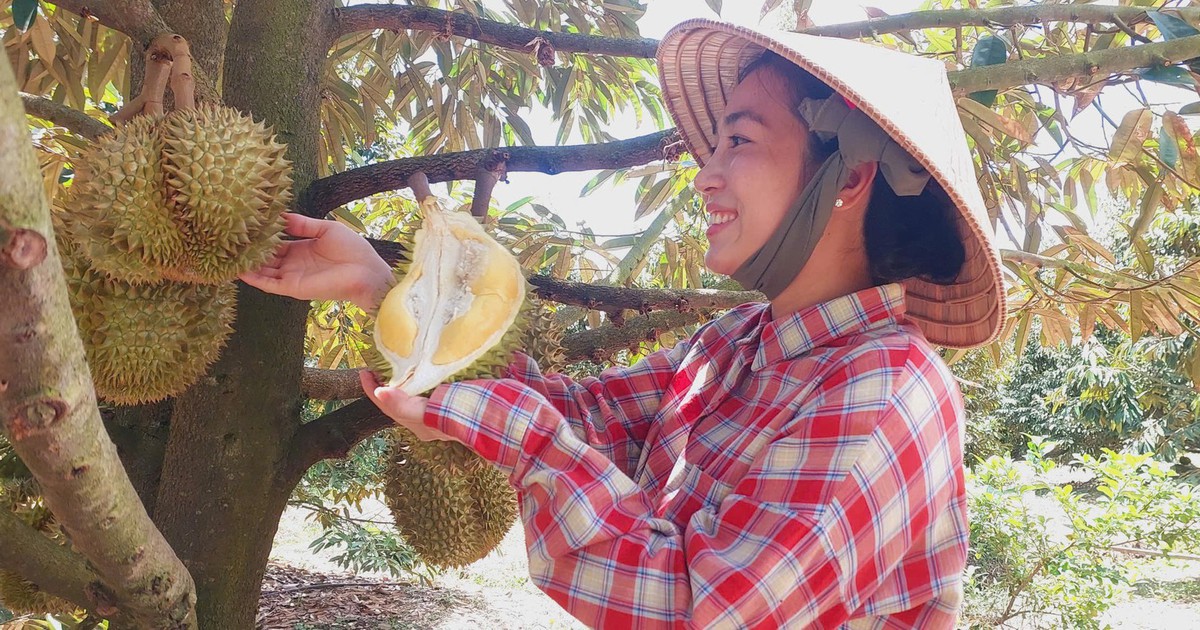
The system is increasingly important for durian, mango, jackfruit, coconut, longan, pomelo, dragon fruit, pineapple and other crops sold domestically, processed or exported. It also requires growers to follow the rules of destination markets and maintain production records. Local authorities are therefore combining new registrations with inspections, training and closer supervision of codes already issued.
Large fruit base supports the registration drive
In Đồng Tháp, fruit-growing area was estimated at about 135,331 hectares at the end of June 2026, including approximately 33,600 hectares of durian, 26,265 hectares of jackfruit, 24,912 hectares of coconut and 16,845 hectares of mango. Pineapple covered 14,781 hectares, citrus 14,180 hectares, dragon fruit 8,500 hectares and longan 5,640 hectares. Total fruit production was estimated at more than 1.313 million tonnes, including over 268,000 tonnes of durian.
Cần Thơ has received 657 growing-area codes covering more than 11,012 hectares and 9,412 farming households. Its coded crops include longan, durian, star apple, mango, pomelo and jackfruit for markets including the United States, Australia, Japan, China, Thailand and the EU. The city also has 45 packing-facility codes held by 17 companies in 14 communes and wards. Several facilities qualify to ship to the United States, New Zealand, the EU and the United Kingdom.
Vĩnh Long has more than 223,000 hectares of perennial crops. Over 21,700 hectares have growing-area codes and more than 30,700 hectares hold organic certification. The province has received more than 1,000 codes for growing areas and packing facilities serving exports of durian, coconut, pomelo, rambutan, longan and sweet potato.
Compliance gaps remain for high-value durian
The registration drive also exposes weaknesses in fragmented production. Phụ Nữ Việt Nam says durian has faced contamination problems involving auramine O and cadmium, affecting its value and reputation. Small, poorly coordinated raw-material areas make it harder to control inputs, verify cultivation practices and respond when an importing market identifies a breach.
An Giang has about 1,595.2 hectares of durian, mainly on alluvial land along the Hậu River. Off-season flowering models in Châu Phú and Long Kiến produce 13–18 tonnes per hectare, with grade-A fruit accounting for more than 70%. Revenue can reach VND 2–3 billion per hectare and profit after costs nearly VND 1 billion per hectare per year. These returns increase the commercial cost of losing market eligibility through non-compliance.
Codes link farms, packers and rural employment
In Cao Lãnh ward, mango covers 2,809 hectares, of which 2,475.50 hectares have codes for export. Officials and growers cited by Phụ Nữ Việt Nam say coded orchards and processing businesses have created local jobs, including employment for rural women in orchard care, preservation and higher-value processing.
Authorities plan to review and update registrations, train farmers, cooperatives and companies, and use digital tools to connect farms with buyers. The priority is not simply issuing more codes, but maintaining auditable production areas and standardized raw-material zones. For exporters and importers, the credibility of each code will determine whether it functions as durable market access or merely an administrative label.