Spain, Italy and Greece form table olive alliance over US tariffs and Mercosur
Industry associations from Spain, Italy and Greece have formed EFOI to represent European table olive producers in Brussels. The federation will focus on US tariffs, the EU-Mercosur agreement and competition from suppliers operating under different market-access conditions.
Three-country federation takes shape
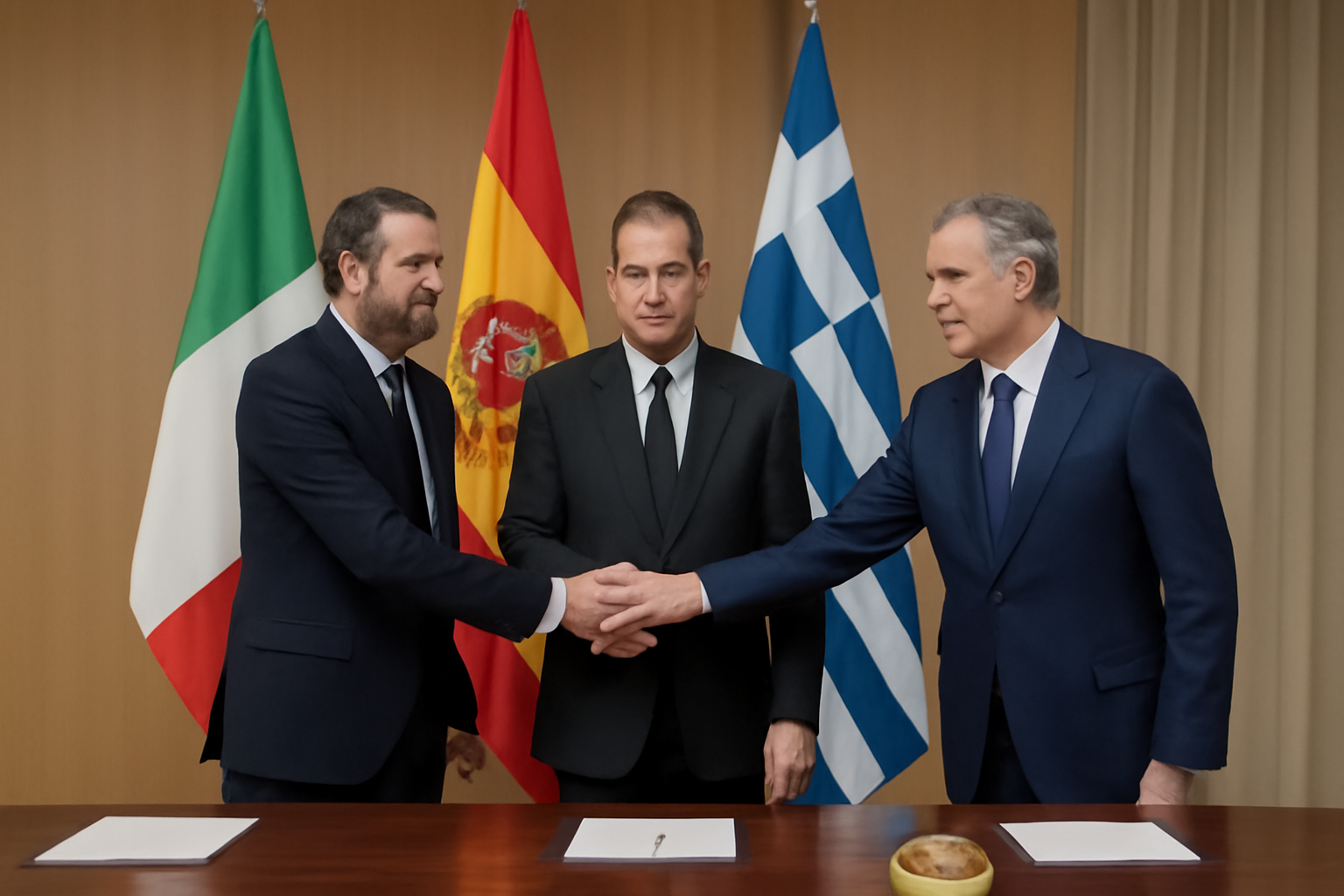
Table olive industry associations from Spain, Italy and Greece have established the European Federation of Olive Industry, or EFOI, to strengthen the sector’s representation in Brussels. Cinco Días, part of El País, reports that the initiative brings together Spain’s Asemesa, Italy’s Assom and Greece’s Pemete. The federation will be based in Rome and chaired by Francisco Torrent Cruz, who also serves as president of Asemesa.
The founders say European institutions have largely overlooked a growing industry with a substantial economic and social role across the Mediterranean. EFOI will concentrate on international trade agreements, US tariffs and competition from countries whose producers are not subject to the same standards and production techniques required of EU farmers and processors. Its immediate objective is to present a coordinated position instead of leaving national associations to pursue separate cases in Brussels.
Production grows, but market access remains uneven
According to figures cited by Cinco Días, European table olive production increased by 7% over the past five years, compared with global growth of 8%. EU output in the 2024-2025 season was expected to reach about 858,000 tonnes, while more than 3 million tonnes circulate on the global market annually. The sector is connected to approximately 80,000 European farms, and European consumption stands at around 600,000 tonnes.
Demand is concentrated in producing countries but also extends to non-Mediterranean markets, including the United States, Brazil and Canada. The product is sold in roughly 100 countries, supported by the international popularity of the Mediterranean diet and demand for foods associated with healthier eating. For processors and exporters, that reach creates growth opportunities, but it also increases exposure to tariffs and differences between trade regimes.
Mercosur terms become a central dispute
Asemesa argues that the EU-Mercosur agreement creates a competitive imbalance for European table olives. Olives from Argentina would receive progressive access to the EU, with the current 12.8% tariff eliminated over seven years. Spanish and other European olives entering Mercosur would continue to face a 12.6% tariff, according to Asemesa. The association says this limits access to strategic destinations such as Brazil while increasing competitive pressure within the EU market.
Argentina has produced an annual average of 75,000 to 80,000 tonnes in recent years, while Brazilian consumption is approximately 120,000 tonnes a year, Asemesa reports. The dispute adds to the pressure on Spanish black olives, which have faced US tariffs for years. EFOI’s challenge will be to turn the combined weight of three major Mediterranean industries into specific demands on reciprocity, tariff treatment and production standards. The federation does not remove the trade barriers, but it gives growers, processors and exporters a single platform from which to contest them.