Indonesia's MBG school meal programme opens a fresh milk market for Semarang dairy farmers
Pasteurised milk processed from smallholder herds in Semarang Regency, Central Java, is now supplied to six government nutrition service units under Indonesia's Free Nutritious Meal programme. The Rumah Susu Indonesia plant in Kadirejo can produce up to 24,000 cups a day at full load, equal to three tonnes of raw milk, and sources its milk through a cooperative in Getasan.
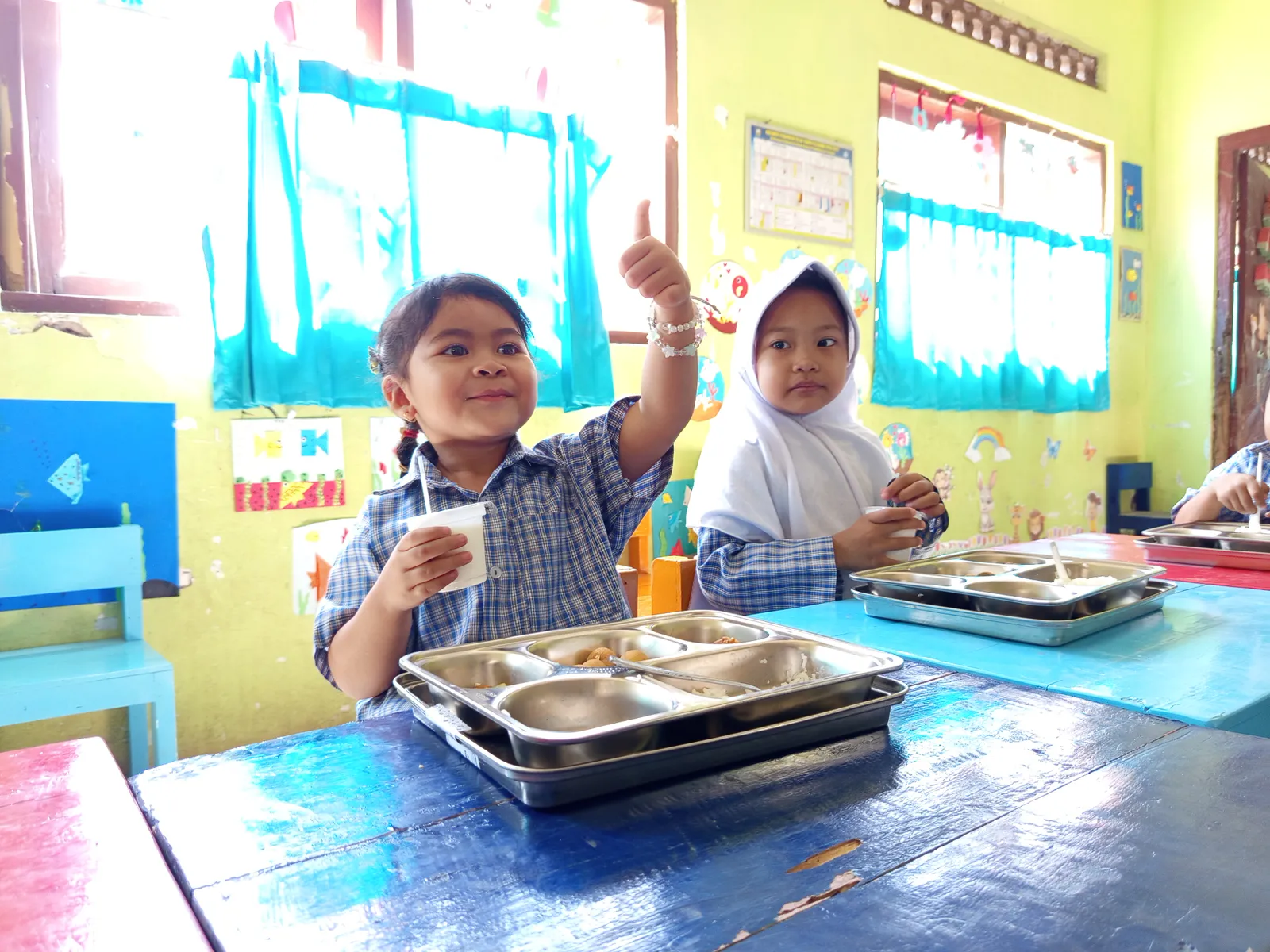
Indonesia's free school meal programme is opening a new institutional market for fresh milk from smallholder dairy farms in Semarang Regency, Central Java, according to Espos. Raw milk from local herds is processed into pasteurised milk at Rumah Susu Indonesia in Kadirejo village, Pabelan district, before being delivered to schools through Nutrition Fulfilment Service Units, known by the Indonesian acronym SPPG.
The pasteurised milk is served as a supplementary item on the menu of the Free Nutritious Meal programme, Makan Bergizi Gratis or MBG. It currently supplies six SPPG. Each of those units serves an average of about 2,000 to 2,600 beneficiaries, which puts the combined base at roughly 12,000 to 15,600 recipients.
Cooperative supply replaces raw commodity sales
Riyadi, the owner of Rumah Susu Indonesia, said the use of fresh milk in MBG also helps absorb production from dairy farmers in the regency. The plant sources its raw material through a cooperative in Getasan, one of the main dairy-producing areas of Semarang Regency, which works with farmer groups and dairy smallholders.
“We cooperate with a cooperative there that supports farmer groups and dairy cattle farmers,” Riyadi told Espos in comments published on Friday, 25 September 2026. Through that arrangement, he said, farmers' fresh milk is no longer sold only as a raw input but reaches a market through processing and distribution into MBG.
Riyadi linked the sourcing model to instructions from the head of the National Nutrition Agency (BGN), Sudaryono. “This is in line with direction from the head of BGN, Mr Sudaryono, to help dairy farmers. For MBG the direction is also to use fresh milk with a minimum milk content of 80 percent,” he said. He added that the milk processed at the facility is 100 percent pure milk.
Capacity of 24,000 cups a day
Riyadi said the home-scale plant has considerable spare capacity. “If we maximise these machines, we could actually do 24,000 cups a day. That means raw material demand of three tonnes a day,” he said. At present the facility serves six SPPG.
Processing is carried out at about 72 degrees Celsius. Kept refrigerated, the pasteurised milk holds for around seven days. Riyadi said the product still needs wider familiarisation among consumers: “Pasteurised milk needs a sharper introduction to the public so that people use it and get to know it.”
School uptake
Eli Sulistiani, head of TK Harapan kindergarten in Semowo village, said children at her school had been receiving the milk for about four months, four times a week. She described it as well liked, good quality and low in sugar, and said parents considered it fresher than packaged milk. When the schedule skips a day, pupils ask for it: “Every Wednesday they do not get it, and the children really ask, ‘Ma'am, where is the milk?'”
Rokhaniah, head of SD Negeri Kadirejo 03, said distribution at her school began on 13 July 2026, the start of the new academic year, and has run daily since. She said the milk tastes fresh and is not cloying, and that using it also supports local products. Fahira, a sixth-grade pupil, said she liked the milk and wanted it always available.
Programme risks
The expansion of local sourcing comes as MBG faces food safety incidents in the same province. Espos reported that 361 students at SMAN 1 Sampang in Cilacap were suspected of food poisoning after MBG meals, with 19 referred to the Cilacap regional hospital and food samples sent for laboratory testing. In Bawang, Batang, the number of suspected poisoning cases rose to 411 people, with 119 referred for treatment and 20 admitted to hospital, after an earlier count of 276. The Batang regency administration prepared sanctions up to closure of the SPPG involved if negligence was established.