Mato Grosso bioenergy plants support 10,760 direct jobs as investment reaches R$6.8 billion
Mato Grosso’s 19 bioenergy plants employed 10,760 formal workers and produced 7.3 billion liters of ethanol in the 2025/26 season. Three new plants and two expansions represent about R$6.8 billion in investment, although producers report pressure from high interest rates and narrow margins.
Bioenergy employment outpaces state industry
Mato Grosso’s bioenergy industry maintained 10,760 formal jobs in 2025, an increase of 87% from 2019, according to Click Petróleo e Gás. Employment across the state’s other industrial segments grew by 34% over the same period, highlighting the faster expansion of ethanol and sugar production.
The state has 19 operating bioenergy plants spread across 17 municipalities. Together, they produced 7.3 billion liters of ethanol from corn and sugar cane in the 2025/26 season. The figures come from a study by the Mato Grosso Observatory, which is linked to the FIEMT System, in partnership with the state bioenergy industry association Bioind-MT.
Plants reshape municipal labor markets
Jobs at the plants accounted for 5.3% of all formal industrial employment in Mato Grosso in 2025. Their local weight is considerably greater in municipalities that host large production facilities. Nova Olímpia has approximately 3,000 direct bioenergy workers, and the sector represents 85% of the municipality’s formal industrial jobs. In Alto Taquari, a municipality with about 8,000 residents in the 2022 Census, sugar and ethanol production accounts for 90% of formal industrial employment.
The study estimates that more than 151,000 direct, indirect and induced jobs are connected to corn and sugar-cane processing in the state. This wider footprint includes suppliers, transport, retail and services. In Tapurah, where a corn ethanol plant began operating in October 2025, local commercial association president Flávio Anderson Breitenbach said rents, services and supermarkets were among the beneficiaries. Sales in those activities increased by approximately 30% after the plant was installed, according to his account.
Payroll and new projects deepen the economic footprint
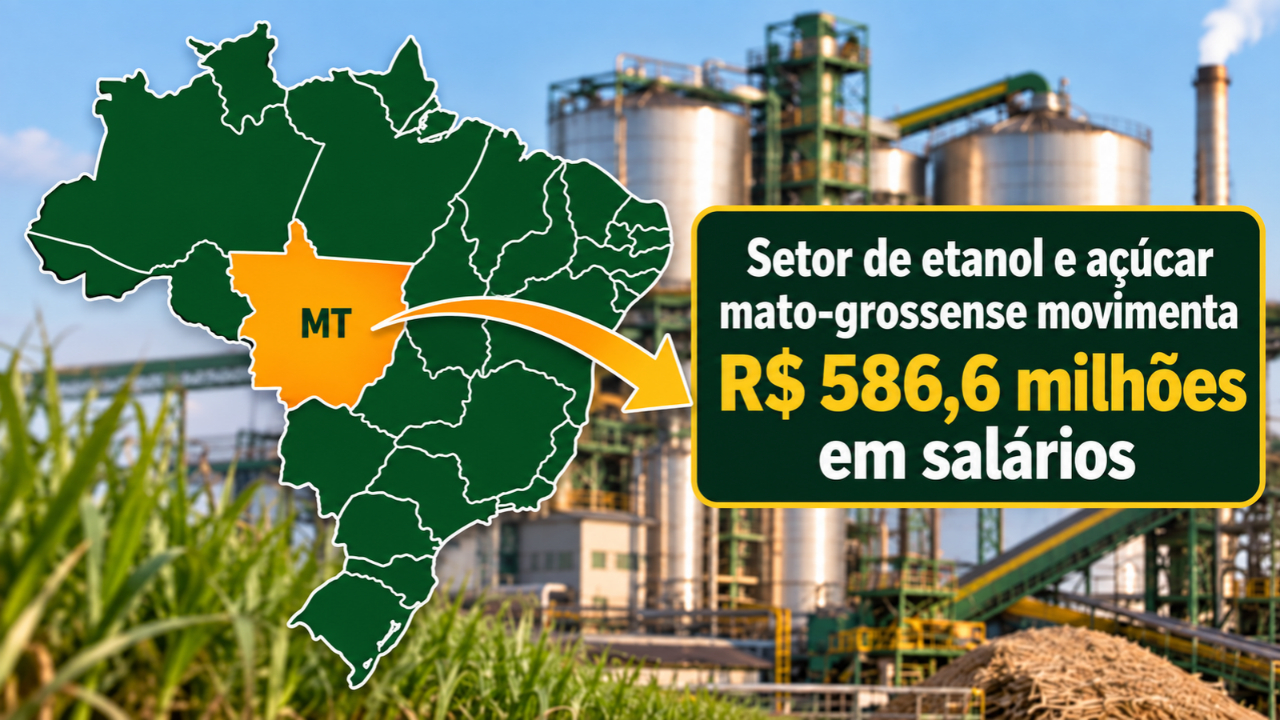
Bioenergy companies paid R$586.6 million in wages during 2025, the publication reported. That represented 9% of the total payroll distributed by Mato Grosso’s industrial sector. The share is larger than the plants’ 5.3% contribution to formal industrial employment, demonstrating the sector’s substantial role in industrial income as well as job creation.
Investment is continuing through three plants under construction and two existing facilities being expanded. Together, these projects represent approximately R$6.8 billion. Since 2017, when Mato Grosso’s first dedicated corn ethanol plant started operating, bioenergy investment in the state has reached R$27 billion. The development of corn-based capacity has enabled processors to add value to the state’s agricultural output while broadening the feedstock base beyond sugar cane.
Expansion continues despite margin pressure
Bioind-MT president José Fernando Mazuca Filho said the geographic distribution of plants supports local economies, supplier chains and value addition. However, the association cautioned that current operating conditions require care. Mazuca said producers face narrow and, at times, negative margins because of high Brazilian interest rates, commodity volatility, international conflicts and selling prices that have not risen in line with costs.
The R$6.8 billion project pipeline indicates that companies are still committing capital despite those constraints. For producers and investors, returns will depend not only on growing ethanol demand but also on financing costs, feedstock economics and commodity prices. Municipalities hosting the plants stand to gain employment and commercial activity, but their high dependence on a single industry also makes local income sensitive to plant margins and future investment decisions.