Mato Grosso beef exports reach 88 countries and generate $2.4 billion in first half of 2026
Mato Grosso exported beef to 88 countries in the first half of 2026, up from 77 markets a year earlier. Revenue rose to $2.4 billion, while China remained the leading destination with 282,400 tonnes.
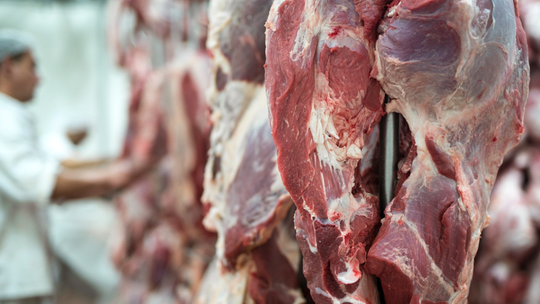
Revenue and market coverage expand
Beef produced in Mato Grosso reached 88 countries in the first half of 2026, according to Gazeta MT. The Brazilian state's meatpackers generated $2.4 billion in export revenue, with an average price of $6,100 per tonne. The figures indicate a broader international customer base and stronger unit values than in the corresponding period of 2025.
In the first half of 2025, Mato Grosso processors sold beef to 77 countries, earning $1.47 billion at an average price of $5,100 per tonne. The year-on-year comparison therefore shows 11 additional destinations, a revenue increase of $930 million and a $1,000-per-tonne rise in the reported average price. The source did not provide total export tonnage for either period, so the contribution of shipment growth to the revenue increase cannot be calculated from the available data.
China maintains a wide lead
China was Mato Grosso's largest foreign beef market in the first six months of 2026, importing 282,400 tonnes. The United States ranked second with 41,000 tonnes, followed by Chile with 31,000 tonnes. China's purchases were almost seven times the volume shipped to the United States and exceeded the combined reported volumes of the second- and third-largest destinations by more than 210,000 tonnes.
Russia, the Philippines, Saudi Arabia, Egypt, the United Arab Emirates, Italy and the Netherlands completed the group of ten largest importers. This mix gives Mato Grosso exposure to buyers across Asia, North America, South America, the Middle East and Europe. It also combines large-volume markets with destinations that may require different product specifications, commercial channels and market-access arrangements.
Smaller destinations broaden the customer base
Mato Grosso beef also reached lower-volume markets including Cape Verde, Azerbaijan, Kazakhstan, Iraq, Puerto Rico, Qatar, Albania and Libya. No individual shipment figures were reported for these destinations, but their presence illustrates the geographical reach of the state's processing industry beyond its largest customers.
Most exports leave Brazil through the ports of Paranaguá in Paraná and Santos in São Paulo. This means Mato Grosso's landlocked beef industry depends on inland transport links and port operations outside the state to serve overseas customers. For processors and livestock producers, reliable access to these corridors remains integral to turning slaughter and processing capacity into export sales.
Diversification reduces—but does not remove—concentration
Bruno de Jesus Andrade, project director at the Mato Grosso Meat Institute, told Gazeta MT that a wider range of destinations reduces the production chain's exposure to economic fluctuations. He said diversification gives processors and cattle producers greater predictability while creating access to niches that pay more for meat quality.
The expansion from 77 to 88 countries supports that diversification strategy, but the disclosed volumes show that China remains dominant. For producers, processors and traders, the 2026 results therefore present two parallel trends: a broader network of buyers and continued reliance on one exceptionally large market. Growth in the United States, Chile and the other leading destinations provides additional sales channels, while smaller markets can help place specific cuts and products that do not necessarily follow the same demand cycle as China's purchases.