Malaysian Crude Palm Oil Futures Close Higher for a Fourth Consecutive Session
Crude palm oil futures on Bursa Malaysia Derivatives ended Thursday higher, extending gains to a fourth straight session, Bernama reported from Kuala Lumpur on 20 August. The exchange sets the reference price for the global palm oil trade, so a multi-session run feeds directly into physical offers. Traders now look to cargo surveyor export estimates and the next Malaysian Palm Oil Board balance for confirmation.
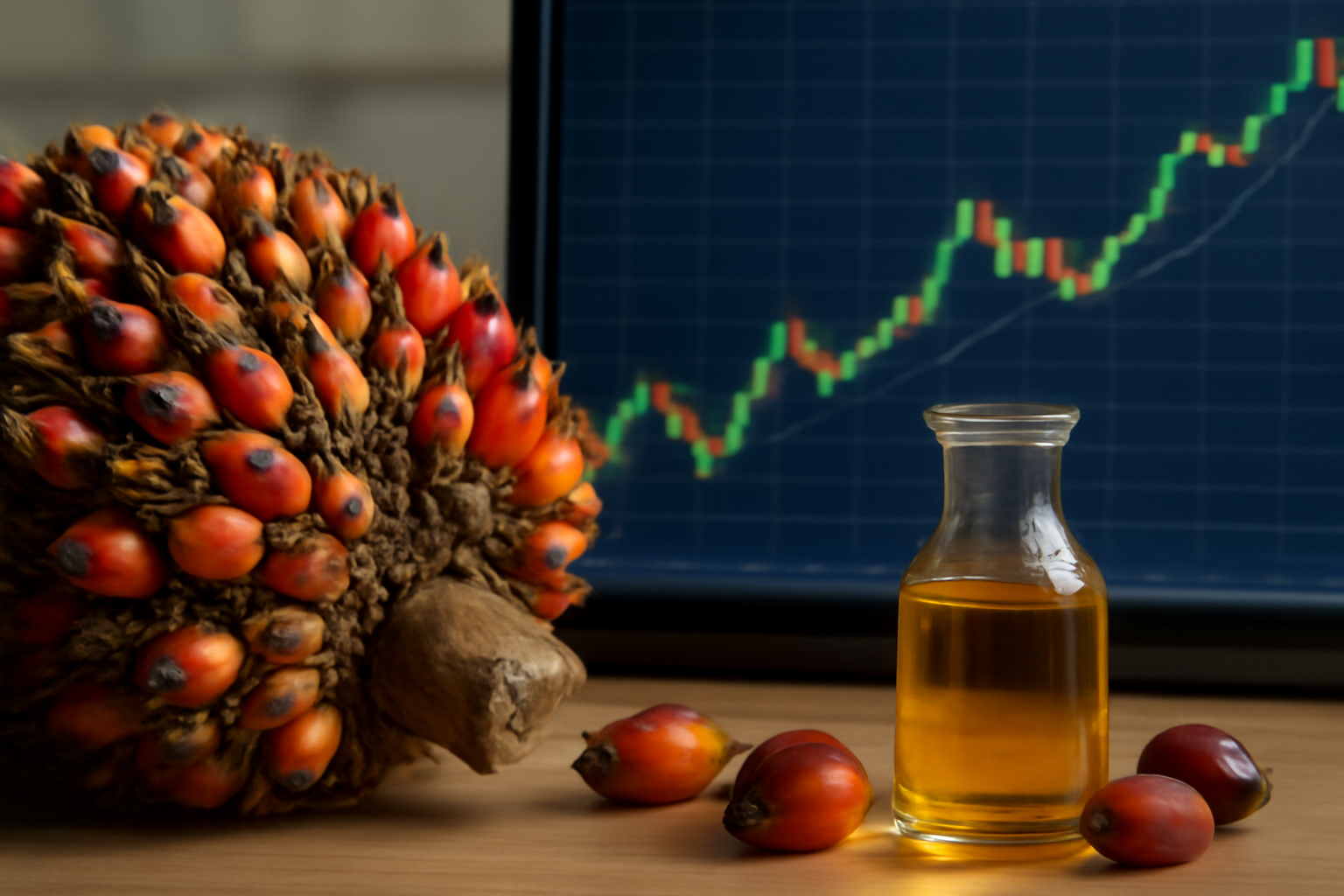
Crude palm oil futures on Bursa Malaysia Derivatives closed higher on Thursday, extending their advance to a fourth consecutive session, the Malaysian national news agency Bernama reported from Kuala Lumpur on 20 August.
A four-session run on the global benchmark
Bernama's market report confirmed the direction of the close but did not set out settlement levels or the scale of the move in the material available. The exchange's crude palm oil contract, quoted in ringgit per tonne, functions as the reference price for the world palm oil trade, and a run of consecutive higher closes is read by physical traders as a signal that extends well beyond Malaysia's own crop.
Malaysia is the second-largest palm oil producer after Indonesia, and its derivatives market carries the price discovery function for the wider vegetable oil complex. Refiners, crushers and importers across Asia and Europe price physical cargoes at a differential to the Bursa Malaysia benchmark, so successive higher closes pass quickly into offer sheets for crude and refined palm oil, olein, stearin and palm kernel oil.
What moves the crude palm oil curve
Neither the Bernama headline nor its accompanying summary singled out one driver for the four-session run. In practice, the contract responds to a recurring set of inputs that vegetable oil desks track daily:
- Rival oils. Soybean oil on the Chicago Board of Trade, together with soybean oil and palm olein contracts on the Dalian Commodity Exchange and sunflower and rapeseed oil values, sets the substitution boundary for price-sensitive buyers.
- Energy prices and biodiesel policy. Crude oil levels and the blending mandates in Indonesia and Malaysia determine how much palm oil is pulled out of the food chain and into fuel.
- The ringgit. Palm oil is quoted in the Malaysian currency, so exchange-rate moves change what dollar-based importers actually pay for the same contract.
- Export momentum. Shipment estimates from cargo surveyors AmSpec Agri Malaysia and Intertek Testing Services, released at intervals through the month, are the market's first read on demand.
- Stocks and output. The Malaysian Palm Oil Board's monthly balance of production, exports and closing inventories remains the anchor data point for the contract.
Implications for buyers and competing oils
For importers, a sustained move on the Bursa benchmark matters mainly through the spread to soft oils. Palm oil's commercial position rests on trading at a discount to soybean and sunflower oil. When the palm contract rallies and the others do not, that discount narrows, and price-sensitive buyers in India, China, Pakistan and Bangladesh tend to slow forward purchasing or shift part of their programme to alternatives. Refiners holding uncovered sales feel it first, because their raw material cost tracks the benchmark while the price of the finished product does not.
On the supply side, firmer futures improve the arithmetic for Malaysian and Indonesian planters and for the mills buying fresh fruit bunches, but they raise input costs for food manufacturers, oleochemical producers and biodiesel blenders. The Malaysian and Indonesian blending programmes compete with export demand for the same volumes, and periods of strong futures typically revive the debate over the cost of those mandates.
The near-term test is confirmation. A four-session advance built on positioning rather than physical offtake is fragile, while one supported by export data and a tightening inventory position tends to hold. The next cargo surveyor estimates and the following Malaysian Palm Oil Board release will determine which of the two this run turns out to be.