Malaysia shifts pepper strategy from output growth to quality, adds 750 hectares of premium planting
Malaysia's pepper industry should move away from chasing higher production volumes and focus on high-quality, high-value output, Noraini said in remarks reported by Bernama from Betong on 17 September. Under the Pepper Planting Sustainability Programme, the government plans to expand premium pepper cultivation by 750 hectares, in addition to managing 800 hectares.
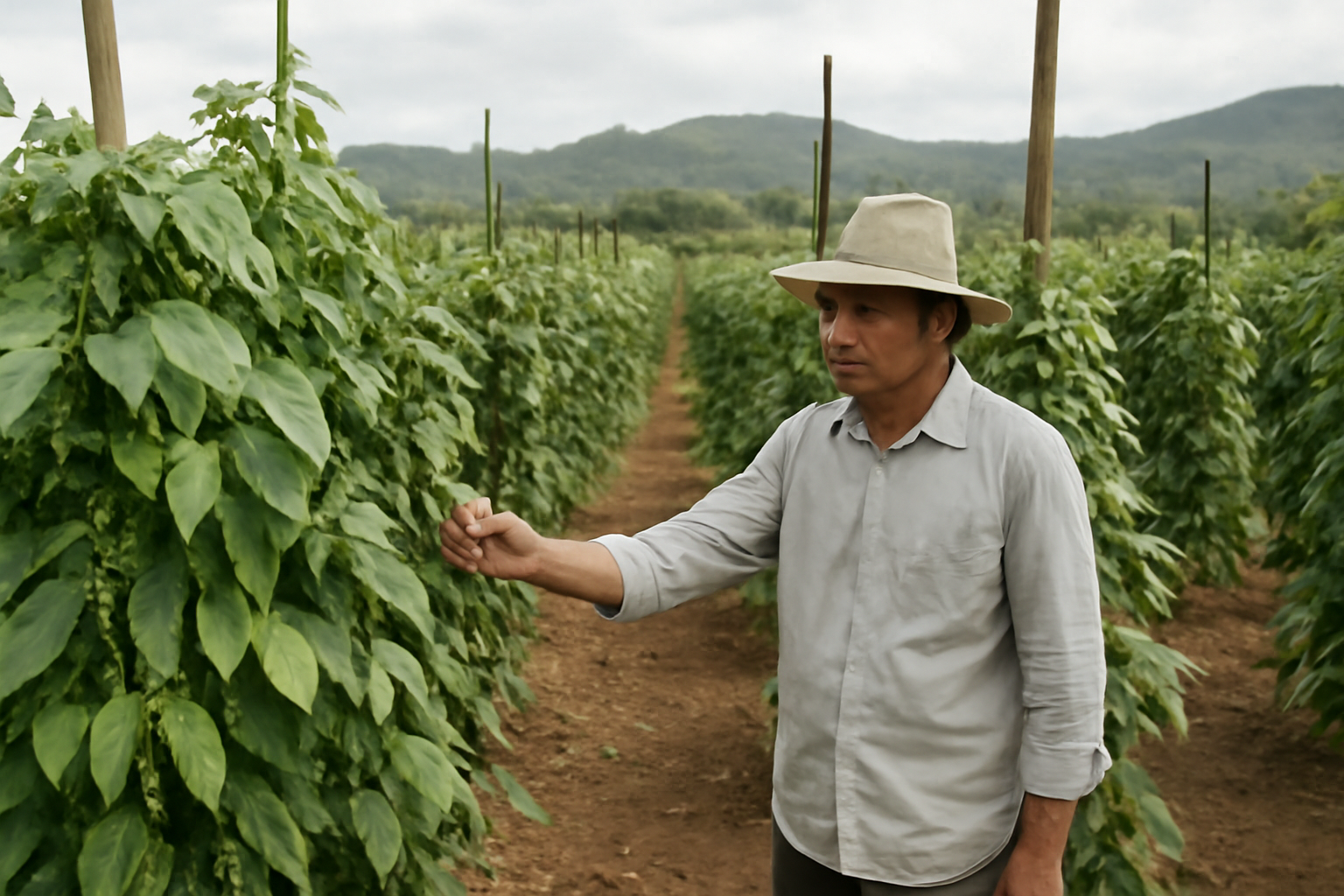
Malaysia's pepper industry should move away from simply chasing higher production volumes and towards producing high-quality, high-value output, Noraini said, in remarks reported by the national news agency Bernama from Betong on 17 September. The stated purpose of the shift is to ensure that smallholder growers earn better returns from what they harvest.
Bernama reported that, under the Pepper Planting Sustainability Programme, the government aims to expand premium pepper cultivation by 750 hectares, in addition to managing 800 hectares under the same programme.
A programme measured in hectares, not tonnes
The headline figure is an area target rather than an output target. Expanding premium cultivation by 750 hectares, alongside the 800 hectares already under management, sets the scale of the intervention at plot level: which vines go into the ground, how they are maintained, and what grade of berry comes off them. Programmes framed this way are normally judged on the price achieved per kilogram and on the share of the crop that clears buyer specifications, not on national production totals.
For an industry concentrated in Sarawak, where Betong is located, an area-based approach also keeps the policy within reach of the smallholdings that dominate planting. Pepper is a perennial crop and new vines take years to reach full bearing, so a 750-hectare premium expansion is a medium-term commitment whose effect on the export mix will appear gradually rather than in the next harvest.
The logic of stepping off the volume treadmill
Pepper is a globally traded commodity in which the largest origins set the reference price. A producer whose planted area is modest by world standards has little influence over that price and carries the full downside when it falls: additional tonnage from a small origin does not move the market, but a weak market still compresses the grower's margin. The alternative is to sell on grade, origin and consistency, where the price is negotiated on product attributes rather than dictated by the benchmark.
That reasoning matches the rationale Noraini gave, as reported by Bernama: the point of the shift is grower income, not national tonnage. It also changes which parts of the chain matter. Under a volume strategy the binding constraints are planted area, fertiliser and yield per vine. Under a quality strategy they move downstream:
- harvest timing and berry maturity, which largely determine grade;
- drying, cleaning and grading capacity at or close to the farm;
- documentation — traceability and certification — that allows a buyer to pay a premium and to substantiate it.
What processors and importers should watch
For spice processors and importers, Malaysian pepper functions as a specialty line rather than a bulk-supply origin. Sarawak black and white pepper is bought on origin and flavour profile, and volumes of that type are too small to shift global prices. A quality-led policy reinforces that position: it is aimed at the segment where buyers already pay above the benchmark, and where supply reliability and documented handling matter more than availability of tonnage.
The Bernama report sets out the hectare targets and the direction of policy, but does not detail funding, timelines, or the grades and volumes the expanded area is expected to deliver. Until those details are published, the practical questions for the trade are whether the additional 750 hectares are planted with output destined for identified premium buyers, and whether post-harvest handling is upgraded in step with planting. A premium crop that is dried and graded to commodity standard is sold at commodity prices, regardless of where it was grown.
The immediate market effect is limited. Neither the 750-hectare expansion nor the 800 hectares under management changes near-term supply, and mature output from new vines is years away. The significance lies in the direction: Malaysia is positioning its pepper sector to compete on product attributes and grower margins rather than on volume against far larger origins.