Malaysia and Pakistan explore agricultural trade cooperation on RM4.40 billion base
Malaysia and Pakistan are exploring expanded cooperation in agricultural trade and the opening of new markets, Bernama reported. Agricultural trade between the two countries stood at RM4.40 billion as of December last year. No product lines, timeline or target value have been attached to the discussions.
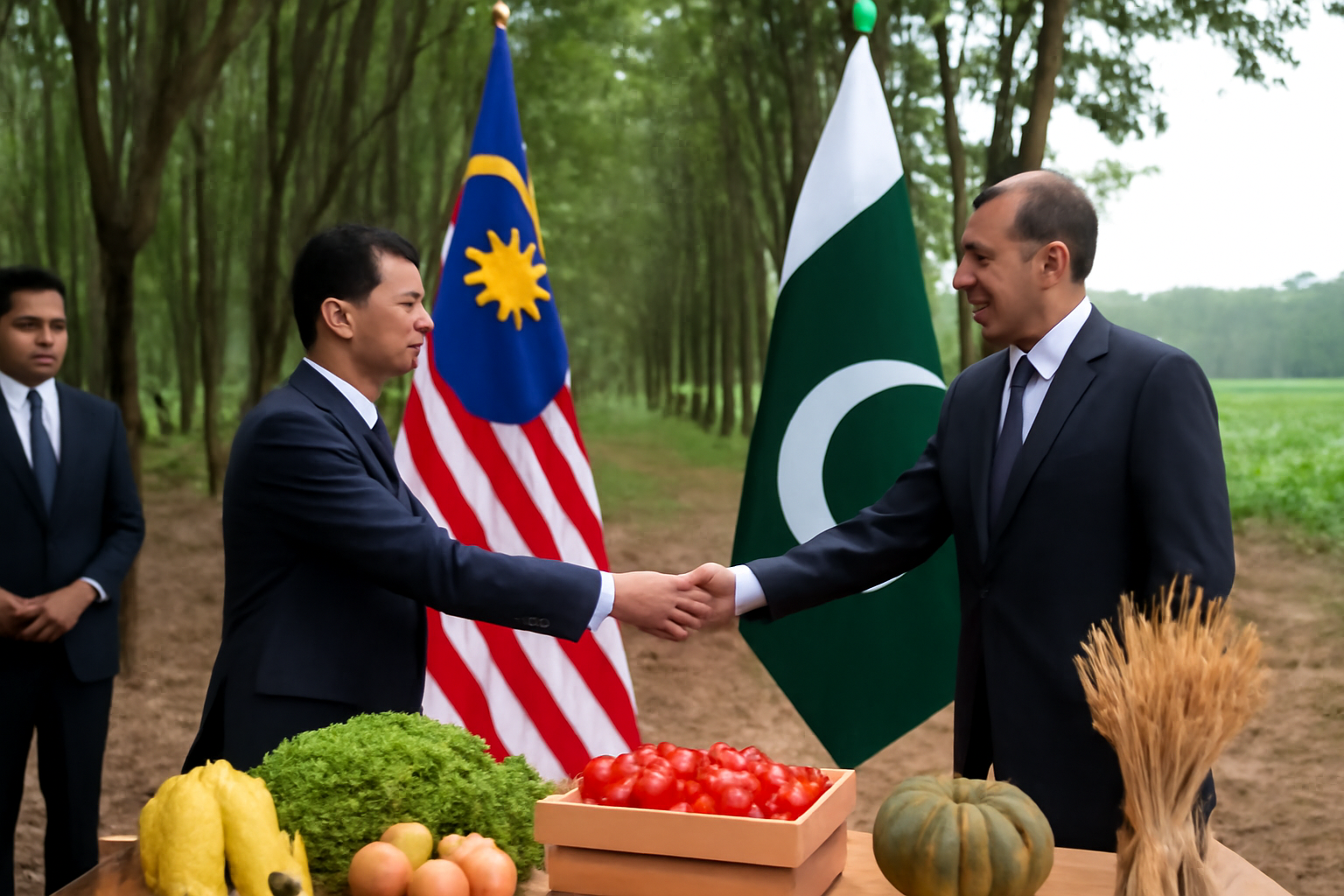
Malaysia and Pakistan are exploring expanded cooperation in agricultural trade and the opening of new markets, Malaysian national news agency Bernama reported. Trade in agricultural products between the two countries stood at RM4.40 billion as of December last year, according to the agency. The discussions are framed around the farm and food sector as a whole rather than a single commodity line, which sets them apart from the product-specific protocols that usually dominate bilateral agricultural diplomacy.
A baseline of RM4.40 billion
The RM4.40 billion figure is the aggregate value of agricultural goods moving between Malaysia and Pakistan as of December last year, as reported by Bernama. It was given as a single total, without a published breakdown by commodity, by direction of flow, or by change against the previous period. For exporters, importers and processors on both sides, that makes the headline number a reference point for negotiation rather than a detailed map of where the trade actually sits.
The sector-wide framing matters for how the talks should be read. Discussions covering agricultural trade and new markets are structurally broader than a single-product deal: they generally touch tariff treatment, certification, and the administrative access conditions that determine whether a consignment can clear a border at all. Bernama's report did not attach a timeline, a target value, or a list of specific product lines to the process, and no signed instrument has been reported.
Where the two farm economies meet
Malaysia and Pakistan operate largely complementary agricultural systems rather than competing ones. Malaysia's farm export base is concentrated in tropical tree crops and processed food, while Pakistan's rests on irrigated field crops, rice and horticulture. That complementarity is the structural reason a bilateral agricultural corridor exists at its current scale, and it also limits how much of the trade is exposed to head-to-head competition between the two sides.
For industry participants, the practical questions attached to talks of this kind are consistent across markets:
- which product lines gain or lose tariff advantage, and on what schedule;
- whether plant and animal health protocols are mutually recognised, since phytosanitary and veterinary certification normally gates access before tariffs become relevant;
- how halal certification is handled, given its weight in food trade involving Muslim-majority markets;
- whether new markets means third countries approached jointly or additional product categories inside the bilateral relationship.
What to watch next
Until specific measures are published, the significance of the announcement lies in direction rather than effect. Exploratory talks are not agreements: on their own they do not change duties, quotas or certification requirements, and the landed-cost arithmetic facing traders is unchanged in the meantime. The operative markers will be any memorandum of understanding, any protocol on plant or animal health, and any tariff schedule that follows from the process.
The corridor is modest relative to the overall agricultural trade of either country, and that is precisely why incremental access measures can register in the numbers. On a base of this size, a single new product protocol or a certification agreement can move the total visibly, while the same measure would be marginal in a larger trade flow. Producers and traders positioned in rice, palm-based products, processed food and horticulture are the constituencies with the most direct exposure to whatever emerges.