Malaysia urges states to gazette paddy land as rice self-sufficiency falls to 54.3%
Malaysia's agriculture ministry has asked state governments to gazette paddy granary areas as legally protected farmland after the rice self-sufficiency ratio fell to 54.3 per cent in 2025 from 68 per cent in 2018. Rice import dependence reached an estimated 1.416 million metric tonnes worth RM2.953 billion last year. The plan also covers 24 state agrofood areas and a new Fertiliser Bill.
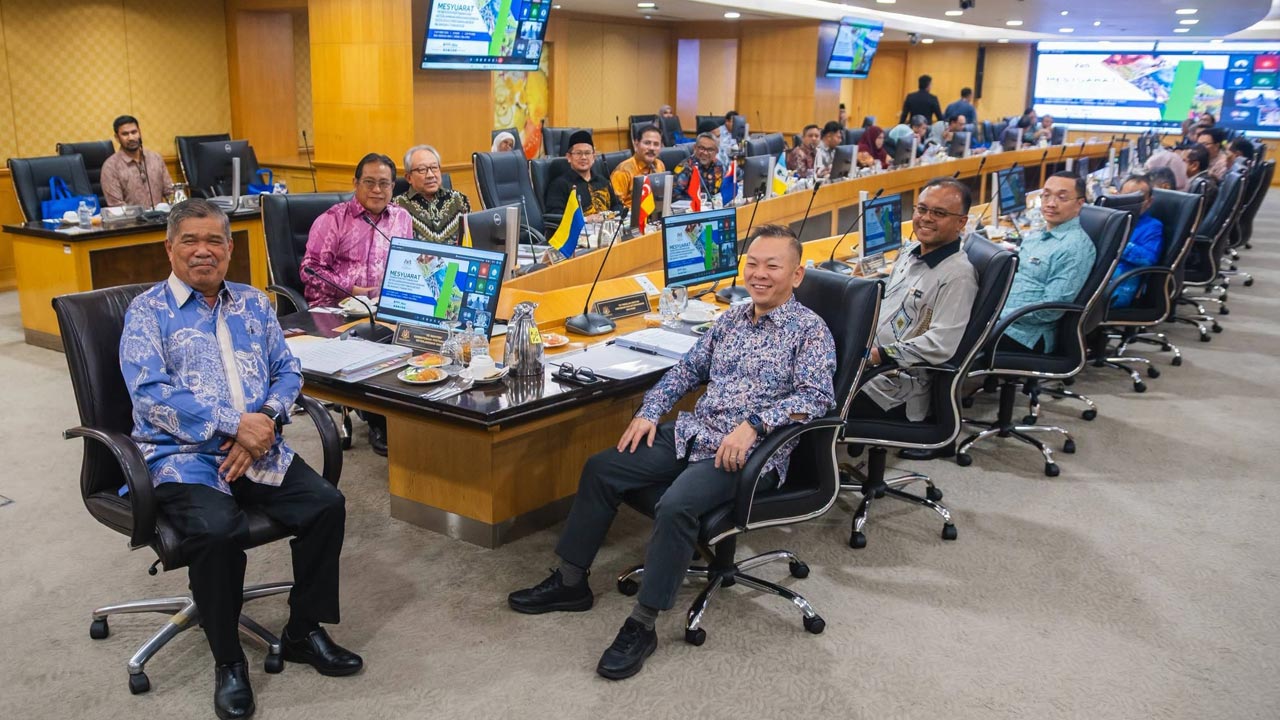
Malaysia's Ministry of Agriculture and Food Security (KPKM) has urged state governments to gazette the country's paddy granary areas, giving that farmland formal legal protection, after the national rice self-sufficiency ratio (SSR) fell to 54.3 per cent in 2025 from 68 per cent in 2018.
The recommendation came out of a meeting chaired by Agriculture and Food Security Minister Datuk Seri Mohamad Sabu with state agriculture executive councillors, the ministry said in a statement reported by Astro Awani and The Malaysia Press. Agriculture excos from nine states attended, together with representatives of the State Economic Planning Units, the Ministry of Finance and the Ministry of Economy, alongside senior officials and the heads of departments and agencies under the ministry.
Shrinking paddy area, a 1.416 million tonne import bill
KPKM tied the fall in the SSR to the contraction of land under paddy, and said the gazetting proposal also follows a recommendation in the Auditor-General's Report that granary areas be gazetted in order to preserve the area available for rice planting. Malay Mail reported the same call on states to act, framing gazettement as a measure to sustain rice cultivation and strengthen national food security. Land administration falls under state jurisdiction in Malaysia, which is why the step requires decisions by individual state governments rather than the federal ministry.
The production gap is being filled by purchases abroad. KPKM put rice import dependence at an estimated 1.416 million metric tonnes worth RM2.953 billion in 2025. Key figures cited by the ministry:
- Rice SSR: 68 per cent in 2018, down to 54.3 per cent in 2025
- Rice imports: an estimated 1.416 million metric tonnes valued at RM2.953 billion in 2025
- State agrofood areas slated for immediate gazettement: 24
Zoning extends beyond rice
The meeting also discussed protecting food production land through the zoning of food source areas in state Structure Plans and Local Plans, in line with the National Land Use Planning Master Plan. Measures identified include the immediate gazettement of 24 state agrofood areas under the Permanent Food Production Park, Permanent Ruminant Production Park and Aquaculture Industrial Zone categories, plus a regularisation scheme for livestock farms and a Food Area Protection Mechanism for Sabah and Sarawak.
“These steps support KPKM's efforts to raise the SSR for strategic commodities, thereby increasing local production and strengthening the country's food resilience and security,” the ministry said in the statement.
Project funding and the fertiliser bill
On spending, the meeting noted the status of the National Agrofood Empowerment Programme approved under the 13th Malaysia Plan. This year 347 projects worth RM349.15 million were approved out of 782 applications worth RM2.09 billion — roughly a sixth of the value requested.
Participants also reviewed the outcome evaluation of the 2024 Land Use Optimisation Programme carried out with state governments, which covered 97 projects, 19,447 participants, about 40,000 hectares and an allocation of RM149.59 million.
On industry regulation, the meeting noted the drafting of a new Fertiliser Bill intended to create a more structured, transparent and effective framework for the fertiliser trade, covering product quality, distribution and price stability as well as the protection of farmers' interests.
Export promotion in Singapore
State governments were additionally asked to consider taking part in Malaysia Fest in Singapore, a promotional platform for Malaysian agrofood products running since 2006 through the Malaysia Fruits and Food Fiesta programmes. Visitor numbers rose from 75,000 in 2017 to 179,400 in 2025, while sales value increased from RM6.59 million to RM15.8 million.