Malaysia launches PALMS 2030 to digitalize palm oil and strengthen global market access
The Malaysian Palm Oil Board has launched PALMS 2030 to advance digital adoption and reinforce the industry’s position in global markets. The initiative also seeks to move research beyond laboratories and turn it into commercially useful solutions.
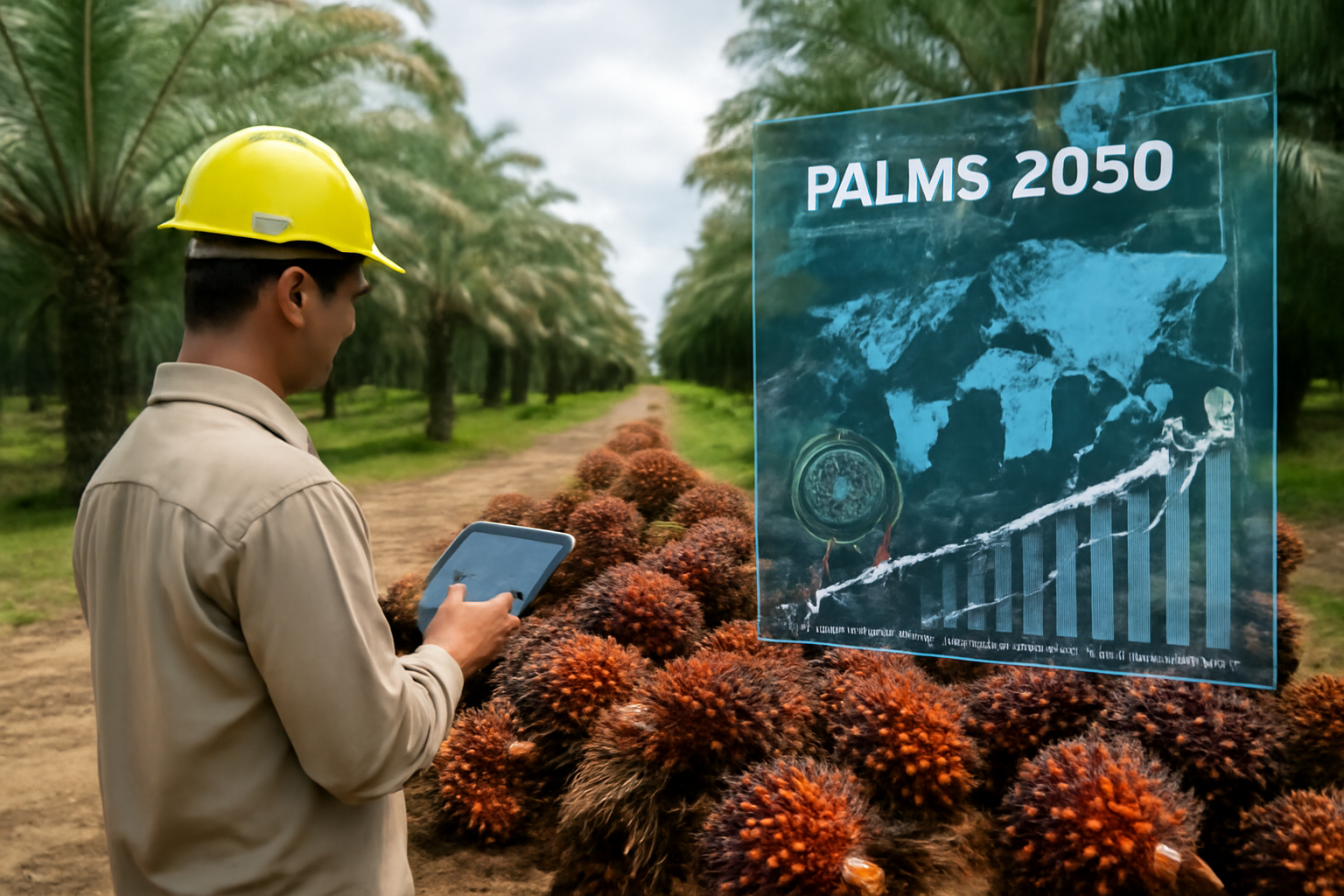
MPOB puts digital adoption at the center of PALMS 2030
The Malaysian Palm Oil Board has launched PALMS 2030, a national initiative intended to strengthen digitalization and expand the global market position of Malaysia’s palm-oil industry. MalaysiaGazette reported the launch under the headline “MPOB launches PALMS 2030 to strengthen digitalization and global markets.” The initiative places technology adoption, research commercialization and market development within a common industry agenda running toward 2030.
The announcement establishes a broad direction rather than a detailed implementation schedule. The material provided does not specify a budget, participating companies, production targets, export goals or individual digital systems. It also does not identify deadlines between the launch and 2030. These details will be important for producers, processors and investors seeking to assess the initiative’s commercial reach and the cost of implementation.
Research is expected to move into commercial use
A central message accompanying the launch is that research should not remain in laboratories. It should be transferred into applications that create measurable value for the industry, the public and Malaysia, according to the statement reported by MalaysiaGazette. This makes commercialization a core test of PALMS 2030: research results will need to become technologies, services or operating practices that companies and other industry participants can use.
For palm-oil businesses, the distinction matters. Research alone does not change plantation output, mill performance or access to customers. Commercial deployment requires users, investment and integration into existing operations. PALMS 2030 therefore has potential relevance across the value chain, but the reported launch does not say which segments will receive priority or how intellectual property, financing and industry participation will be handled.
Global positioning will depend on execution
The global-market element signals that digitalization is being treated as more than an internal efficiency project. Digital tools can support the information and operating capabilities required by producers, processors and companies selling palm oil, while commercial research can broaden the industry’s technological base. However, MalaysiaGazette’s report does not provide new figures for palm-oil production, capacity, trade flows or prices, and it does not name specific overseas markets targeted by PALMS 2030.
Industry participants will consequently be watching for the next layer of policy detail: which projects qualify under the initiative, who can participate, how technologies will be tested and what indicators will be used to measure progress through 2030. The launch gives MPOB and the industry a defined strategic direction. Its market impact will become clearer when that direction is translated into funded programs, commercial agreements and tools that can be adopted in plantations, processing facilities and other parts of the palm-oil supply chain.