Maharashtra Onion Prices Fall Below Production Costs in Many Mandis
India’s central government has acknowledged in the Lok Sabha that onions are selling below farmers’ production costs in many Maharashtra mandis. The price weakness points to excess supply and mounting pressure on growers.
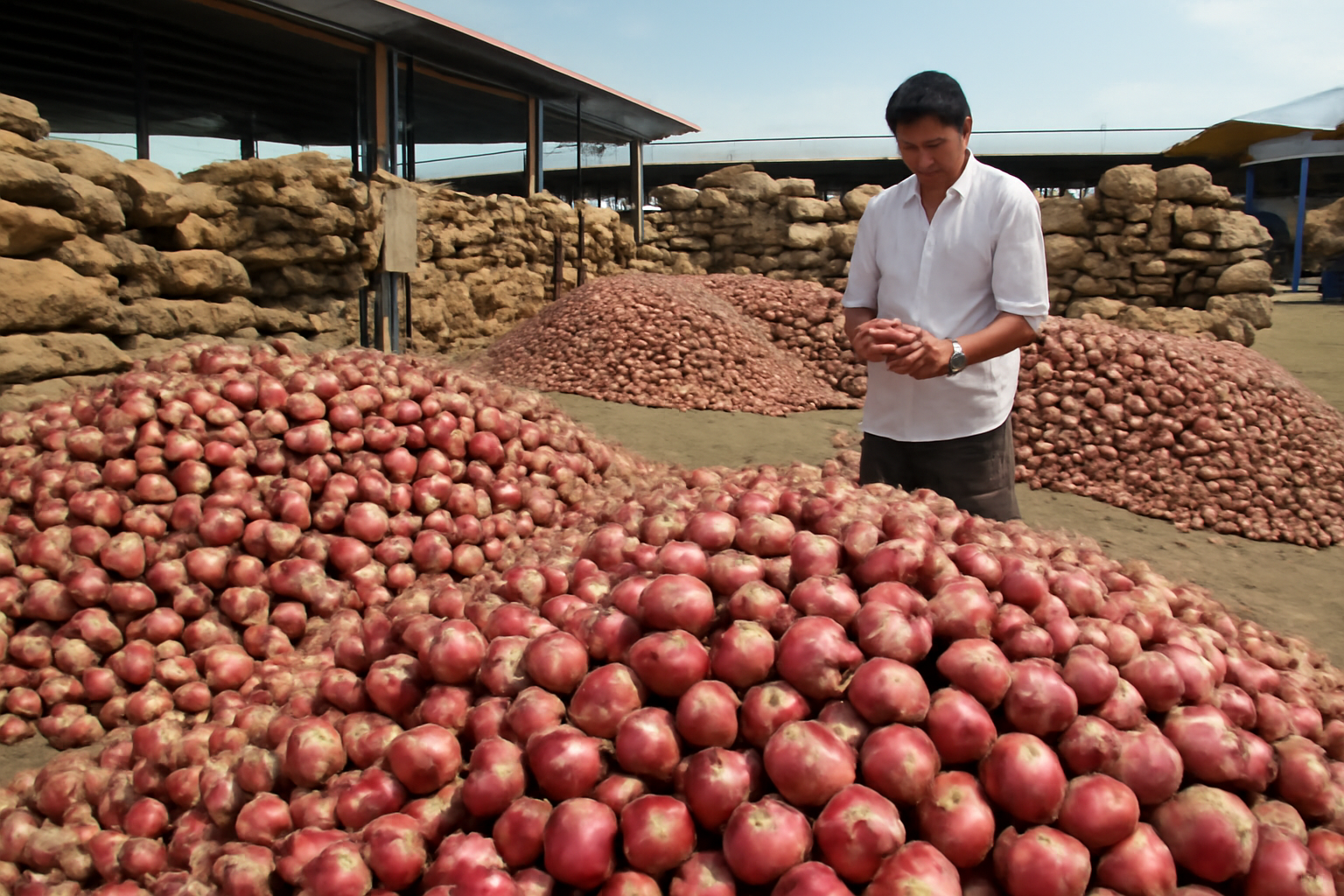
Government acknowledges losses for onion growers
Onion prices in many agricultural markets in Maharashtra have fallen below farmers’ production costs, according to information presented by India’s central government in the Lok Sabha. The acknowledgement confirms that growers in one of the country’s principal onion-producing regions are failing to recover the money spent on cultivating and bringing their crop to market.
The available information does not specify individual mandi prices, estimated production costs or the volume of onions affected. It nevertheless establishes the central commercial issue: market revenue is insufficient to cover production expenses for farmers selling through numerous mandis in the state. The imbalance places immediate pressure on farm income and raises questions about how much of the crop growers can market economically.
Excess supply weighs on the market
The price decline highlights a glut in Maharashtra’s onion market. When supply exceeds the volumes that traders, processors and consumers can absorb at remunerative prices, the adjustment falls primarily on growers. Onions are perishable and cannot always be held indefinitely while farmers wait for better bids, limiting their ability to withdraw produce from a weak market.
Below-cost prices can affect decisions across the supply chain. Farmers may delay sales when storage is available, but doing so adds carrying costs and exposes the crop to deterioration. Those without adequate storage or working capital may have to accept prevailing mandi prices. Traders can obtain cheaper supplies, although rapid price declines also create inventory risk if quotations continue to weaken.
Processors and other large buyers may benefit from lower raw-material costs in the short term. That advantage does not remove the underlying imbalance. If growers repeatedly fail to recover their costs, they have a commercial incentive to reduce onion planting or spending on inputs in a subsequent production cycle. Such a response could eventually tighten supply, although the source material provides no forecast for acreage or output.
Policy focus shifts to market absorption
The government’s statement in parliament puts the condition of Maharashtra’s onion farmers on the national policy agenda. The immediate question is whether existing market channels can absorb the surplus without forcing a disproportionate share of the loss onto producers. Measures involving procurement, storage, processing or access to additional buyers would have different effects, but no specific intervention was detailed in the supplied information.
For market participants, the parliamentary acknowledgement is significant because it confirms that the problem extends beyond an isolated transaction or a single mandi. Producers will watch for measures capable of supporting price realization, while traders and processors will assess how any policy response could affect availability and purchasing conditions.
The episode also shows the limits of higher physical supply when demand and market infrastructure do not expand at the same pace. A large crop can increase the quantity available to buyers while reducing the value recovered by farmers. Until the excess onions are consumed, processed, stored or moved to additional markets, Maharashtra’s growers remain exposed to prices that do not cover production costs.