Madhya Pradesh cane shifts to jaggery as sugar mills face payment delays
Sugarcane growers in Madhya Pradesh are increasingly selling to jaggery units because mills take longer to pay, Patrika reports. Around 3,500-4,000 units are producing jaggery, whose reported output reached 2.3 million quintals compared with 2 million quintals of sugar.
Immediate payment redirects cane
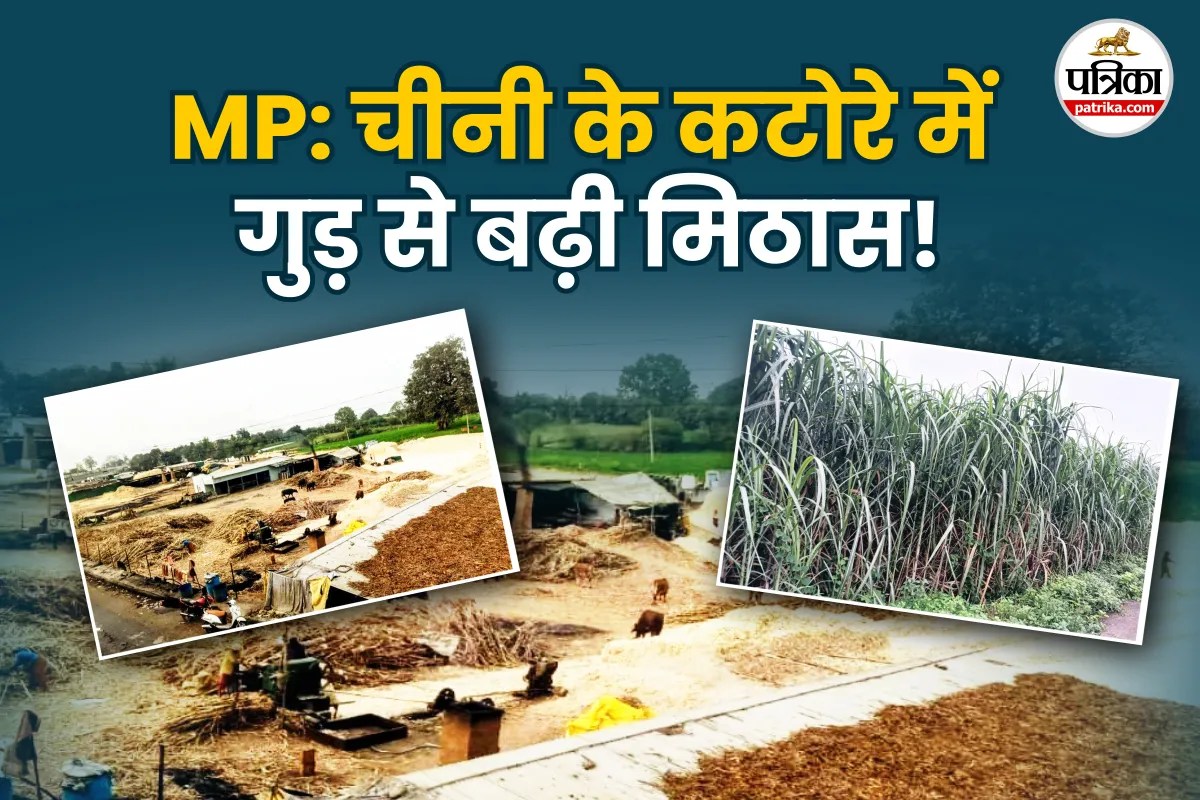
Sugarcane growers in Madhya Pradesh are directing more of their crop to jaggery-making units as delayed payments weaken the appeal of sugar and khandsari mills. Patrika reports that the shift is visible in a district described as the state's “sugar bowl,” where jaggery furnaces have become a major alternative destination for cane.
The central issue is the timing of payment. Some farmers are selling directly to jaggery operators because they need immediate cash for the next cultivation cycle, while payment from mills can take longer. This makes liquidity at the farm level a decisive factor in where harvested cane is delivered, independently of longer-term demand for processed sugar.
Jaggery output moves ahead of sugar
According to figures reported by Patrika, around 3,500-4,000 jaggery units are operating across Madhya Pradesh. Jaggery production this year reached 2.3 million quintals, exceeding reported sugar output of 2 million quintals. The comparison indicates that small and dispersed processors now absorb a substantial share of the state's available cane.
The figures do not establish whether every tonne of jaggery and sugar was produced within the same district or processed under directly comparable conditions. They nevertheless show the scale of the alternative market. Jaggery is no longer only a supplementary outlet for growers: its production volume is reported to be larger than that of sugar, despite the region's established association with mill-based processing.
Liquidity becomes a procurement advantage
For sugar and khandsari mills, the shift creates a procurement problem tied directly to working capital. Cane is perishable and must be moved after harvesting, so buyers able to settle quickly can secure supplies even when larger factories have more formal procurement systems. If mills cannot shorten payment periods, jaggery operators may continue to gain access to cane needed to maintain factory throughput.
For farmers, the decision reflects cash-flow requirements rather than a simple preference between two products. Fast payment helps finance field preparation, inputs and the next planting cycle. For processors and market analysts, the reported production gap is therefore a signal about the local allocation of raw material: mill liquidity is shaping the product mix before sugar-price movements alone determine processing decisions.