Madagascar launches five-year PAPRiz 4 rice value-chain project
Madagascar has launched PAPRiz 4, a five-year project covering rice production, processing and market access in Alaotra-Mangoro and Boeny. The government and JICA-backed initiative will also strengthen producer groups, irrigation management, training and women’s access to finance.
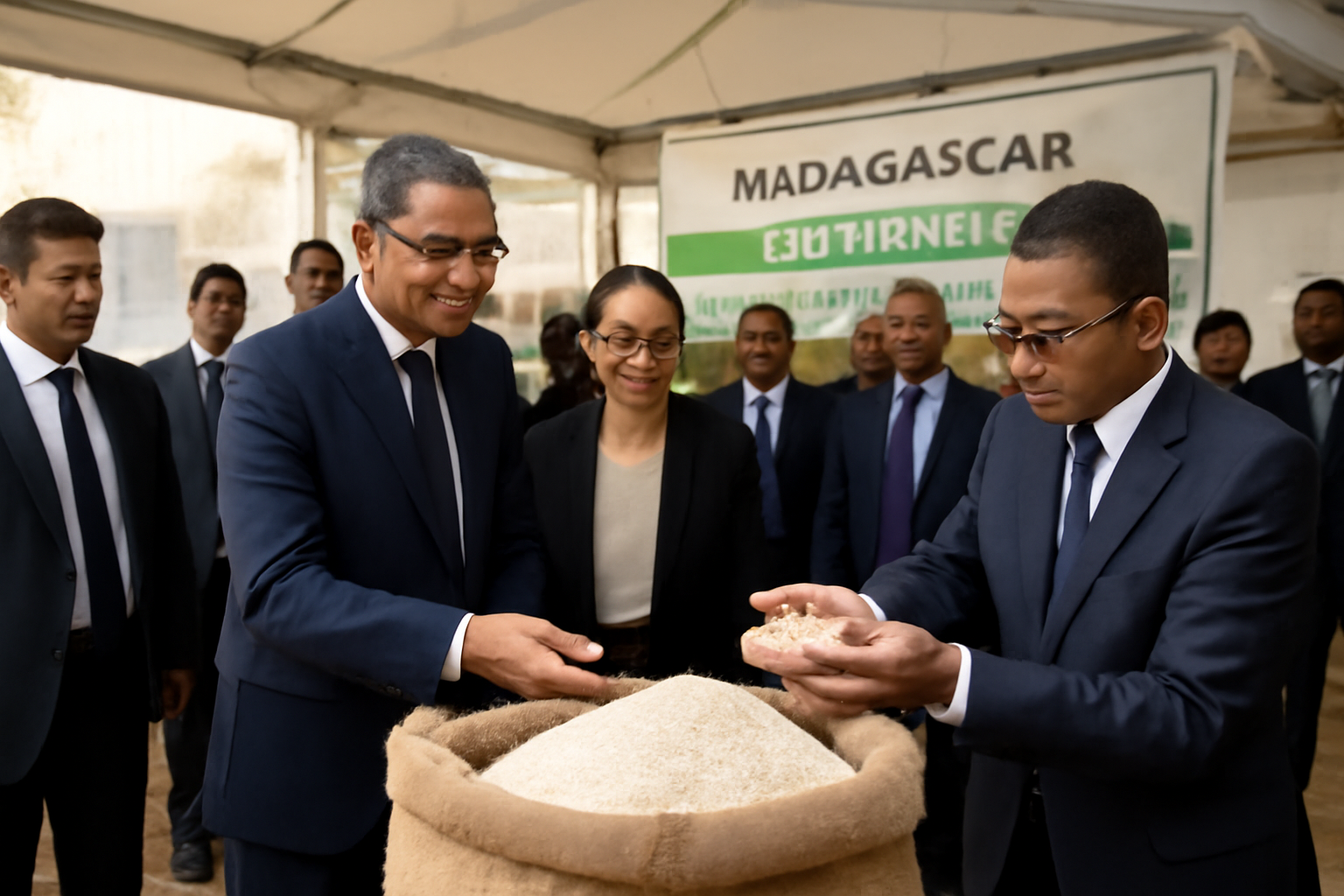
Five-year program targets two producing regions
Madagascar has launched the fourth phase of its Rice Productivity Improvement Project, known as PAPRiz 4, with a broader mandate covering the country’s rice value chain. The five-year program will concentrate its main activities in Alaotra-Mangoro and Boeny, according to Midi Madagasikara and the Ministry of Agriculture and Food Sovereignty.
The Ministry of Agriculture and Food Sovereignty will implement the project with the Ministry of Industrialization and Private Sector Development and support from the Japan International Cooperation Agency, or JICA. A cooperation agreement was signed in Anosy on August 31, 2026, formally opening the implementation phase.
PAPRiz 4 is intended to raise the quantity and quality of domestic rice production while preserving the gains made during the first three phases. Those earlier programs strengthened farmers’ skills and disseminated improved cultivation techniques nationally, Midi Madagasikara reported.
Intervention expands beyond farm yields
The new phase has five priority areas. It will work to improve the quality of rice sold on the domestic market, helping producers obtain greater value from national output. It will also strengthen producer organizations by connecting them with suppliers, processors and markets, while improving cooperative governance, financial management and commercial skills.
Irrigation management is another component. Water Users’ Associations will receive support to operate and maintain hydro-agricultural infrastructure and improve their ability to respond to climate-related pressures. The project will also cooperate with agricultural training institutions, vocational centers and universities, including the Higher School of Agronomic Sciences at the University of Antananarivo.
Women’s participation is included across the program. PAPRiz 4 will seek to increase women’s representation and access to leadership roles in cooperatives and Water Users’ Associations. It also plans to improve their access to financing, including through Madagascar’s Agricultural Development Fund.
Fourth phase builds on a national extension network
The Ministry of Agriculture said the first three phases improved rice productivity, farmer capabilities and the spread of higher-performing cultivation practices. Official figures for PAPRiz 3 show the extension system had grown to more than 400 regional trainers and over 4,000 farmer-trainers working across nearly 2,400 irrigated areas. These areas represented more than 200,000 hectares of rice fields, including 84,000 hectares mobilized during the third phase.
The ministry also reported that beneficiary farmers under PAPRiz 3 reached an average yield of 5 tonnes per hectare. Production of basic and certified seed at FOFIFA stations increased from 15 tonnes in 2020 to 56 tonnes in 2024. These results provide an operating base for PAPRiz 4, although no budget, production target or expected reduction in imports was disclosed in the project announcement.
For Madagascar’s rice market, the decisive change is the extension of support from cultivation into quality control, irrigation, organization, processing relationships and commercialization. If these elements raise the volume of marketable local rice, the program could reduce the need for external supply. The scale of that effect will depend on execution in Alaotra-Mangoro and Boeny and on whether improvements achieved there can be reproduced elsewhere.