Low River Levels Force Kalimantan Coal Barges to Adjust Loads and Schedules
Prolonged dry weather has reduced river flows in Kalimantan, forcing coal barges to adjust cargo volumes and departure schedules. The disruption could slow mine-to-port logistics and make coal deliveries less predictable.
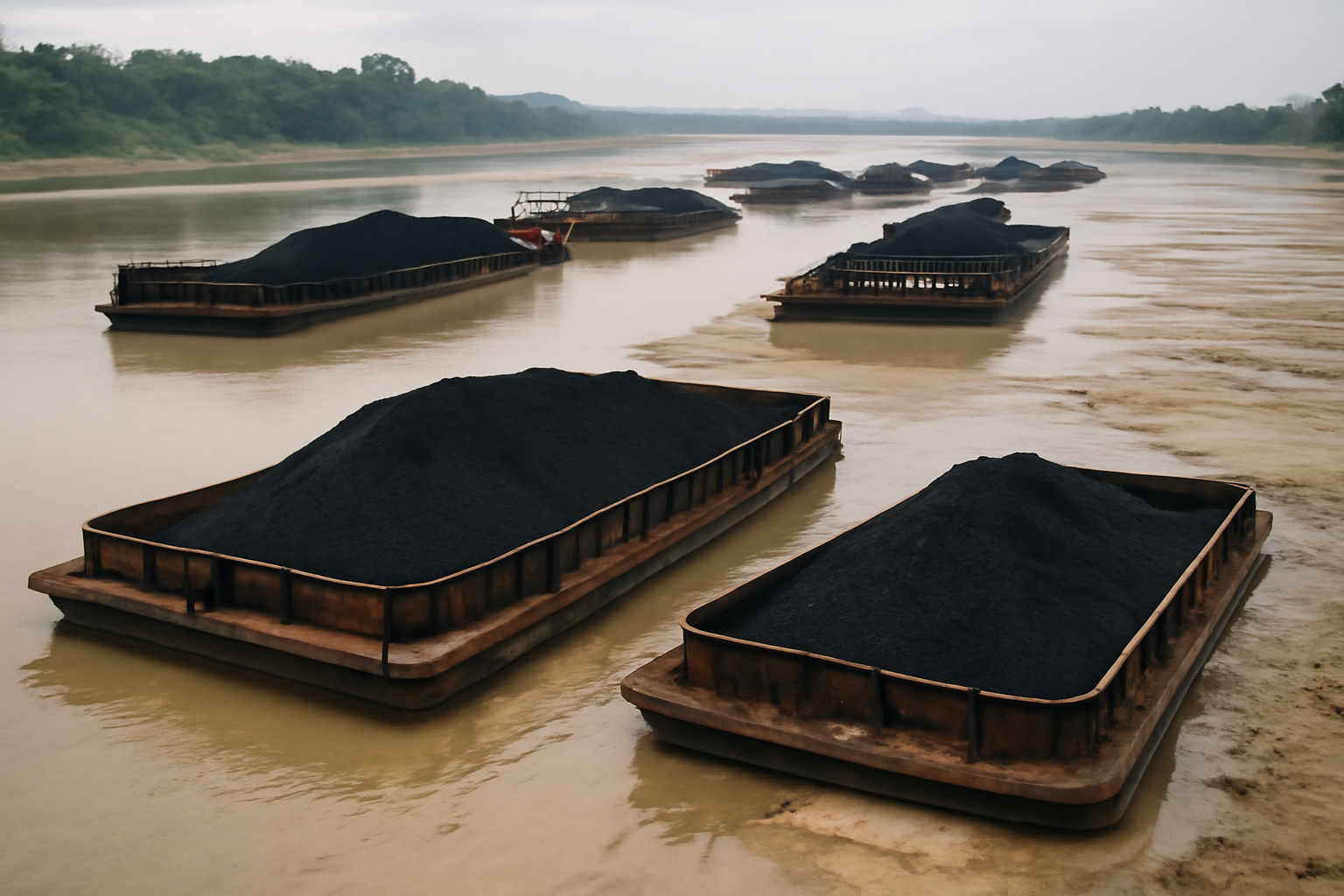
Dry weather constrains inland coal transport
Prolonged dry weather has reduced river flows in Kalimantan, forcing coal barge operators to adjust both cargo loads and departure schedules. The operational changes affect a critical stage in the movement of coal from mining areas to downstream ports and loading points.
Lower water levels reduce the navigable depth available to loaded barges. Operators must therefore match cargo volumes to river conditions rather than loading vessels according to their usual capacity. Departures may also need to be rescheduled around sections of the river that become more difficult to navigate during the dry period.
The immediate consequence is lower transport efficiency. A reduced load means that more barge movements may be required to carry the same quantity of coal, while schedule changes can lengthen the time between mine dispatch and delivery at the port. Neither outcome necessarily stops shipments, but both can make logistics more expensive and less predictable.
Mine-to-port schedules face greater uncertainty
Coal producers depend on coordination between mine output, stockpiles, barge availability and port operations. When river conditions limit barge loading, coal can accumulate upstream if mining continues at the planned rate. Conversely, ports and larger vessels may have to wait if barges arrive later or carry less coal than expected.
The need to revise departure times also complicates fleet planning. Barges and towing vessels that spend longer completing one journey are unavailable for their next assignment. This can tighten effective transport capacity even if the number of vessels in service remains unchanged.
For traders and buyers, the main risk is timing. Cargo commitments may still be fulfilled, but irregular barge arrivals can disrupt the assembly of export parcels and reduce confidence in loading windows. The impact will depend on how long the dry weather persists and how far river levels fall.
Operators balance cargo volume and navigational risk
Loading decisions require a trade-off between moving as much coal as possible and maintaining sufficient clearance for safe navigation. Carrying less cargo protects access through shallow sections, but it raises the transport requirement per unit of coal. Waiting for more favorable conditions can preserve load size but introduces schedule delays.
Companies with flexible stockpile space, available barges and adaptable port schedules will be better placed to absorb the disruption. Operators with tightly sequenced deliveries have less room to respond because a delay at one stage can affect mine dispatch, river transport and vessel loading in succession.
The situation highlights the exposure of Kalimantan’s coal supply chain to inland water conditions. River transport remains the immediate constraint described in the available information; no production losses, shipment volumes, prices or closure dates have been reported. Market participants will therefore be watching navigable depth, barge loading decisions and departure frequency for signs that a logistical adjustment is developing into a broader supply disruption.