Low-priced onion imports push Spanish growers to destroy crops
Spanish onion growers are destroying or abandoning crops after farmgate prices fell below harvesting and production costs. Imports rose nearly 18% between January and April 2026, with Peru and Chile accounting for much of the additional volume.
Farmgate prices fall below harvesting costs
Spanish onion growers are destroying crops, leaving them unharvested or giving them away after farmgate prices collapsed below production costs. La Gaceta reports that farmers blame rising imports and pressure from processors and commercial operators, which they say are replacing domestic onions with supplies from countries outside the European Union.
Ava-Asaja estimates losses in the Valencian Community, one of Spain’s principal onion-producing regions, at €8 million. According to the agricultural association, buyers have offered growers €0.08 per kilogram even though production costs exceed €0.25 per kilogram. Near the end of the season, prices reportedly dropped as low as €0.03 per kilogram, a level that did not cover the cost of harvesting. Some farmers consequently used tractors to crush onions in their fields, while others gave the crop away to avoid further expenses.
Imports rise ahead of the domestic early crop
Spanish onion imports increased by nearly 18% between January and April 2026 compared with the same period a year earlier, according to Ministry of Economy, Trade and Enterprise figures compiled by DataComex. The increase occurred immediately before the marketing period for Spain’s early domestic onion crop, intensifying competition as local supplies entered the market.
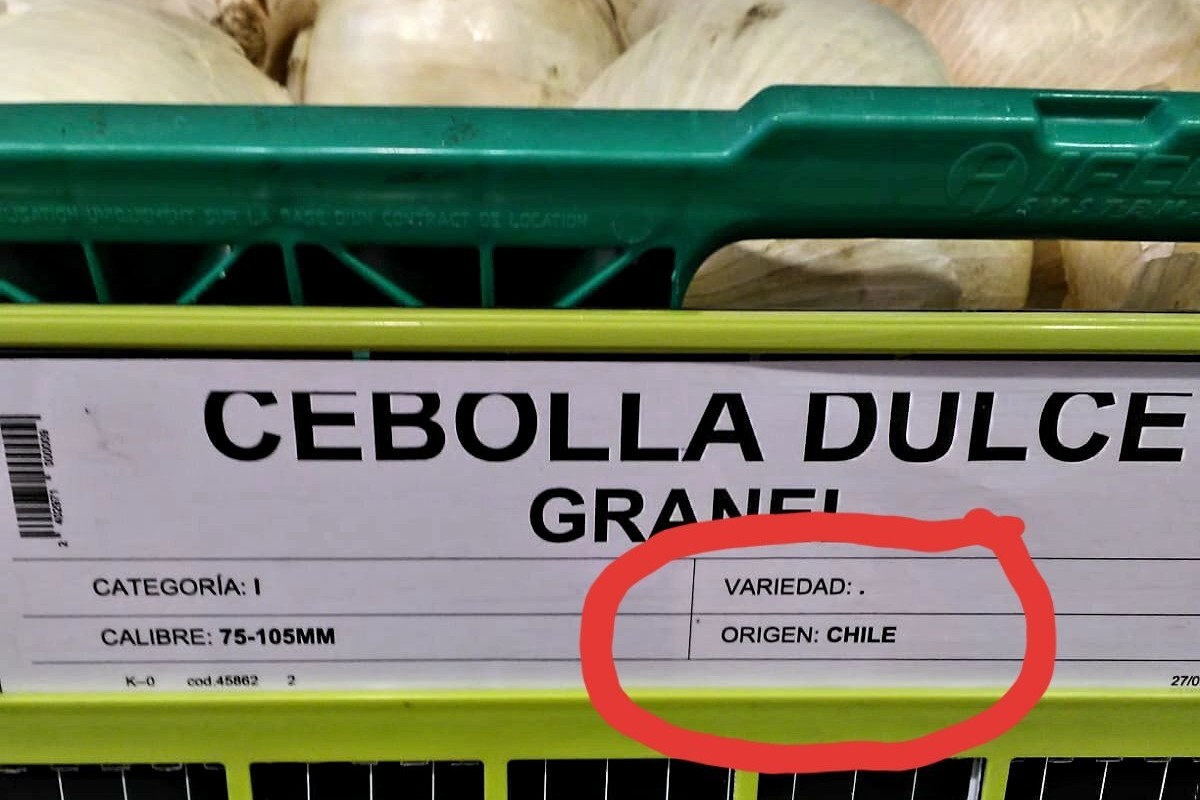
Most of the additional volume came from outside the European Union. Seven of Spain’s ten largest onion suppliers are non-EU countries. Peru and Chile recorded the largest increases in shipments to Spain, adding more than 5,700 tonnes and almost 4,800 tonnes respectively. The source material does not provide Spain’s total import volume or identify the other five non-EU suppliers among the top ten.
Growers challenge purchasing practices
Farm organizations argue that imported supplies are depressing domestic prices and creating competition between producers operating under different environmental, labor and phytosanitary requirements. They also contend that offers below production cost run against the principle underpinning Spain’s Food Chain Law, which holds that products should not be sold below cost. The report does not establish whether authorities have formally determined that any specific contract breached the law.
Ava-Asaja president Cristóbal Aguado said growers had already absorbed high production costs, elevated temperatures and pest pressure before bringing in a crop they could not sell profitably. In comments reported by El Debate, he called for priority to be given to domestic and locally produced onions, warning that more farmland would be abandoned if current competitive conditions continued. For growers, the immediate choice is whether harvesting at prevailing prices creates a larger loss than destroying the crop. For processors and traders, the widening gap between imported availability and domestic production costs raises the prospect of further tension over contracts and sourcing practices.