Logika Moloka Completes 3,500-Tonne Milk Powder Plant in Kazan for About 1 Billion Rubles
Logika Moloka is finishing construction of a milk powder facility at the Edelweiss site in Kazan with an annual capacity of 3,500 tonnes and investment of about 1 billion rubles, KazanFirst reported. A test launch is scheduled for October 2026. The plant enters a market where domestic powder demand is falling but export revenue rose 1.5 times year on year to $20 million over five months.
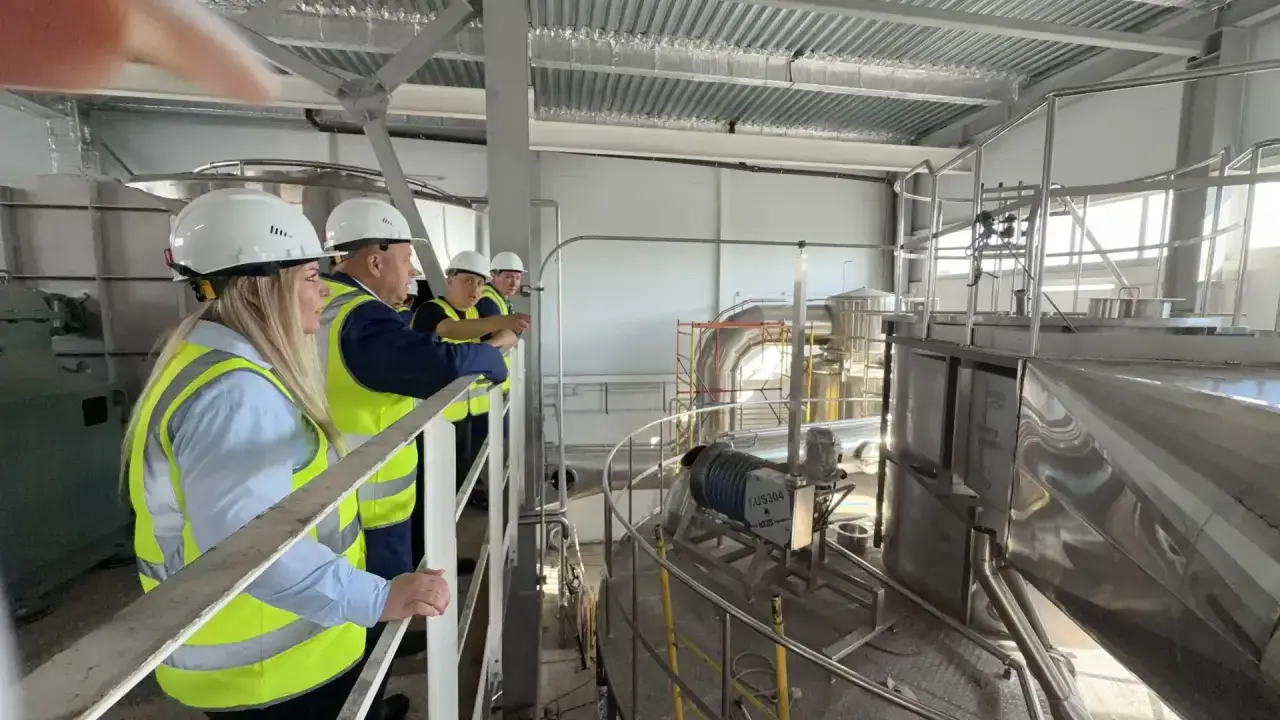
Logika Moloka is completing construction of a milk powder facility at the Edelweiss production site in Kazan, Republic of Tatarstan, with an annual capacity of 3,500 tonnes and total investment of about 1 billion rubles, KazanFirst reported. A test launch of the production line is scheduled for October 2026. The project is part of the company's investment programme.
A billion-ruble drying line
The main production building has been erected and installation of a vacuum evaporation unit for gentle milk concentration is under way, according to KazanFirst. Packaging areas and a boiler house with a gas burner for energy-efficient drying are also being prepared. Natalia Grak, director of the Edelweiss plant, said the company is completing installation of the process lines and has begun commissioning work, and that preparation for the October test launch is on schedule. She said the new capacity will allow the company both to raise output volumes and to provide reliable support for dairy farming in the republic.
Domestic demand is falling
The market the plant is entering is difficult. Artem Belov, head of Soyuzmoloko, told KazanFirst that domestic demand from industrial buyers is declining, above all among confectioners, as output of products containing milk powder falls and as dry whey partially replaces milk powder in formulations. Expert estimates he cited show consumption of whole milk powder down 16% in the first half of the year, skimmed milk powder down 5% and dry whey down 4%. Production followed the same path: whole milk powder output fell 25% over seven months, skimmed milk powder matched last year's level and dry whey rose 3%. Stronger competition from Belarusian imports and high milk powder stocks at the start of the year added further pressure.
Inventories have since normalised. By the beginning of August, skimmed milk powder stocks were 14% below the same period a year earlier, whole milk powder stocks 24% lower and dry whey stocks 1% lower, Belov said, attributing much of the drawdown to the development of the export channel.
Exports as the release valve
Lenar Garipov, first deputy minister of agriculture and food of Tatarstan, described milk powder as a profitable export product. Soyuzmoloko data show that revenue from milk powder exports reached $20 million over five months of this year, 1.5 times higher year on year. Belov linked the growth to high world prices for skimmed milk powder and whey: the Global Dairy Trade world price index rose 41% over the year. Skimmed milk powder exports more than doubled in 2026 and whey exports rose by more than 50%.
Figures from the federal centre Agroexport put the physical volume of skimmed milk powder exports above 6,000 tonnes for the five months of 2026. The top five buyers were:
- Algeria - 1,700 tonnes
- Kazakhstan - over 1,500 tonnes
- Armenia - over 1,400 tonnes
- Egypt - about 400 tonnes
- Uzbekistan - around 300 tonnes
Russia shipped skimmed milk powder to Afghanistan for the first time in 2026 and resumed exports to Georgia and Tajikistan. Belov said exchange-traded dairy categories, principally powders, allow suppliers to widen their geography into the Middle East, Southeast Asia and North Africa, and Soyuzmoloko forecasts that dairy exports may grow by at least 15% in volume terms this year if logistics support measures are maintained.
Other market participants are more cautious. Denis Pirogov, head of the Union of Milk Producers of Tatarstan, said the export potential exists but the domestic market remains the main sales channel, and external conditions shift with supply from New Zealand, the traditional world leader in dairy powders, and from the European Union, as well as with the ruble exchange rate. Adel Khairullin, chief executive of the Krasny Vostok holding, pointed to product quality: international buyers typically demand more than Russian GOST regulations on solubility and sediment index, and older plants cannot always deliver the required grinding quality and drying, alongside microbiology and protein heat stability parameters.
The raw milk balance
Raw milk purchase prices have fallen by more than 20%, to 33.23 rubles per kg, while raw milk output in Tatarstan continues to grow 6-7% a year and processing capacity often lags the expanding raw material base, so summer surpluses traditionally weigh on prices. Pirogov called skimmed milk powder a highly milk-intensive product, requiring nine tonnes of skim milk per tonne of powder, which allows surplus raw material to be placed into long-term storage and used when the market is short; drying also yields fats, cream or butter, for own production or sale. Khairullin noted that powders were historically created as a seasonal balancing tool, when more than 60% of milk was produced in summer. Total powdered dairy output in Tatarstan is about 18,000-20,000 tonnes a year across whole milk powder, skimmed milk powder and whey.