Local rice at Rp16,000 per kilogram loses Nunukan market to cheaper Malaysian supply
Rice produced around the Indonesian border regency of Nunukan has reached Rp16,000 per kilogram, while rice from Malaysia sells for about Rp3,000 less, according to regional.kompas.com. Malaysian supply now accounts for the bulk of trade in the local market, though the report gives no volumes or trade channel.
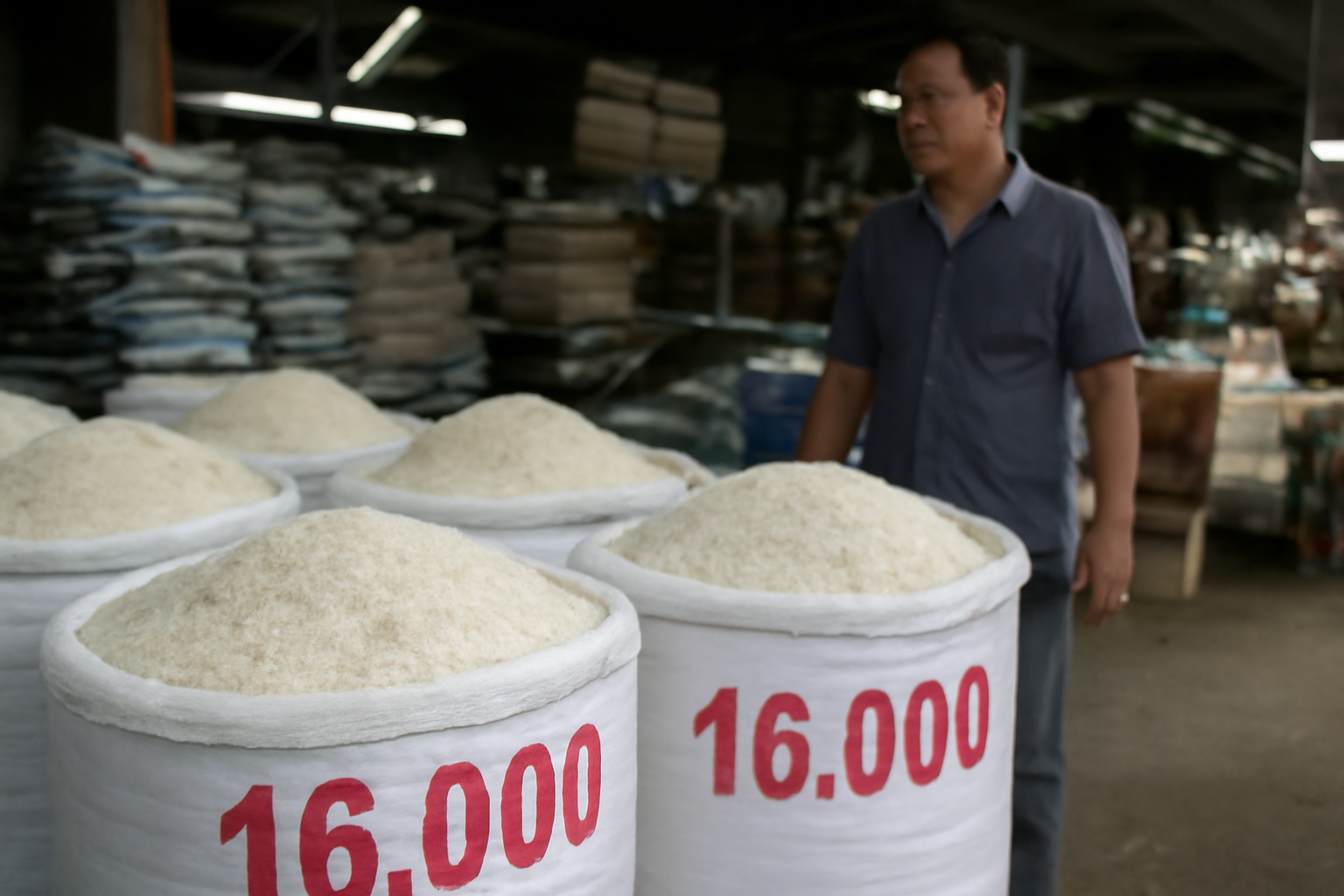
Local rice at Rp16,000 a kilogram loses ground to Malaysian supply
Rice produced locally around Nunukan, a regency in Indonesia's North Kalimantan province on the frontier with Malaysia, has reached Rp16,000 per kilogram, while rice brought in from the Malaysian side sells for about Rp3,000 less, according to regional.kompas.com. That places the Malaysian product at roughly Rp13,000 per kilogram — close to 19 percent below the local price — and it has taken over the bulk of trade in the Nunukan market.
The report treats the shift as a direct consumer response. Rice is bought weekly in fixed quantities, demand barely moves with price, and a difference of Rp3,000 on every kilogram is large enough to redirect purchases inside a single market. No volume figures, varieties or price history accompany the report, so the scale of the displacement cannot be measured from the material available. The direction is unambiguous: local rice is the expensive option in its own district, and Malaysian rice is the volume leader.
A border market with its own price logic
Nunukan sits across a narrow stretch of water from the Malaysian state of Sabah, and its retail basket has long been shaped more by that proximity than by conditions in Java or Sulawesi. Freight is the standard explanation for a gap of this kind. Rice from Indonesia's surplus regions arrives after a long sea leg with handling and storage at both ends, and those costs are embedded in the Rp16,000 shelf price. Supplies from across the border cover a fraction of the distance, which is enough on its own to account for a spread of this size without assuming any difference in farm-gate costs.
For producers and millers this is a commercial question rather than a statistical curiosity. The Rp3,000 spread decides which milling and distribution chain earns the margin in a regency of consumers who will buy the cheaper sack. Border districts are poor proxies for national rice prices, but they are where domestic supply is most easily displaced, and that displacement tends to be quiet: no mill closes, volumes simply stop arriving.
What the report leaves open
- Volumes — no figure is given for how much Malaysian rice enters Nunukan, so the share of demand lost by domestic supply cannot be sized.
- Channel — the report does not specify whether the rice arrives through formal cross-border trade arrangements or informal traffic.
- Duration — there is no indication of how long local rice has traded at Rp16,000, or whether the Rp3,000 spread is seasonal or structural.
What to watch
Two responses are available and they lead to different outcomes. Lowering the delivered cost of domestic rice into Nunukan — through freight support, closer sourcing or larger stocks held locally — attacks the gap directly and leaves the choice with consumers. Restricting the inflow lifts the local price without addressing why it is high, and in a border economy it tends to move trade rather than stop it.
The useful signal for analysts is whether the Rp16,000 level holds once the current harvest cycle turns. A price that stays there while Malaysian rice remains near Rp13,000 points to a cost structure rather than a temporary shortage, and it would make Nunukan a durable outlet for Malaysian supply rather than an occasional one. Volume, channel and duration data would settle the question, and none of it is in the reporting so far.