Lithuania Prepares New Support Round for Replacing Polluting Boilers with Heat Pumps
Lithuania is preparing a new support stage for households replacing polluting boilers with efficient heating equipment. A report published by 15min says applicants may recover up to 90% of a heat pump’s price, although the supplied material does not specify the reimbursement formula, budget or application dates.
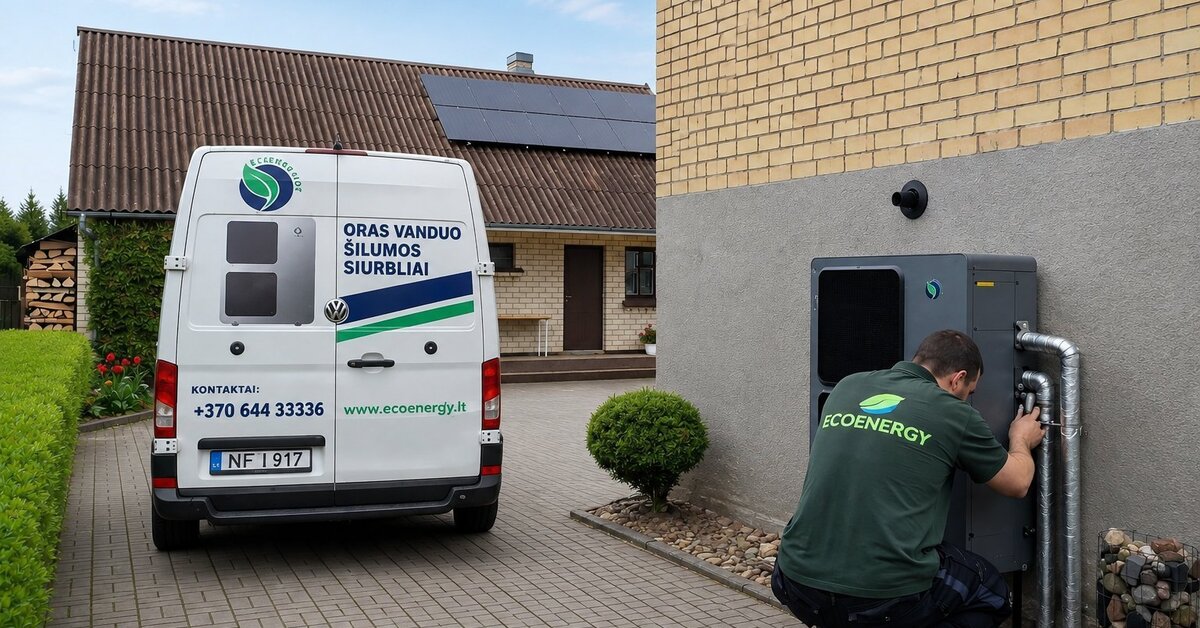
New support stage approaches
Lithuania is preparing another support stage for residents replacing polluting boilers with more efficient heating equipment, according to a report published by 15min. The program is administered by the Lithuanian Energy Agency, known as LEA, and is expected to maintain household interest in air-to-water heat pumps. The report says residents can recover up to 90% of a heat pump’s price, but the supplied material does not provide the reimbursement formula, total budget, opening date or application deadline.
Individuals may apply when replacing boilers that use firewood, pellets, peat or sawdust briquettes, natural gas, heating diesel, coal or other polluting fuels. Eligible applicants must own a residential house, garden house or residential apartment. The article also identifies a new practical advantage: recipients are not required to remove their existing boiler, allowing households to retain an alternative heating source alongside an air-to-water system.
That provision could broaden the addressable market, particularly among owners of older homes who are reluctant to depend entirely on electric heating. It also lowers the operational risk perceived by households that want backup capacity during cold weather or power interruptions. However, prospective applicants will need the formal LEA conditions to establish which equipment and costs qualify and how the advertised reimbursement level will be calculated.
Air-to-water systems target older housing
Air-to-water heat pumps can supply underfloor heating, radiators and domestic hot water through one system. The source material says the latest equipment can prepare hot water at temperatures of up to +75°C. That capability makes the technology relevant not only to new or renovated properties with low-temperature heating, but also to older buildings that continue to rely on radiators.
Equipment performance will still depend heavily on building conditions. The report highlights insulation as a central factor in heating efficiency and recommends smart controls for precise temperature management. Filters require periodic cleaning, while the broader system should be inspected and serviced by specialists. For buyers, the cost of installation and maintenance therefore remains part of the investment calculation even when public support substantially reduces the initial equipment price.
Gintautas Liutkus, head of Ecoenergija.lt, told 15min that customers value avoiding firewood preparation, chimney cleaning, ash and the repeated loading of wood or briquettes. He also pointed to remote controls and stable temperature settings as practical benefits. His company advises buyers on equipment selection, installation and compensation documentation, placing service providers in an important position between households, manufacturers and the agency administering support.
Financing may reinforce demand
Private financing is being marketed alongside the public program. According to the article, a new instalment option allows €1,000 to be paid over 10 months in payments of €100 without an increase in the purchase price. This can reduce the immediate cash requirement while a household waits for compensation, although the material does not state whether those terms apply to every customer or every heat-pump model.
For equipment suppliers and installers, another LEA stage could sustain orders ahead of the heating season. Demand is likely to favour companies able to combine product selection, installation, paperwork and after-sales service. The option to keep an existing boiler may also accelerate adoption in the renovation segment, where hybrid arrangements can be easier to accept than a complete and immediate change of heating source.
The central uncertainties are now administrative rather than technical. The report signals support of up to 90%, but gives no detailed schedule or funding envelope. Households and market participants will therefore need to verify the official rules before committing to purchases. Once those conditions are published, the reimbursement methodology and eligible equipment list will determine how widely the program translates into new heat-pump installations.