Lindt raises chocolate prices 12% as first-half volumes decline
Lindt & Sprüngli raised chocolate prices by 12% in the first half of 2026 and reported higher sales despite lower volumes. The company’s results show how pricing is helping chocolate manufacturers offset pressure from cocoa costs.
Higher prices offset lower volumes
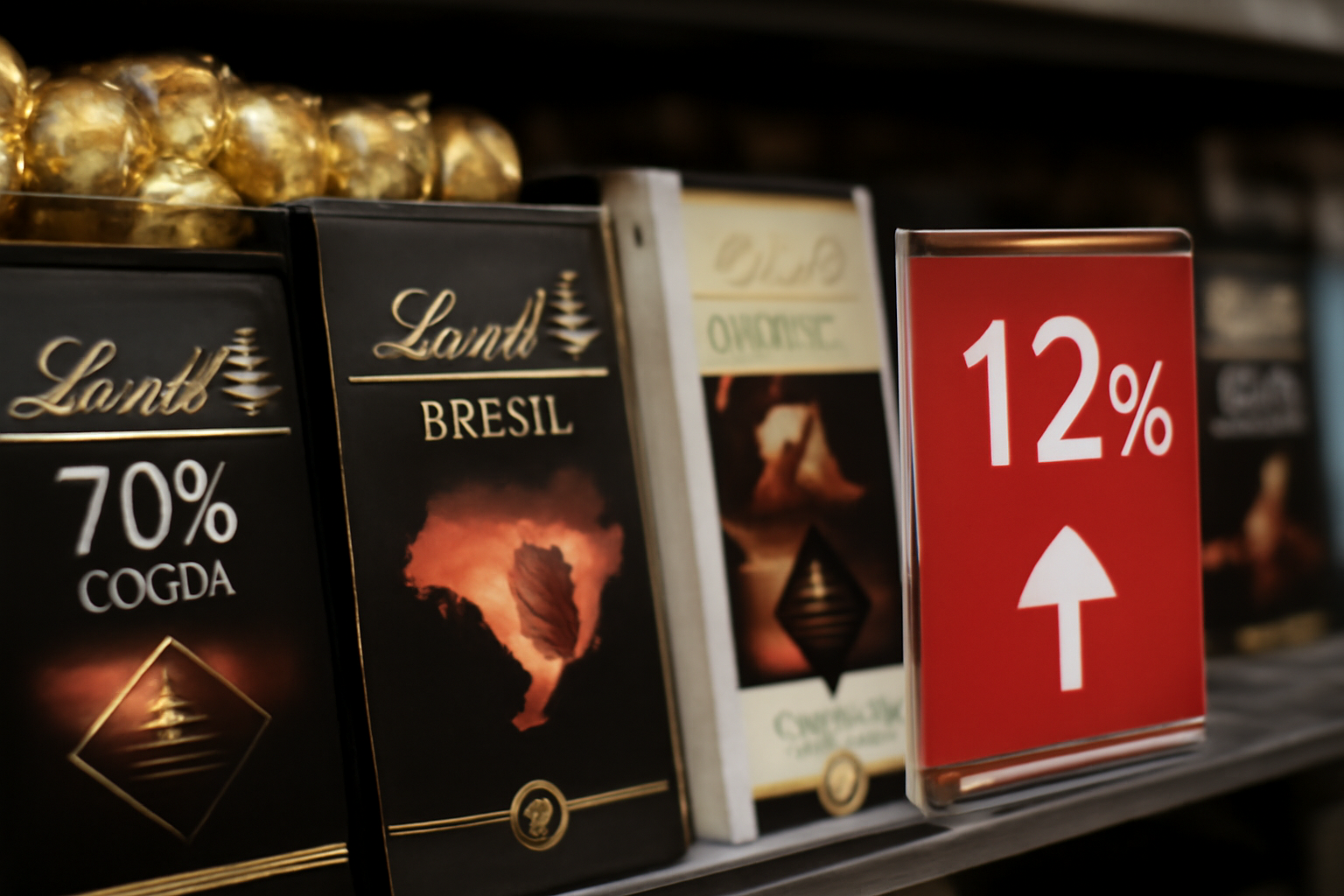
Swiss chocolate manufacturer Lindt & Sprüngli increased its prices by 12% in the first half of 2026, allowing the company to raise sales even as the volume of chocolate sold declined. The result illustrates the growing importance of pricing for chocolate producers facing pressure from cocoa costs.
The available company information says Lindt achieved organic sales growth during the period. It does not provide the sales total, the rate of organic growth or the size of the volume contraction. The figures nevertheless establish a clear split between value and physical demand: customers spent more on Lindt products overall, while purchasing a smaller quantity.
Profit and sales claims require distinction
The supplied reporting presents two different claims about the scale of Lindt’s performance. The working account says the company doubled profit, while the German headline says higher prices doubled sales. Its accompanying description states only that sales increased despite declining volumes. No absolute profit or revenue figures are provided, so the scale and basis of either reported doubling cannot be independently assessed from the available material.
For industry professionals, that distinction matters. Revenue growth generated through price increases does not necessarily indicate stronger consumer demand, while profit growth can reflect pricing, costs and the comparison with the previous period. What can be stated from the supplied information is that the 12% price increase was sufficient to offset the negative sales effect of lower volumes during the first half.
A test of consumer tolerance
Lindt’s performance reflects a central challenge for branded chocolate manufacturers: passing higher cocoa-related costs to consumers without causing an excessive decline in demand. The first-half figures suggest that the company protected the value of its sales, but the fall in volumes shows that buyers responded to the higher price level by purchasing less.
This creates different implications across the market. Producers and processors gain evidence that established brands can recover at least part of their cost pressure through pricing. Retailers must manage higher shelf prices alongside weaker unit movement. Cocoa suppliers and traders, meanwhile, need to distinguish between sales growth measured in money and underlying demand measured in physical product.
Pricing remains central to the outlook
The sustainability of Lindt’s approach will depend on whether further price increases are required and how consumers react over a longer period. The supplied material contains no forecast, country-level breakdown or indication of whether the volume decline was concentrated in particular products or markets.
Even with those limitations, the first-half result offers a concise signal for the chocolate sector. Lindt raised prices by 12%, generated higher sales and accepted lower volumes. That combination supports financial performance in the short term, but it also places greater weight on brand strength and consumer willingness to keep paying more for chocolate.