Legal restrictions keep Port wine out of ViniPortugal’s international campaigns
ViniPortugal cannot include Port wine in its international promotion campaigns under Portugal’s current legal framework. The restriction comes as global wine consumption falls, inventories rise and Douro producers face weaker grape prices.
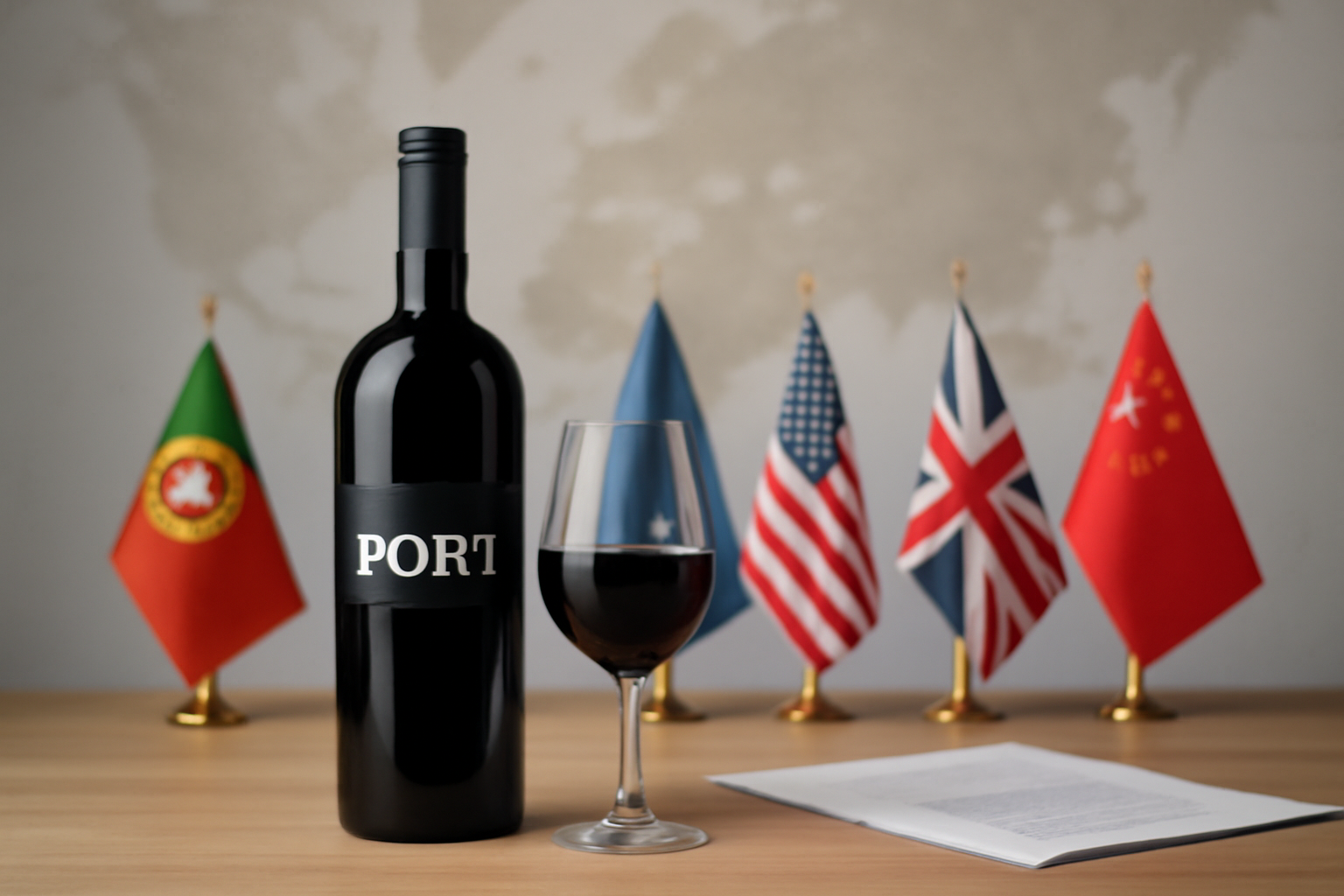
Portugal’s best-known wine excluded from campaigns
Portugal’s current legal framework prevents ViniPortugal from promoting Port wine internationally through its Wines of Portugal campaigns, according to the organization’s president, Frederico Falcão. He told Dinheiro Vivo that the exclusion is imposed by national legislation rather than chosen as part of ViniPortugal’s commercial strategy.
The restriction leaves one of Portugal’s most internationally recognized wine categories outside a wider national promotion program. Falcão said incorporating Port into the Wines of Portugal strategy could strengthen the global image of Portuguese wine, create promotional synergies and increase the impact of campaigns across the industry.
ViniPortugal’s mandate is to increase the value of Portuguese wine in foreign markets. Its approach focuses on higher-priced segments, selected markets, qualified sales channels and greater recognition of origin. The organization does not set grape prices or regulate production, although Falcão said it can advocate measures that distribute value more evenly along the supply chain.
Consumption falls while stocks accumulate
The legal constraint has become more significant as the wine market struggles with declining demand and persistent surpluses. Data cited by Dinheiro Vivo showed that 717 million hectoliters of wine accumulated worldwide between 2000 and 2023. That volume was equivalent to 37 months of global consumption without the production of any additional grapes.
Global wine consumption fell 2.7% in 2025 and reached its lowest level since 1957, according to the figures reported by the publication. Port producers said consumption of their category had declined by at least one-third compared with 20 or 30 years earlier. The contraction has weighed heavily on grape prices in the Douro, where growers are facing historically low levels.
Lower output has not resolved the imbalance. Wine production in the Douro fell 40% in 2025, but stocks continued to increase. The combination of weaker demand, accumulated inventories and depressed grape prices puts pressure on growers, wineries and merchants, while limiting the sector’s ability to restore margins through production cuts alone.
Promotion budget targets higher-value markets
ViniPortugal has an approved promotional budget of €8.3 million for 2026. It carries out more than 100 activities annually and works with more than 500 Portuguese economic operators. The budget for the following year will be presented after planning, coordination with industry organizations and approval by the relevant governing bodies.
Falcão said the results of promotion cannot be measured only through tastings, attendance, commercial contacts or media references. Producer margins also depend on supply-chain contracts, production costs, volumes, company structures and regional regulation. ViniPortugal therefore concentrates on helping producers enter new sales channels and improve the market positioning of Portuguese wine.
Portugal was the only country to increase wine export volume in 2025 and recorded the smallest decline in export value, according to Falcão. Even so, he argued that Portugal cannot compete sustainably by offering the lowest price because producers are relatively small, average vineyard productivity is low, costs are rising and the industry remains fragmented.
Promotion alone cannot eliminate excess stocks. Falcão identified demand forecasting, production discipline, crisis-management instruments, product innovation and coordination among regional organizations, producers, merchants and public authorities as necessary measures. Bringing Port wine into the national campaign would widen the promotional toolkit, but doing so will require a change to the legal framework.