Louis Dreyfus plans 4,000-tonne-a-day sunflower crushing plant in Argentina
Louis Dreyfus Company has announced a new sunflower crushing complex in Bahía Blanca, Argentina. The plant is designed to process 4,000 tonnes per day and is expected to rank among the world’s largest sunflower processing facilities.
LDC announces large-scale sunflower investment
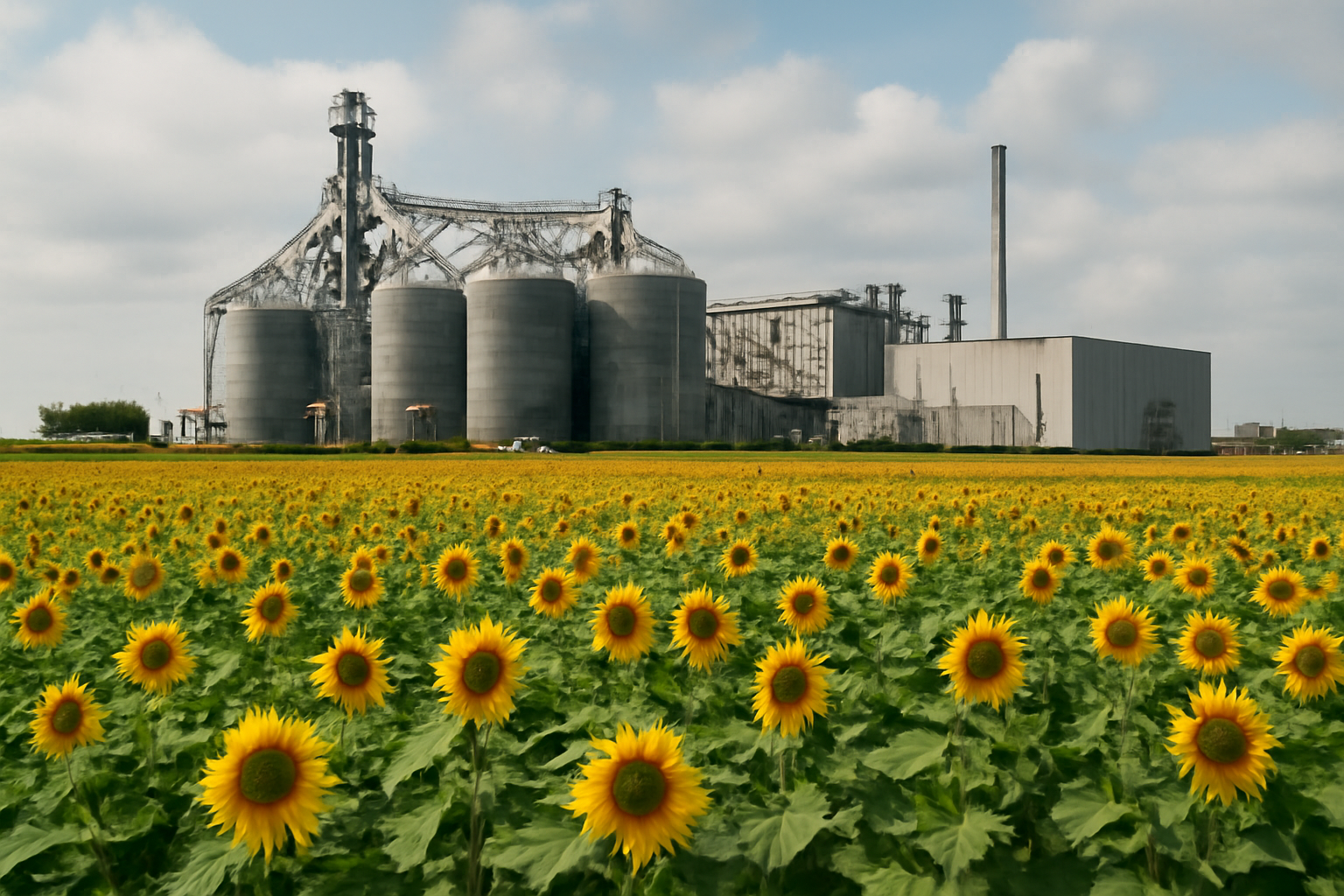
Louis Dreyfus Company has announced plans to build a sunflower crushing complex in Bahía Blanca, Argentina, with capacity to process 4,000 tonnes of sunflower per day. The project is being presented as one of the largest sunflower processing plants in the world and represents a major addition to Argentina’s oilseed industry.
The stated daily capacity gives producers, processors and traders a clear measure of the project’s scale. Once operating at its designed level, the complex would require a substantial and regular supply of sunflower seed. It would also create a large new processing outlet for the crop, linking agricultural production more closely with the manufacture of sunflower oil and processing by-products.
Bahía Blanca gains a new processing role
The choice of Bahía Blanca places the investment in an Argentine location already associated with agricultural commerce. The announcement does not provide a construction timetable, start-up date, investment value or expected annual output. It also does not specify where LDC expects to source the seed or where the resulting products will be sold.
Those unanswered questions will determine the project’s practical impact. A plant rated at 4,000 tonnes per day can influence competition for available sunflower seed, particularly when supplies are limited. Producers may gain another potential buyer, while existing processors will have to account for substantial new crushing capacity when planning procurement and plant utilisation.
The investment could also affect decisions made before the crop reaches the market. Farmers and commercial partners will assess whether the new outlet offers sufficient demand visibility to support sunflower planting, storage and delivery arrangements. Traders will focus on the timing of commissioning and the speed at which the plant approaches full capacity, because announced capacity and actual throughput can differ during the start-up period.
More domestic processing capacity
Crushing sunflower seed converts a primary agricultural commodity into oil and residual material used in downstream markets. Adding capacity therefore expands Argentina’s ability to process the crop domestically rather than market only the unprocessed seed. The commercial effect will depend on operating rates, seed availability and demand for the plant’s output.
For LDC, the project adds a large industrial asset to its agricultural processing activities. For Argentina’s sunflower chain, it creates the prospect of a new demand centre with a clearly stated daily requirement. The facility’s scale may reinforce links among growers, storage operators, transport providers, crushers and buyers of sunflower products, although the announcement does not give details of supply contracts or logistics arrangements.
Market participants await project details
The next important disclosures will be the construction schedule, commissioning target and capital cost. Industry participants will also need information about storage, logistics and the product mix before they can fully assess the complex’s effect on regional seed values and processing economics.
For now, the central fact is the size of the planned operation: 4,000 tonnes of sunflower per day in Bahía Blanca. If delivered and utilised at scale, the complex would become a significant new component of Argentina’s oilseed processing base and a major source of demand for the country’s sunflower supply chain.