Lampung Project Targets 500,000 Tonnes of Emissions Cuts at Tapioca Plants
PT ESGIN Global Partners has placed 23 tapioca factories in Lampung in an initial pipeline for projects targeting an estimated 500,000 tonnes of cumulative CO₂e reductions. The plan focuses on capturing, destroying or using methane generated by organic-rich wastewater, but verified reductions and carbon-credit volumes remain subject to feasibility studies and regulatory approval.
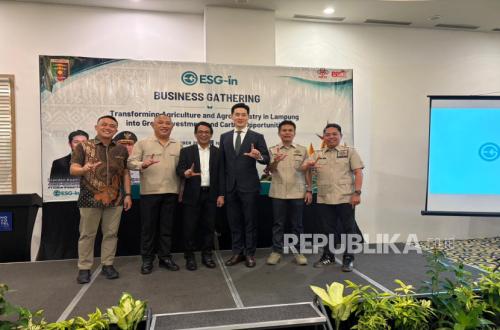
Twenty-three factories enter initial project pipeline
PT ESGIN Global Partners is preparing wastewater and methane-reduction projects across 23 tapioca factories in Lampung, Indonesia, with an estimated potential to cut cumulative emissions by about 500,000 tonnes of carbon dioxide equivalent.
According to Republika, the factories belong to the Indonesian Tapioca Flour Entrepreneurs Association, known as PPTTI, and form the initial pipeline for the proposed program. The emissions opportunity is concentrated in methane released during the treatment of wastewater from tapioca processing.
Tapioca wastewater contains high levels of organic material. When it is treated under anaerobic conditions, that material can generate methane, a greenhouse gas. ESGIN plans to deploy technology for methane capture, destruction and utilization. Depending on the configuration selected for each project, captured gas could also be used as a renewable energy source.
The initiative would address an environmental liability associated with starch production while potentially giving participating processors access to green financing and carbon markets. ESGIN chief executive Brandon Keam said the company aims to connect Lampung’s agricultural and agro-industrial base with low-carbon technology, green investment and carbon-market mechanisms, creating economic value for industry, farmers and the region.
Carbon-credit potential remains conditional
The stated 500,000-tonne reduction is an early estimate rather than a verified project outcome. Republika reported that the volume of eligible emissions reductions, and therefore the number of carbon credits that could eventually be issued, can only be established after technical and regulatory work is completed.
Required steps include feasibility studies, baseline setting, selection of an appropriate carbon methodology, monitoring, validation, verification and registration. The projects must also comply with applicable regulations before implementation and commercialization can proceed.
ESGIN intends to integrate the installations with digital monitoring, reporting and verification systems, or Digital MRV. The wider development process will include carbon accounting, technology assessment, data validation and the design of an investment structure. These elements will be important for demonstrating that reductions are measurable, additional and suitable for recognition in carbon markets.
For tapioca processors, the technical choice will determine whether methane is simply destroyed or converted into usable energy. Utilization could reduce dependence on other energy sources at factory level, although the source provided no investment cost, construction schedule, individual plant capacity or projected energy output.
Biochar and rice projects broaden Lampung strategy
ESGIN is also exploring emissions projects involving livestock waste, rice straw and paddy cultivation. Together with PT Juang Jaya Abdi Alam, the company is studying the conversion of cattle manure and rice-straw biomass into biochar.
Based on a cattle population of about 20,000 animals, the collaboration is targeting biochar production capacity of up to approximately 30,000 tonnes a year. Final capacity will depend on feasibility work, the availability and characteristics of feedstock, the chosen technology and product-quality testing.
The biochar is intended for use as a soil amendment to support soil quality and more sustainable farming practices. ESGIN will also assess whether the activity can qualify as a carbon-removal project, taking account of carbon-accounting methodology, storage durability, Digital MRV, validation, verification and relevant standards.
Separately, ESGIN has discussed the Alternate Wetting and Drying method with the Lampung provincial government. The approach controls periods of flooding and drying in rice fields, potentially improving water-use efficiency and reducing methane emissions. Any resulting carbon project would still need to meet requirements covering baselines, additionality, methodology, monitoring and regulation.
Taken together, the proposals would link tapioca processors, livestock operators and rice farmers with technology providers, financial institutions, investors and carbon-market participants. The immediate focus, however, remains project preparation: validating the available data and establishing whether the estimated emissions reductions can be converted into technically viable and verifiable investments.