Lactalis Puts €7 Million into Castilla-La Mancha Plants, Employs 944 in the Region
Lactalis closed 2025 with more than €7 million invested in its Villarrobledo and Marchamalo plants and over €14 million in purchases from suppliers in Castilla-La Mancha. The group collected more than 28 million litres of sheep and cow milk from 156 farms and employs 944 people in the region. A biomass plant worth over €6 million will replace natural gas at the Albacete cheese site.
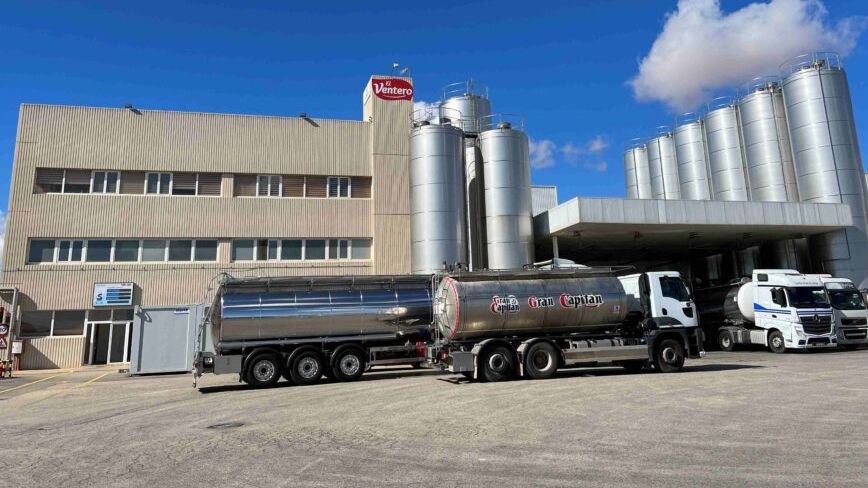
The dairy group Lactalis closed 2025 with more than €7 million invested in its two industrial sites in Castilla-La Mancha and more than €14 million in purchases from suppliers based in the region, according to the company's Corporate Social Responsibility report as reported by El Español. The spending was aimed at efficiency, competitiveness and sustainability at the plants in Villarrobledo (Albacete) and Marchamalo (Guadalajara).
The region has become one of the main industrial pillars of Lactalis in Spain. The company employs 944 people there, which makes Castilla-La Mancha the Spanish autonomous community with the largest number of Lactalis staff. El Español reports separately that the socio-economic impact of Lactalis España exceeds €1.2 billion nationwide.
Milk collection and the supplier base
Lactalis works with 197 local suppliers in the region, a group that covers livestock farms, milk collection companies and providers of raw materials, packaging and other industrial inputs. In 2025 the company collected more than 28 million litres of sheep and cow milk from 156 farms spread across 78 municipalities of Castilla-La Mancha. That volume feeds two very different product lines, one built on hard cheese and the other on chilled fresh dairy.
- Villarrobledo (Albacete) hosts one of the main Lactalis cheese plants in Spain, alongside the Prenvapack cutting facility. Output includes El Ventero and Gran Capitán, as well as Don Bernardo, a manchego cheese with Protected Designation of Origin made in the heart of La Mancha.
- Marchamalo (Guadalajara) is the production centre for yoghurt, fermented milks and dairy desserts of Lactalis Nestlé, described as the largest site of the joint venture in southern Europe. Brands manufactured there include La Lechera, Yaos and Nestlé Kéfir.
Biomass and solar at the two sites
The single largest project is the new biomass plant at Villarrobledo, one of the group's main decarbonisation schemes, with an investment of more than €6 million. It will replace natural gas with renewable thermal energy and will have capacity to generate 37,000 MWh a year using certified agroforestry biomass sourced in Albacete and neighbouring provinces. Lactalis says the project will create 20 direct and indirect jobs.
At Marchamalo, the investment has gone into energy efficiency and competitiveness, including new photovoltaic installations at the Guadalajara plant. "Castilla-La Mancha is key for Lactalis España and particularly for Lactalis Nestlé," said Vincent De Salins, director of the Lactalis Nestlé plant in Marchamalo, who highlighted that spending.
Logistics, jobs and community programmes
Next to the Marchamalo factory stands the Cold Logistics Centre, a 10,000-square-metre facility that serves all the business units of Lactalis España. In 2025 more than 68,000 kilos of dairy products were channelled from that site to food banks and social organisations in Castilla-La Mancha.
On employment terms, 90% of the company's contracts in Spain are permanent and unwanted turnover stands at 2.02%, according to the same report. In Castilla-La Mancha, 87% of staff say they want to keep working for the company over the next five years. Lactalis also maintains local sponsorship in Villarrobledo through the El Ventero brand, which has renewed its collaboration with Club Baloncesto Villarrobledo and backs teams from the 3ª FEB senior side down to youth categories.