Lab-grown diamonds from China and India reshape jewelry pricing and consumer trust
Factory-made diamonds from China and India are gaining ground in jewelry as prices for natural stones fall. Lab-grown stones now reportedly feature in 61% of US engagement rings purchased, challenging the natural-diamond trade’s pricing and authenticity model.
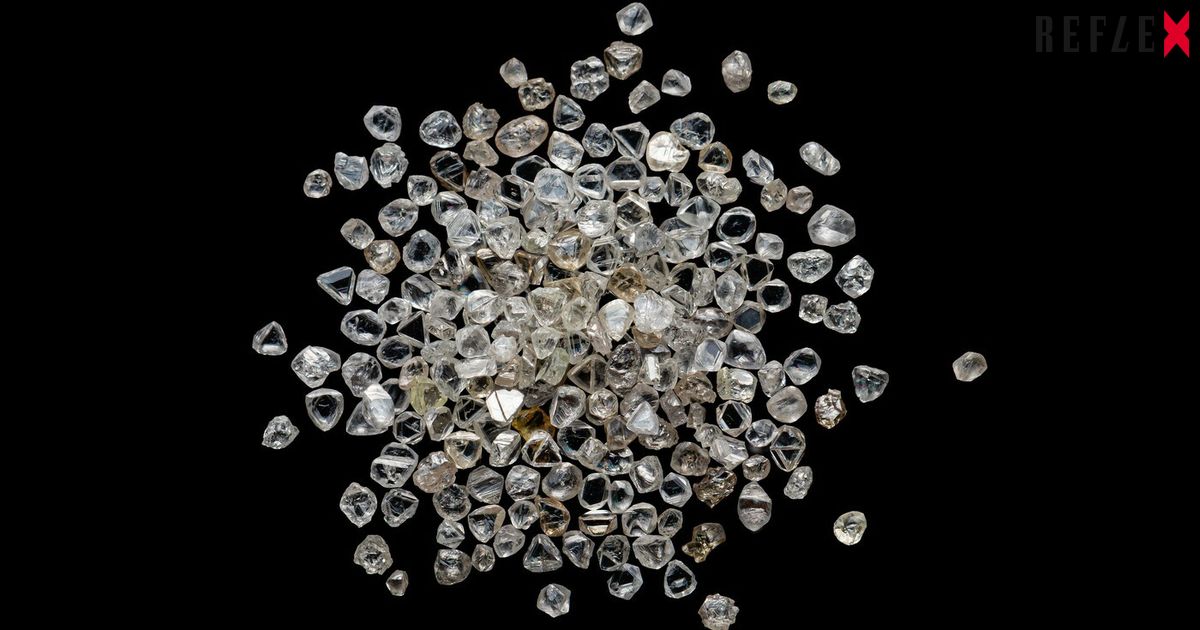
Factory production challenges natural-diamond pricing
Laboratories in China and India can produce a one-carat diamond in roughly one week using high-pressure, high-temperature equipment, according to Czech publication Reflex. The resulting stone weighs 0.2 grams and is chemically and optically indistinguishable from a natural diamond. The equivalent geological process takes between 1 billion and 3 billion years.
In the HPHT process, a small natural-diamond seed is placed in a press with an alloy of nickel, cobalt and iron and a piece of pure graphite. The chamber reaches 50,000 atmospheres and 1,500 degrees Celsius, recreating conditions found about 150 kilometers below the Earth’s surface. Carbon dissolved from the graphite passes through the metal layer and crystallizes around the seed. The technology has long supplied industrial diamonds for tools and components used in automotive manufacturing, energy and electronics, but factory output is increasingly entering jewelry.
Large price gap accelerates adoption
Prices for one- and two-carat jewelry diamonds peaked after the Covid pandemic and have since fallen sharply, Reflex reports, linking the decline primarily to the influx of synthetic stones from Chinese and Indian factories. A one-carat lab-grown stone sells wholesale for the equivalent of about CZK 6,000 even with substantial margins. A diamond mined in Botswana costs roughly 14 times more.
The price gap is changing purchasing patterns in the United States, where diamond engagement rings have their strongest cultural foothold. Synthetic stones accounted for 45% of engagement rings purchased in 2025, according to figures cited by Reflex, and the reported share has since reached 61%. Popularity has risen by almost 240% since 2020. These figures indicate that many consumers value size, appearance and price above a stone’s geological origin, weakening the industry’s effort to preserve a premium for natural diamonds.
Identification and provenance become central
The shift creates a trust problem for jewelers, traders and buyers because visual inspection alone may not establish origin. Reflex cited gemologist Steve Richards of Australian Diamond Wholesale Brokers, who told The Guardian that despite 30 years of experience, he could not identify which of two stones was laboratory-made when they were placed side by side. Reliable grading, disclosure and documentation therefore become increasingly important as physically similar products trade at sharply different prices.
The natural-diamond business was historically supported by controlled supply and marketing. De Beers, founded in 1888, controlled as much as 90% of the rough-diamond trade from the 1930s, according to Reflex. Competition later expanded in Russia, Australia, Canada and African countries, but laboratory production now introduces capacity that is not constrained by mine geology. More than 25 tonnes of diamonds are mined annually, although only a fraction have the clarity required for jewelry and most serve industrial markets.
Ethics adds another competitive dimension
Laboratory producers are also promoting provenance and energy use. During Indian Prime Minister Narendra Modi’s 2023 White House visit, he presented US First Lady Jill Biden with a 7.5-carat diamond made by Indian laboratory Greenlab using renewable energy. The gift highlighted India’s capacity to position synthetic stones as luxury products rather than only low-cost substitutes.
For miners, processors and dealers, the immediate challenge is market segmentation. Natural stones retain a differentiated origin and established luxury narrative, while factory-made diamonds offer the same chemical composition and optical characteristics at a much lower price. Jewelry businesses will need clearer product disclosure and stronger traceability to protect consumer confidence. Producers of natural diamonds, meanwhile, face pressure to demonstrate why provenance, rarity within jewelry-grade output and mining origin justify a premium that laboratory capacity is steadily eroding.