Kyrgyzstan and Pakistan Move to Set Up Direct Bean Shipments as Trade Target Rises to $200 Million
Kyrgyzstan's agriculture minister Erlist Akunbekov and Pakistan's ambassador Altamash Wazir Khan agreed to link Kyrgyz bean growers directly with Pakistani importers. Export potential for the crop exceeds 50,000 tonnes, and Kyrgyz bean exports were worth $67 million in 2025. Bilateral trade currently stands at about $16.1 million against a stated target of $200 million.
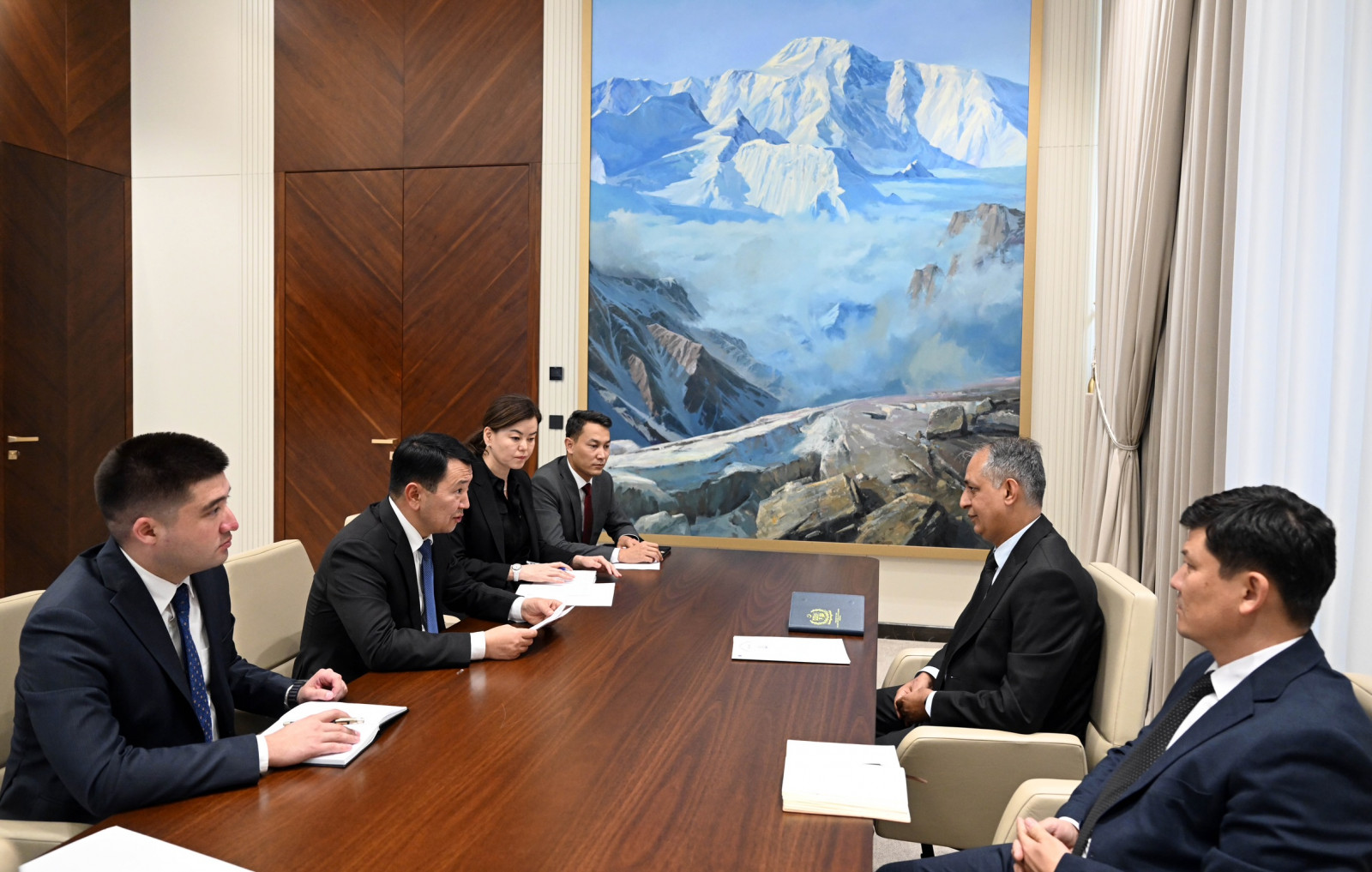
Direct contacts between growers and importers
Erlist Akunbekov, Deputy Chairman of the Cabinet of Ministers of Kyrgyzstan and Minister of Water Resources, Agriculture and Processing Industry, received Pakistan's Ambassador Extraordinary and Plenipotentiary to the Kyrgyz Republic, Altamash Wazir Khan. The government press service, cited by 24.kg, said the central item on the agenda was the export of Kyrgyz beans to the Pakistani market and the practical steps needed to turn declarations into commercial shipments.
Particular weight was given to establishing direct contacts between Kyrgyz producers and Pakistani importers, to organising and taking part in bilateral trade exhibitions, and to working out concrete supply volumes and delivery terms, according to 24.kg. economist.kg reported the same set of commitments from the meeting, describing the organisation of direct bean deliveries to Pakistan as the key subject of the talks and noting that the two sides intend to agree volumes and conditions rather than confine the discussion to general intentions.
A $67 million crop looking for a new destination
Statistical data cited by 24.kg put the export potential of Kyrgyz beans at more than 50,000 tonnes. The publication also reported that the crop enjoys steady demand on foreign markets, and that the total value of Kyrgyz bean exports reached $67 million in 2025. Beans are among the country's few agricultural lines with an established international sales record, which is why they were placed at the centre of the discussion with Pakistan rather than treated as one item on a longer list.
Neither 24.kg nor economist.kg broke out how much of that $67 million went to Pakistan, and no baseline volume for the Pakistani market was published. The figure of 50,000 tonnes is presented as export potential rather than contracted tonnage, which leaves the scale of any first commercial consignments open until producers and importers settle specifications, pricing and payment terms between themselves.
From $16.1 million to $200 million
Mutual trade between the two countries currently amounts to roughly $16.1 million, economist.kg reported. The same outlet noted that the sides had earlier declared their intention to raise bilateral turnover to $200 million within the coming two years — an increase of more than twelvefold from the present base. Beans are the most advanced part of that agenda, but they are not the only one being counted on.
According to economist.kg, the countries are also looking to pharmaceuticals, joint production projects and a transport route running through China to Pakistani ports. The logistics component matters for any bulk agricultural trade: Kyrgyzstan is landlocked, and access to seaports on the Pakistani coast would change the cost structure of shipping bulk commodities from Central Asia.
What was agreed
The meeting produced a set of working commitments rather than signed contracts. As reported by 24.kg and economist.kg, the parties agreed on the following:
- establishing direct contacts between Kyrgyz bean producers and Pakistani importers;
- organising and participating in bilateral trade exhibitions;
- agreeing specific supply volumes and delivery terms;
- starting immediate practical work on shipping Kyrgyz agricultural products to the Pakistani market.
Neither publication disclosed a timetable for the first shipments, tariff arrangements, or the names of the companies expected to take part. The sides agreed to intensify work on supplying Kyrgyz agricultural output to Pakistan now and to begin joint practical steps to expand mutual trade, 24.kg reported.