Kyrgyzstan's meat imports exceeded exports 32.6-fold in January-July 2026, with poultry above 92% of inflows
Kyrgyzstan imported 32.6 times more meat and edible meat offal than it exported in January-July 2026, according to open.kg, citing National Statistical Committee data. Poultry accounts for more than 92% of those imports, while 24.kg reports full domestic self-sufficiency in beef and mutton, where fixed prices remain in force after the 2025 price rise.
Imports exceed exports 32.6-fold
Kyrgyzstan's foreign trade in meat and edible meat offal remained sharply unbalanced in the first seven months of 2026: imports exceeded exports by 32.6 times, open.kg reported, drawing on data from the National Statistical Committee. Export volumes in the category were marginal against inbound flows, leaving a significant part of domestic consumption dependent on supplies from abroad.
The gap built up through the year rather than appearing in a single month. open.kg recorded a significant increase in meat product imports in January and February 2026, and reported the same direction for the January-May period, before the seven-month data confirmed the scale of the imbalance. Total foreign trade turnover for January-July 2026 reached $10 billion, against $15 billion 825 million for the whole of 2025, so the meat deficit is forming inside a trade profile that is itself import-heavy.
Poultry takes more than 92% of meat imports
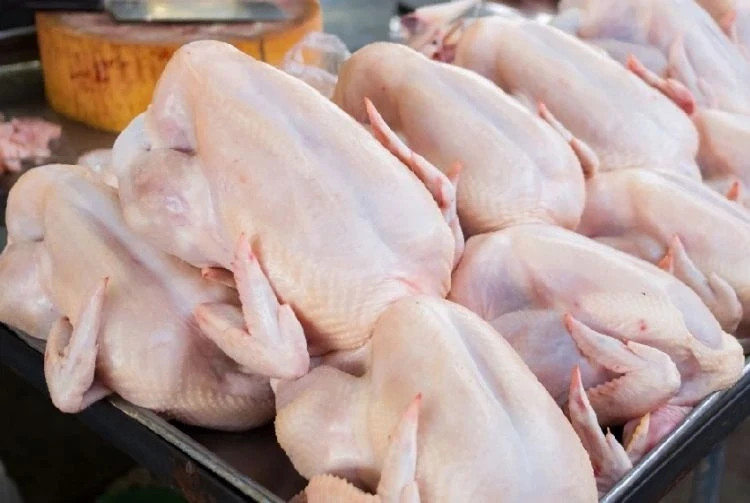
Poultry accounts for over 92% of Kyrgyzstan's meat imports, according to open.kg, making it the dominant share of the category in volume terms. Beef, mutton and edible offal divide the remainder.
The concentration follows price. Chicken is the cheapest source of animal protein for households and for processors buying raw material for sausage and convenience products, and it arrives frozen, in large lots, with a long shelf life. Kyrgyzstan does have a domestic poultry sector - the Ministry of Water Resources, Agriculture and Processing Industry places Chuy oblast first in the country by the size of its poultry flock - but output has not displaced imports at the volumes the market absorbs.
Beef and mutton: self-sufficiency and capped prices
Red meat sits in a different position. 24.kg reports that Kyrgyzstan is fully self-sufficient in beef and mutton production, which is consistent with the small residual import share once poultry is counted out.
That segment is under administrative pressure on price. Meat price growth became a public issue in 2025, and the authorities responded by introducing fixed prices for beef and mutton to stabilise the market. Ceilings hold retail costs down in the short term, but they compress margins for cattle and sheep producers and weaken the case for herd expansion. The practical effect is that imported poultry remains the flexible part of supply, absorbing demand growth that domestic red meat is not positioned to serve.
The wider food import picture
Meat is one line in a broader run of processed-food purchases abroad reported by open.kg for 2026:
- chocolate confectionery: more than 10,600 tonnes bought in the first half of the year;
- sweet carbonated drinks: over 32 million litres brought into the country in June alone;
- butter: exports fell 10.3-fold in January-June 2026, a reversal in one of the country's dairy trade lines.
For poultry exporters and traders, Kyrgyzstan reads as a destination market with rising volumes and a clear product focus, where competition runs on delivered cost rather than on brand. For domestic producers the constraint is the same one the import share already reveals: feed and financing costs that keep local chicken above the landed price of frozen imports, and price regulation in beef and mutton that limits the returns available from scaling up. Neither the 32.6-fold ratio nor the 92% poultry share is likely to narrow without a change in one of those two variables.