Kyrgyzstan’s dried-legume exports fall 19.5% in first half of 2026
Kyrgyzstan exported 25,756 tonnes of dried leguminous vegetables in January-June 2026, down 19.5% year on year, Tazabek reported. The contraction reduces the volume available to Kyrgyzstan’s established pulse-export business, although the available data do not identify the affected products, destinations or causes.
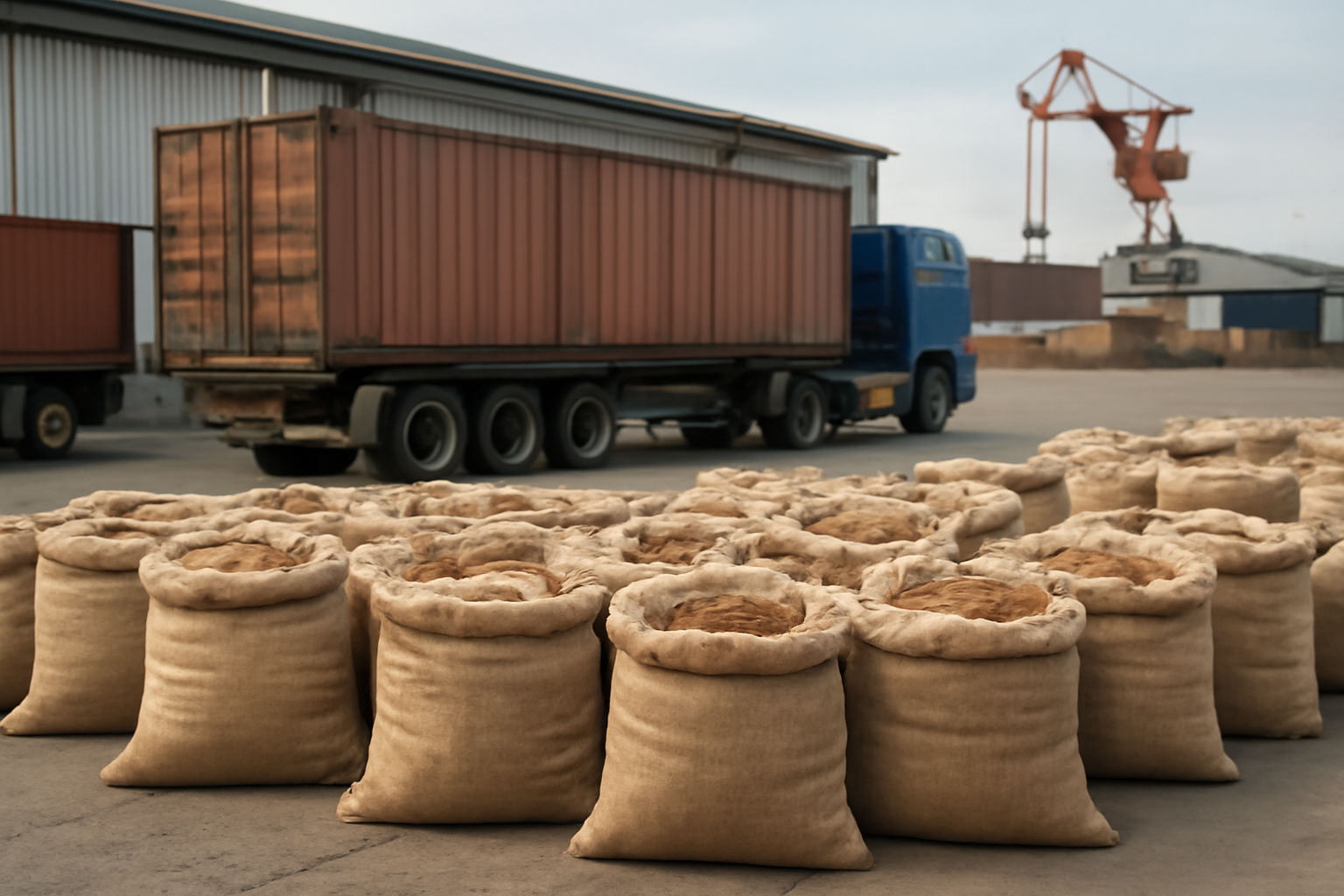
First-half shipments decline
Kyrgyzstan exported 25,756 tonnes of dried leguminous vegetables in January-June 2026, a decrease of 19.5% from the same period a year earlier, Tazabek reported. The figures point to a substantial contraction in physical shipments during the first six months of the year: almost one fifth of the previous year’s export volume was no longer reaching foreign markets.
The reported figure covers dried leguminous vegetables as a product category. The available source material does not provide a breakdown by individual crop, destination country, export value or average price. It therefore establishes the scale of the volume decline but does not show whether the change was concentrated in one product or spread across Kyrgyzstan’s pulse-export portfolio.
Pressure moves back through the supply chain
For growers and processors, lower export volume can mean less demand from traders and aggregators serving foreign customers. The commercial effect will depend on whether the missing tonnage was redirected to Kyrgyzstan’s domestic market, carried in storage or offset by changes in prices. None of those factors is specified in the published information, so the shipment decline cannot by itself be treated as evidence of an equivalent fall in production or export revenue.
The distinction between volume and value is important for market participants. A 19.5% reduction in tonnage may have a different financial impact if contract prices increased, product quality changed or the mix shifted toward higher-value pulses. Conversely, weaker prices alongside lower shipments would deepen the effect on growers, cleaning and packing businesses, logistics providers and exporters. The available data contain no price or value figures with which to determine that outcome.
Exporters need destination and product detail
The next indicators will be the composition of shipments and the geography of demand. Product-level data would show whether the decline reflects conditions affecting a particular dried legume, while destination data would help identify whether buyers in one market reduced purchases or whether weakness was broader. Monthly figures would also clarify whether exports slowed throughout the half-year or whether the result was driven by a short disruption.
For traders, the immediate issue is how much product remains available after the first-half decline and whether inventories will put pressure on domestic prices. For producers, planting and marketing decisions will depend on whether foreign demand recovers and on the terms offered by exporters. Processors must also assess whether lower throughput affects the utilization of sorting, cleaning, packing and storage capacity.
The 25,756-tonne result gives Kyrgyzstan’s pulse sector a clear benchmark for the first half of 2026. It does not yet explain the decline. Until information on production, stocks, prices, product mix and destination markets becomes available, the safest reading is that the country’s dried-legume export channel handled materially less volume than a year earlier, increasing the importance of domestic sales and second-half foreign demand.