Kyrgyzstan doubles cucumber imports to 9,195 tonnes in first half of 2026
Kyrgyzstan imported 9,195 tonnes of cucumbers and gherkins in January-June 2026, twice the volume recorded a year earlier. Tazabek reported the increase, but the available source material does not identify suppliers or disclose import values.
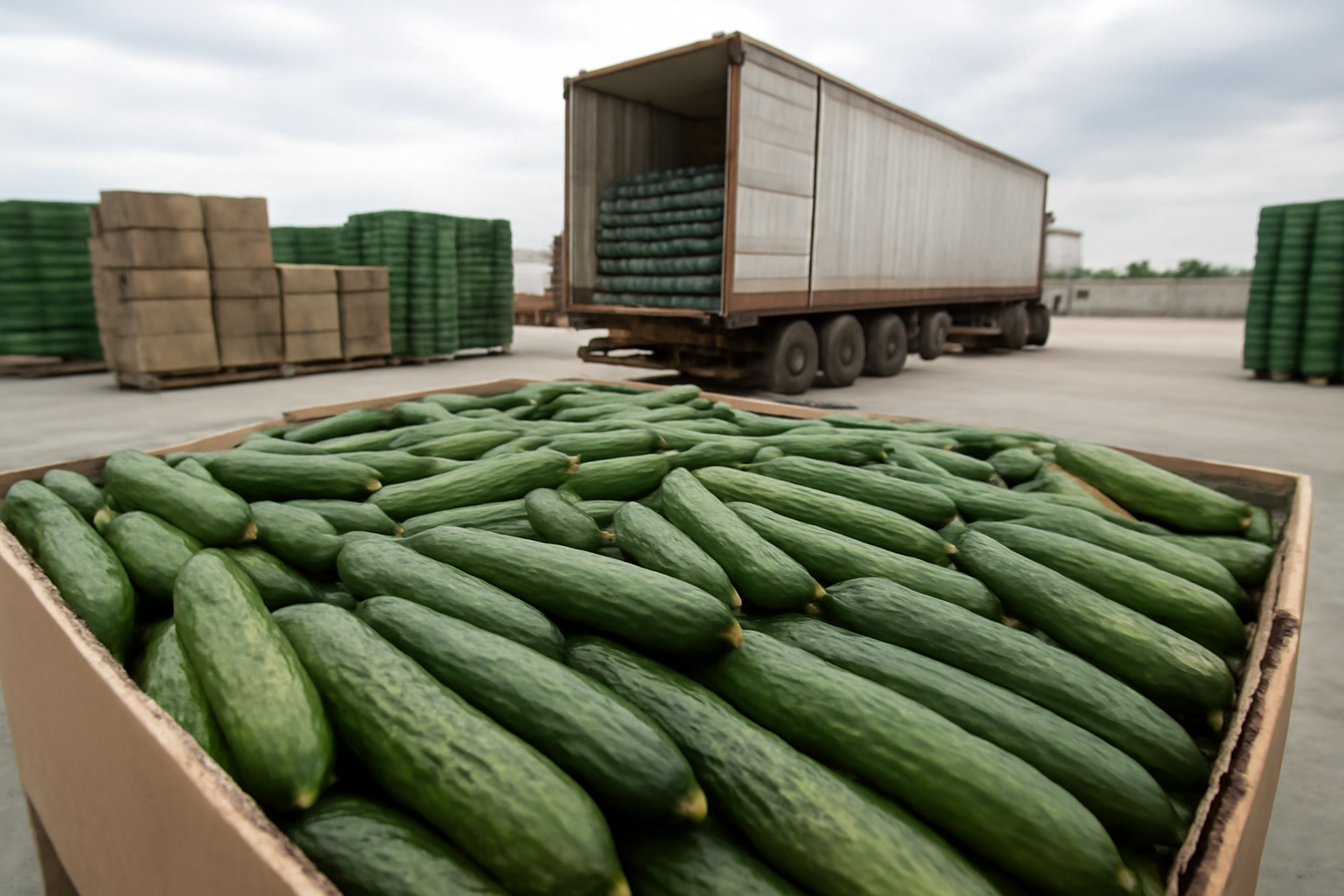
Import volume doubles in six months
Kyrgyzstan imported 9,195 tonnes of cucumbers and gherkins in January-June 2026, according to Tazabek. The volume was twice as high as in the corresponding period a year earlier, marking a sharp expansion in the country’s reliance on foreign supply during the first half of the year.
The reported figure combines cucumbers and gherkins. The available source material does not provide a breakdown between the two products, nor does it specify whether the shipments consisted mainly of fresh cucumbers for retail sale or smaller gherkins destined for particular processing and food-service uses.
No import value was disclosed. As a result, the data show the change in physical volume but do not establish whether Kyrgyz buyers paid more or less per tonne, or how changes in product quality, seasonality, transport costs and supplier mix affected the total import bill.
Supplier structure remains undisclosed
Tazabek’s report does not identify the countries that supplied the 9,195 tonnes. The information available therefore cannot establish which foreign producers gained market share, whether the increase came from one dominant origin or several suppliers, or which transport corridors handled the additional volume.
This omission matters for traders and distributors. Supplier geography determines delivery times, freight exposure and the ability to replace shipments when harvest conditions or border procedures disrupt trade. Without country-level figures, the doubling can be measured at the national level, but the commercial beneficiaries cannot be reliably identified.
The source also provides no monthly series. It is therefore unclear whether imports increased steadily throughout January-June 2026 or were concentrated in months when domestic production was insufficient to cover demand. Cucumbers are highly perishable, making the timing and continuity of deliveries particularly important for wholesalers and retailers.
Higher imports point to a domestic supply gap
A twofold increase in imported volume indicates that foreign produce filled a substantially larger share of Kyrgyzstan’s available supply during the period. The figures alone do not explain the cause. The gap may reflect changes in domestic output, seasonal availability or buyer demand, but none of these factors is quantified in the source material.
For domestic greenhouse and open-field growers, the increase means stronger competition from imported cucumbers during at least part of the first half. The effect on local prices cannot be determined because no wholesale or retail price data were provided. Producers will need supplier-level and monthly trade statistics to assess when imported volumes exerted the greatest pressure.
Importers and retailers, meanwhile, handled significantly more foreign product than a year earlier. That raises the operational importance of cold-chain capacity, rapid border clearance and predictable delivery schedules, although the report gives no information on logistics performance or losses.
The next relevant indicators will be supplier shares, import values and the monthly pattern of arrivals. Full-year data will also show whether the first-half increase represented a temporary response to a domestic shortage or a more persistent rise in Kyrgyzstan’s demand for imported cucumbers and gherkins.