Kri Kri plans €127 million expansion to nearly triple yogurt capacity by 2030
Greek dairy producer Kri Kri plans to invest €127 million between 2026 and 2030, increasing yogurt production capacity by 196% from its 2025 level. Export growth, particularly in the United Kingdom and Italy, has pushed existing facilities close to their limits.
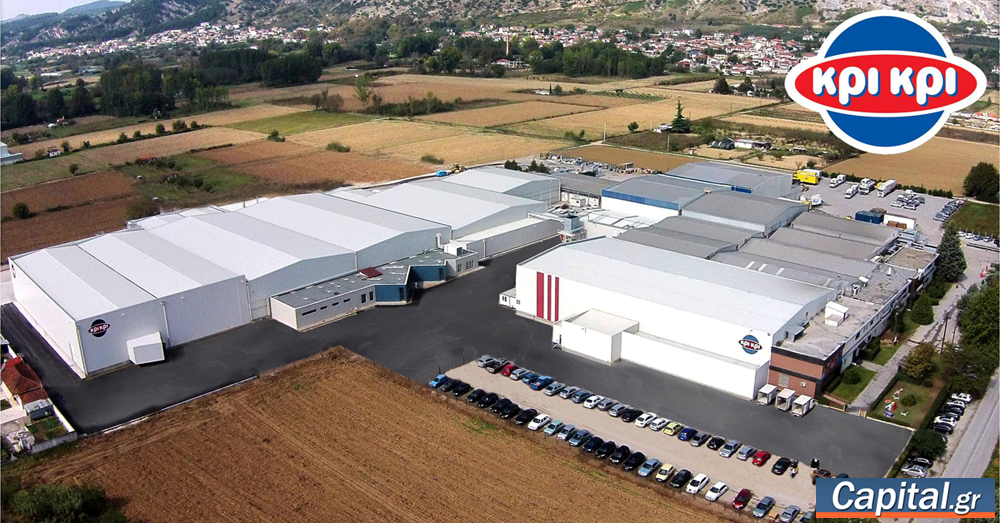
Capacity constraints drive five-year investment plan
Greek dairy producer Kri Kri is preparing a €127 million investment programme to expand yogurt production between 2026 and 2030, after rapid export growth brought its existing facilities close to full utilisation. Capital.gr reported that the company is delaying the development of some new international partnerships and cannot always meet demand during seasonal peaks, including May and September.
Kri Kri CFO Konstantinos Sarmadakis said the current production base, measured against expected 2026 capacity and prevailing prices, could support annual sales of approximately €430 million to €440 million. The company expects revenue of about €400 million this year, raising its previous forecast of more than €390 million. The narrow gap between projected revenue and the sales supported by existing capacity illustrates why additional production lines are becoming necessary.
Capacity scheduled to rise 196% by 2030
The programme allocates capital expenditure of €28 million in 2026, €26 million in 2027, €23 million in 2028 and €25 million in each of 2029 and 2030. Compared with 2025, yogurt capacity is scheduled to increase by 20% in 2026 and 76% in 2027. It is expected to double in 2028 and reach almost three times the 2025 level by 2030, representing cumulative growth of 196%.
The expansion will proceed in stages and remain linked to demand. The 2027 investments are already included in the company’s planning, but orders for the relevant 2028 production equipment have not yet been placed. This approach gives Kri Kri room to adjust later spending if sales growth changes, while still addressing the immediate capacity shortage.
European exports underpin growth
The first use of the new capacity will be to serve established markets where the company says it is already losing business because it cannot supply enough product. Some capacity will also be reserved for entry into additional countries. Europe remains the priority for yogurt expansion rather than Asia, partly because the product’s short shelf life limits the practicality of more distant distribution.
Capital.gr reported that Kri Kri’s yogurt exports rose 46.6% in the first half of 2026, reaching approximately €129 million from €88.3 million a year earlier. EBIT from the segment more than doubled to €28.4 million from €14.1 million. Higher volumes contributed about €37 million to first-half sales, while approximately €8.5 million came from price increases implemented during the second half of 2025.
The United Kingdom and Italy are central to the expansion strategy. Sales increased by 67% in the UK and 31% in Italy, while exports now account for roughly 75% of Kri Kri’s total yogurt sales. Management said its UK business had tripled over three years, yet authentic Greek yogurt still has relatively low penetration compared with the wider Greek-style category. That gap provides room for growth, but converting it into sales will depend on the timely commissioning of new capacity and Kri Kri’s ability to maintain distribution gains in its largest European markets.