Kompania Piwowarska opens 230 million-zloty automated warehouse in Poznań
Kompania Piwowarska has opened a 230 million-zloty automated high-bay warehouse at its Poznań brewery. The project raises storage capacity from about 23,000 to 58,000 pallets and is intended to increase direct deliveries to customer warehouses from 50% to 90%.
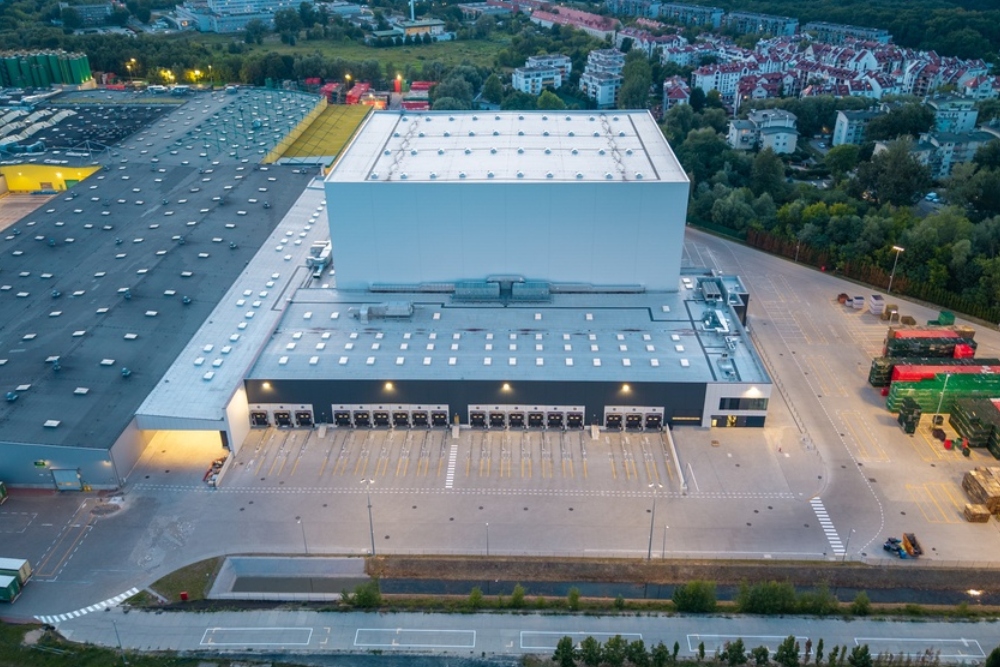
Storage capacity more than doubles
Kompania Piwowarska has commissioned an automated high-bay warehouse at its brewery in Poznań, investing 230 million zlotys in additional storage and distribution capacity. According to MamBiznes, the project increases the brewery’s total warehouse capacity from approximately 23,000 to 58,000 pallets. The company expects the new infrastructure to raise the share of direct deliveries to customer warehouses from 50% to 90%.
The investment is designed around the operational requirements of Kompania Piwowarska’s largest and most comprehensive production site. The Poznań brewery makes alcohol-free and flavored beers, two categories that require the company to handle a broader product mix while responding to changing consumer preferences. Greater on-site capacity should allow finished products to remain close to production lines until orders are assembled for dispatch, reducing the need for intermediate handling and storage elsewhere.
A 40-meter automated facility
The new building is 40 meters high and contains more than 41,000 pallet locations. Twelve automated stacker cranes place pallets into storage and retrieve them for shipment. The installation comprises around 1,000 interconnected devices and is linked to the brewery’s other infrastructure through a Monorail system. Its maximum throughput is 552 pallets per hour, while 18 loading docks have been prepared to handle outbound transport.
Automation covers the process from collecting a pallet at the filling line to preparing it for dispatch. Bartosz Bukowiecki, senior manager responsible for the company’s strategic logistics project, told MamBiznes that the system operates without heavy forklifts inside the automated process. He said this should improve safety by limiting interaction between employees and forklift trucks, traditionally one of the main operational risks in warehouse environments.
Distribution adapts to a changing beer market
The warehouse also reflects changes in Polish beer distribution. Dorota Peter, supply chain director at Kompania Piwowarska, told Newseria Biznes that the modern retail channel is growing strongly while the traditional channel is declining. Changes in consumption, consumer preferences and customer structure are therefore influencing how the brewer prepares and delivers its products.
MamBiznes reports that Poland’s overall beer market has been contracting for years, even as sales of alcohol-free beer continue to grow. That divergence makes logistics flexibility increasingly relevant: breweries must serve expanding product segments without relying on growth in the total market. More pallet positions and automated order flows give the Poznań site room to accommodate a more varied portfolio and larger volumes moving directly into retailers’ distribution networks.
Implications for customers and carriers
The targeted increase in direct deliveries from 50% to 90% could materially alter the company’s distribution pattern. Moving more beer directly from the brewery to customer warehouses may reduce intermediate transfers and consolidate outbound volumes at Poznań. For retail customers, the benefit will depend on reliable order preparation and the warehouse’s ability to sustain its stated capacity of 552 pallets per hour during demand peaks.
For Kompania Piwowarska, the 230 million-zloty investment connects production, storage and dispatch at its key plant. Its commercial value will rest on whether higher automation and expanded capacity translate into safer operations, dependable service and lower handling complexity as alcohol-free and flavored beer lines expand within a shrinking national beer market.