Kenya: Sugar Prices Rise for a Fourth Consecutive Month Despite Higher Local Output
Consumer sugar prices in Kenya increased for a fourth month in a row, according to the Kenya National Bureau of Statistics, even as domestic production rose. The divergence points to constraints between the cane field and the retail shelf rather than to a shortage of raw material.
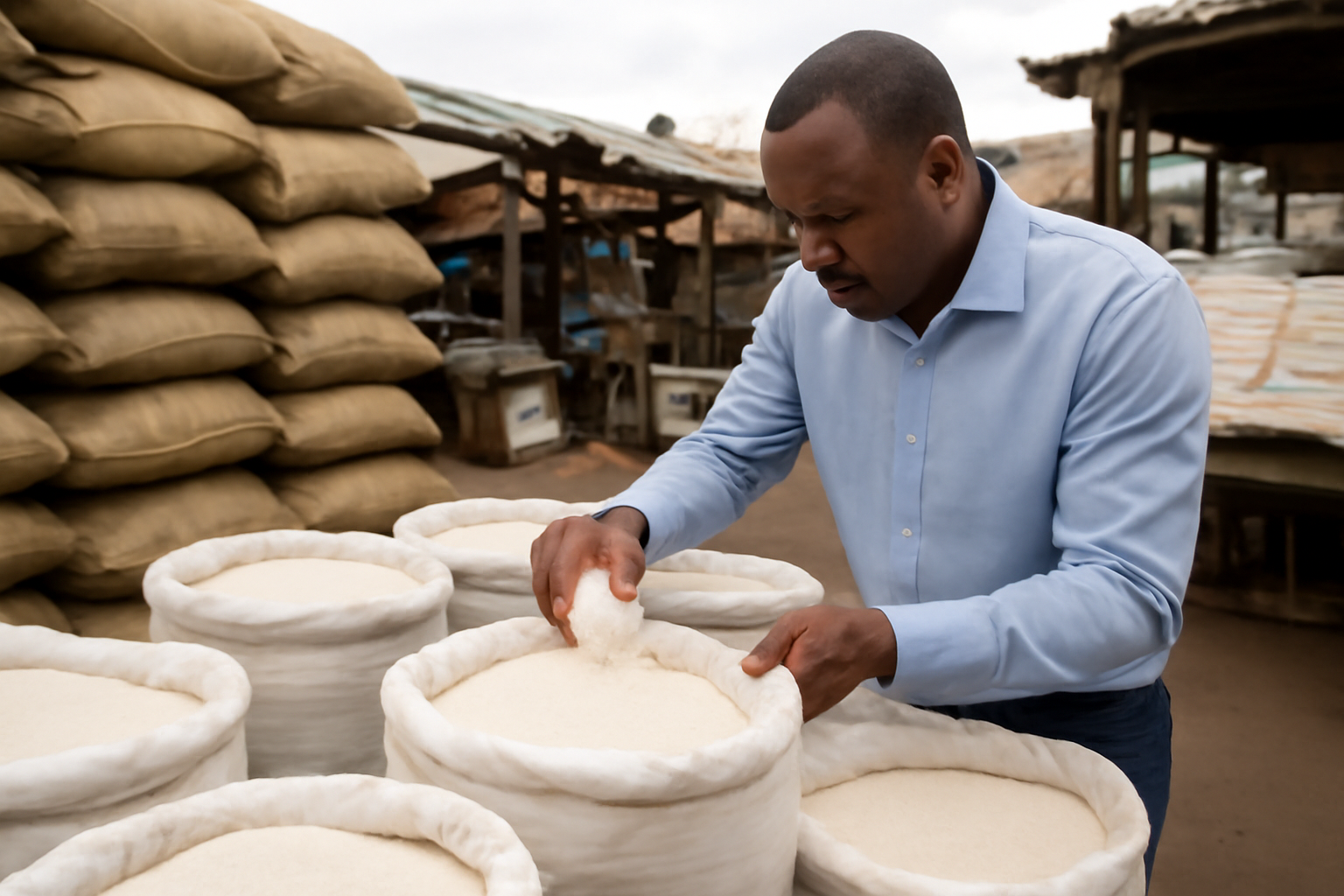
Consumer sugar prices in Kenya rose for a fourth consecutive month, according to figures from the Kenya National Bureau of Statistics (KNBS), even as local production increased over the same period. The divergence breaks the usual link between supply and price and moves attention to the stages between the cane field and the retail shelf.
Output up, shelf prices up
KNBS, the agency responsible for Kenya's official statistics, recorded the increase in its regular consumer price monitoring. Sugar is among the most closely watched items in the Kenyan food basket: it is bought across all income groups, it enters a wide range of processed foods, and its retail price carries political weight. A four-month run of increases is long enough to be read as a trend rather than a monthly fluctuation.
The rise in domestic production reported alongside the price data would ordinarily be expected to relieve pressure at retail. Larger local volumes reduce the share of demand that has to be met from imports and give millers and traders more room to compete on price. Neither effect has shown up in the KNBS numbers so far.
Where the constraint sits
When output and prices move up together, the binding constraint usually sits downstream of the crop rather than in it. Several links in the Kenyan sugar chain can hold prices up while cane deliveries improve:
- Milling throughput. Extra cane becomes extra sugar only if factories can crush it on schedule; breakdowns, maintenance gaps and weak sucrose recovery leave volume stranded in the field.
- Factory costs. Energy, spare parts, chemicals, cane haulage and wages feed into ex-factory prices regardless of how much cane arrives.
- Trade margins. Packaging, transport, wholesale and retail margins sit between the factory gate and the shelf, and they do not automatically compress when supply improves.
- Import volumes and timing. The scale and arrival schedule of imported sugar shape the market balance alongside domestic output.
- Stockholding. Millers and traders can hold inventory rather than release it, delaying the point at which higher production is felt by buyers.
Who pays
Households are the visible side of the increase, but industrial users absorb it in volume. Beverage bottlers, bakeries, confectioners and dairy processors buy sugar as a core input and usually contract ahead on the assumption that a stronger local crushing season lowers their costs. A sustained rise in domestic quotations forces those buyers either to accept thinner margins or to pass the increase into finished-goods prices. Importers and regional traders read the same signal differently: a domestic market that stays firm despite higher local output remains open to supply from outside.
What to watch
The immediate test is the next round of KNBS consumer price data. A fifth consecutive increase would indicate that the constraint is structural rather than seasonal, and would put the spotlight on milling performance and the distribution chain rather than on cane availability. Confirmation of how much local production actually rose, and of how much of that sugar reached the market, will determine whether the current gap between output and price is a timing effect or a lasting feature of the Kenyan market.