Kenya leads Africa in milk production as meat exports rise 87%
Kenya has become Africa’s leading milk producer, while its meat exports have increased by 87%. The dairy sector’s cooperative network is illustrated by Murang’a County Creameries, an umbrella organization comprising 36 dairy cooperatives.
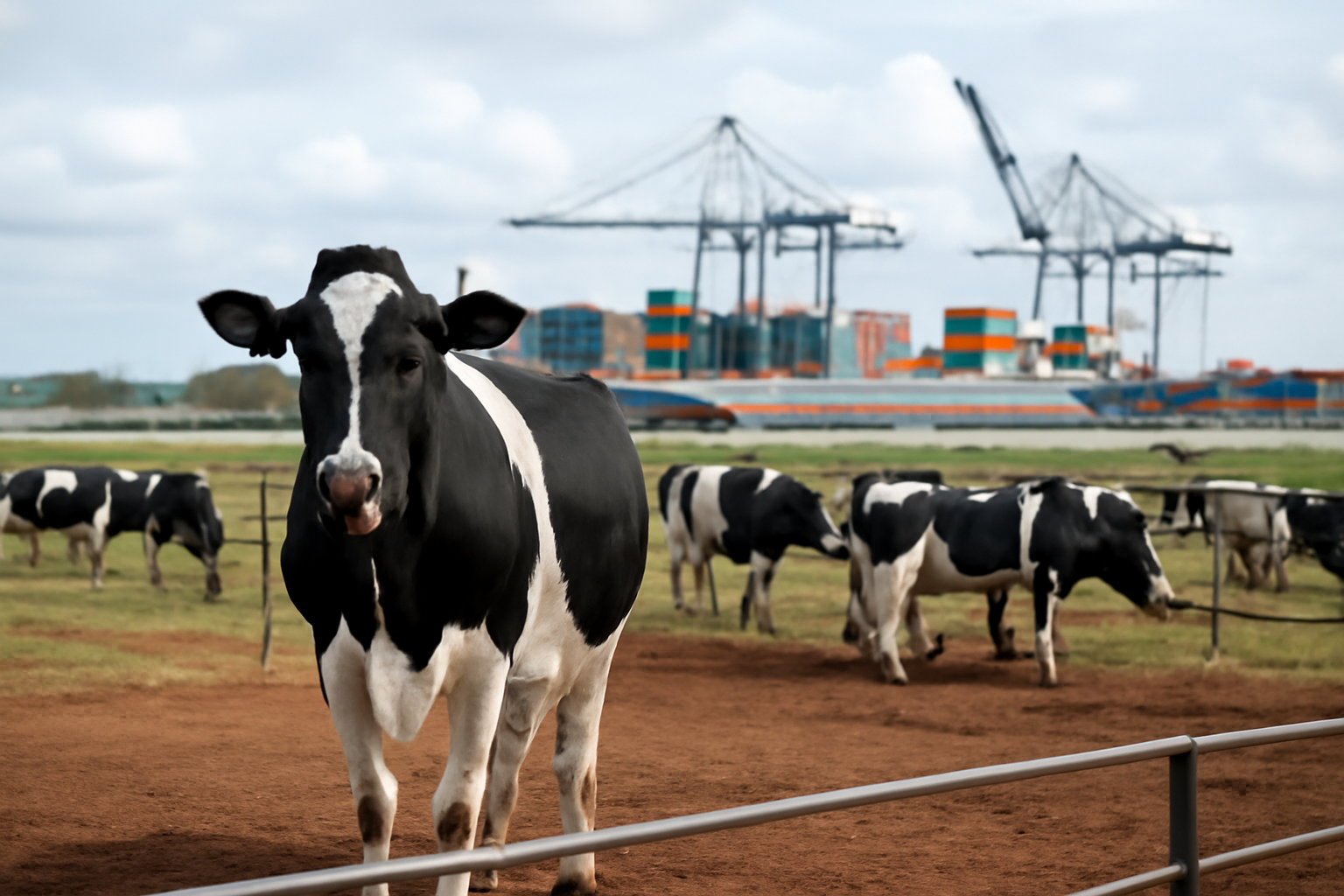
Kenya takes the lead in African milk production
Kenya has become Africa’s leading milk producer as the country’s meat exports rise by 87%, marking gains in two major segments of its livestock economy. The development strengthens Kenya’s position in African animal production, although the available source material does not specify the period covered by the export increase, the volume of meat shipped or the country’s total milk output.
The milk-production ranking points to the scale of Kenya’s dairy industry and the importance of organized collection systems. Dairy cooperatives connect individual farmers with processors and other buyers, allowing relatively small daily supplies to be pooled into commercially viable volumes. This model is particularly relevant in a sector where production is distributed across numerous farms and milk must be collected regularly.
Cooperatives support dairy collection
The experience of Murang’a dairy farmer Ndung’u Muiruri illustrates how individual producers participate in this system. Muiruri sells 40 litres of milk per day and previously supplied Murang’a County Creameries. The organization serves as an umbrella for 36 dairy cooperatives in the county, demonstrating the role of collective structures in aggregating local production.
At Muiruri’s reported daily level, consistent access to a buyer is central to turning milk output into cash flow. For processors, cooperative collection offers access to supplies from multiple farms without requiring separate procurement arrangements with every producer. The source excerpt does not provide the price paid for Muiruri’s milk, production costs or processing volumes, so the commercial returns for farmers and processors cannot be quantified.
The network of 36 cooperatives also indicates that Kenya’s dairy leadership is supported by institutions extending beyond individual farms. Such organizations can provide a route to market and coordinate collection, although the supplied information does not detail their ownership, processing capacity or geographic reach outside Murang’a County.
Meat exports record an 87% increase
Alongside the dairy milestone, Kenya’s meat exports have risen by 87%. The increase signals stronger activity in the export-facing part of the livestock industry, but no baseline tonnage, shipment value, destination markets or product breakdown is included in the available material. It is therefore not possible to determine whether the growth was led by beef, goat meat, sheep meat or another category.
For livestock producers and meat processors, an 87% increase potentially means greater demand for animals, slaughtering services and export-compliant processing. For traders, the commercial impact depends on which destinations absorbed the additional supply and whether the increase reflects higher physical volumes, higher prices or both. Those details are not stated in the source excerpt.
Livestock sector gains need fuller trade data
The combination of leadership in milk production and rapid growth in meat exports gives Kenya a more prominent position in Africa’s livestock sector. Dairy production is anchored in domestic collection networks such as the 36-cooperative structure associated with Murang’a County Creameries, while meat provides a direct connection to external markets.
Further assessment will require comparable milk-output figures for other African producers and detailed meat-export data covering volumes, values, products and destinations. The facts currently available nevertheless show progress on both sides of the industry: Kenya ranks first in African milk production, and its meat exports have expanded by 87%.