Kazakhstan targets 128.9 million tonnes of coal as investment and safety pressures rise
Kazakhstan plans to raise coal production from 115.9 million tonnes in 2025 to 128.9 million tonnes in 2026. Investment is expected to reach 553 billion tenge, but mine safety, railway logistics and the cost of modernizing coal-fired generation remain central constraints.
Production and investment targets rise
Kazakhstan produced 115.9 million tonnes of coal in 2025, an increase of 7% from the previous year, according to np.kz. About 30 million tonnes were exported. The Energy Ministry expects production to reach 128.9 million tonnes in 2026, underlining coal’s continuing role in the country’s power system, district heating and metallurgical supply chain.
Investment under coal-sector contract work programmes totalled about 305 billion tenge in 2025 and is expected to rise to approximately 553 billion tenge in 2026. Around 40 subsoil users currently mine coal, while the authorities plan auctions for rights to ten additional coal sites. The figures indicate that Kazakhstan is preparing to commit new capital to the sector rather than relying solely on existing mines and equipment.
The allocation of that capital will determine whether higher output improves the industry’s economics and resilience. Investment requirements include mining machinery, automation, degassing and ventilation systems, coal-quality improvements and railway infrastructure. In 2026, Qarmet began receiving new tunnelling equipment. A remotely operated roadheader is being tested at the Shakhtinskaya mine, and the company’s coal department is due to receive eight such machines during the year.
Safety and labour remain critical
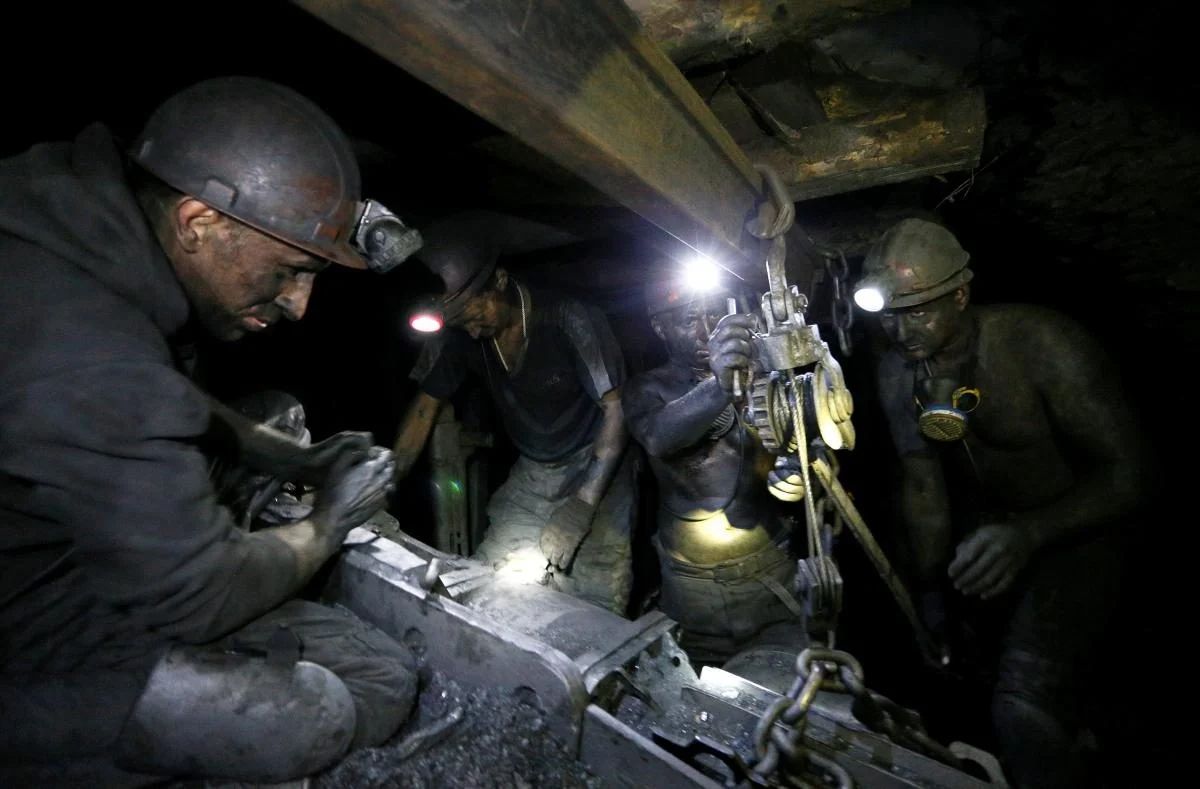
Modernization is inseparable from mine safety after 46 miners died at the Kostenko mine in October 2023. The causes of the disaster remain subject to court proceedings and public scrutiny. Automation can reduce human exposure to dangerous operations: the Vostochny open-pit mine, for example, has introduced an autonomous haul truck. Remote machinery, methane sensors, digital monitoring and predictive safety systems are also changing the skills required from mine workers.
Pay data illustrate the sector’s social tensions. In November 2025, the governor of the Karaganda region put average miners’ pay at about 700,000 tenge and said the region employed roughly 14,000 miners. Workers publicly cited figures closer to 400,000 tenge. National statistics showed average nominal mining pay of 888,900 tenge in the second quarter, but this measure divides the entire payroll by the number of employees. In the previous year, nominal mining pay averaged 866,500 tenge, while the most common wage was 372,600 tenge, or 43% of the nominal figure.
Exports depend on routes and freight costs
Kazakhstan supplies coal to Russia, Poland, Uzbekistan, Turkey, India and Malaysia, among other markets. Shipments to Turkey reportedly doubled to 1.6 million tonnes in the first half of 2026. However, coal is a high-volume, relatively low-value commodity, making railway tariffs and access to export corridors as important as the price and quality of the material. Producers seeking further export growth must therefore compete on delivered cost, not mine-gate cost alone.
China’s production of more than 4.6 billion tonnes in 2025, representing over half of global output, shows that international coal demand will not disappear immediately. It also points to intense competition from very large producers. For Kazakhstan, increasing volumes without improving productivity, quality and logistics could leave additional output exposed to freight costs and volatile external demand.
Domestic power demand anchors the sector
The government plans to increase electricity production to 126.5 billion kWh in 2026. A national coal-generation development project is also being prepared, with projects totalling about 7.6 GW under consideration. These plans mean domestic power and heat generation will remain major sources of coal demand even as Kazakhstan develops renewable energy.
The production target, investment programme and planned generating capacity create an opportunity to modernize the full coal chain. They also raise the cost of getting policy wrong. New mining capacity will need safer operations, reliable rail access and more efficient generation if it is to support energy security without simply extending ageing infrastructure. For miners, equipment suppliers, utilities and exporters, the decisive measure will be how much of the 553 billion tenge improves safety and delivered economics rather than output alone.