Kazakhstan’s sugar output falls 35.2% as imports capture 70.4% of the market
Kazakhstan produced 78,000 tonnes of sugar in January–June 2026, down 35.2% year on year. Imports accounted for 70.4% of domestic consumption in 2025 as beet-processing constraints and missed production targets weakened local suppliers.
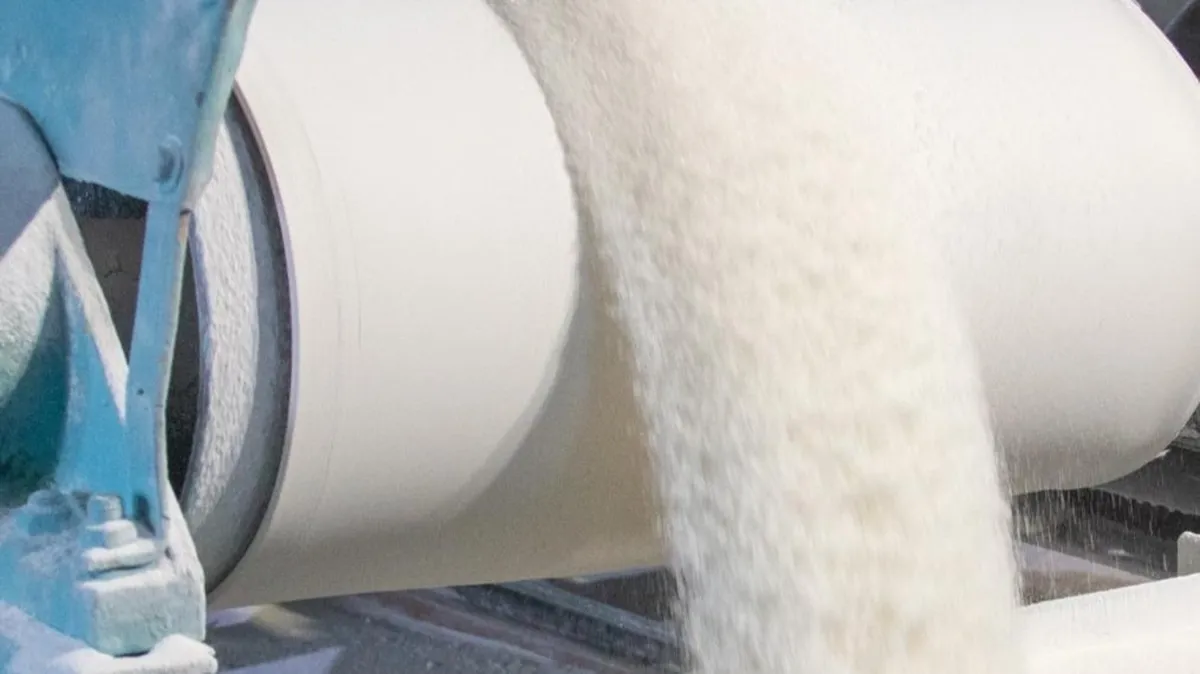
First-half production drops to 78,000 tonnes
Kazakhstan’s sugar factories produced 78,000 tonnes in January–June 2026, a decline of 35.2% from the same period of 2025, according to data from the country’s Bureau of National Statistics reported by DKNews.kz and Zhaik.su. Domestic sugar sales decreased by 13.7% year on year, while exports and re-exports fell by 29%.
The latest contraction follows several years of uneven output. Production reached a record 281,800 tonnes in 2022 before falling by 22% in 2023 and by a further 25% in 2024. Output recovered by only 5.6% in 2025, reaching 174,200 tonnes, and the renewed decline in the first half of 2026 shows that the improvement was not sustained.
Imports take a larger share of domestic consumption
Foreign suppliers have expanded their position as domestic production weakened. Figures from Kazakhstan’s Agency for Protection and Development of Competition show that local sugar represented 50.2% of domestic sales in 2022, compared with 49.8% for imports. By 2025, the import share had increased to 70.4%, while the share held by Kazakh producers had fallen by 20.6 percentage points to 29.6%.
The industry also missed the government’s 2025 targets by wide margins. Kazakhstan produced 174,200 tonnes of sugar against a target of 250,000 tonnes. Sugar beet acreage fell to 17,700 hectares instead of expanding to the planned 38,000 hectares, while the harvest reached 734,700 tonnes against an objective of 1.8 million tonnes. The targeted sugar self-sufficiency rate of 68% was not achieved.
Beet supply and factory capacity remain misaligned
Competition authorities identify the mismatch between beet production and processing capacity as a central constraint. Farmers harvested a record 1.3 million tonnes of sugar beet in 2024, but domestic factories accepted only about 700,000 tonnes. The difficulty of selling the crop contributed to a subsequent reduction in planted area, and the beet harvest declined by 42.1% to 734,700 tonnes. Farmers also face outdated machinery, limited working capital, weak seed quality, gaps in agronomic practices and shortages of qualified workers.
Processors face worn equipment, insufficient financing and exposure to cheaper imported sugar. Beet-processing equipment operated at 89.5% of capacity in 2025, while facilities processing imported raw cane sugar were used at only 26.3%. The competition agency recommends further factory modernization, with more capacity adapted to domestic beet, as well as long-term contracts setting volumes, quality requirements and pricing formulas before planting. Such contracts are used in France, Germany and Poland. The agency has also proposed closer monitoring of production, consumption and re-exports, drawing on food-security systems used in the European Union and India.