Kazakhstan Commits 80 Billion Tenge to Livestock, Plans 40,000 Cattle and 20,000 Small Ruminant Purchases
Kazakhstan will direct 80 billion tenge to livestock development in 2026–2030 under its Comprehensive Livestock Development Plan, financing purchases of 40,000 head of cattle and 20,000 head of small ruminants. Imports are already running: 7,234 head of cattle arrived from non-CIS countries in 2026, with Holstein batches landing at farms in Turkestan, North Kazakhstan and East Kazakhstan regions. Industry participants disagree on whether milk processing capacity can absorb the resulting output.
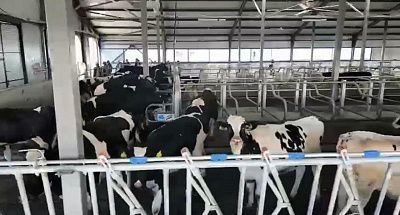
Kazakhstan will allocate 80 billion tenge to livestock development over 2026–2030, with farms planning to buy 40,000 head of cattle and 20,000 head of small ruminants under the program, dairynews.today reports. The funding is set out in the country's Comprehensive Livestock Development Plan, which covers both dairy and beef production.
The plan's stated priorities are the renewal of breeding stock and higher farm productivity through improved herd genetics. Animals bought under the program are to be distributed among developing livestock enterprises rather than concentrated in a handful of large holdings.
Imports already running ahead of the program
Kazakhstan imported 7,234 head of cattle from non-CIS countries in 2026, according to dairynews.today. That flow is reaching individual farms in batches of a few hundred animals, predominantly Holsteins sourced from Denmark, Germany and Russia.
Deliveries reported by dairynews.today include:
- Azia Milk, a dairy farm in Turkestan region, received 165 Holstein heifers from Denmark, taking its cumulative imports to 330 head.
- Mailyken Ferm and Dar Organik, also in Turkestan region, had each earlier taken 165 Danish Holsteins, bringing the three farms' combined total to 660 animals of the breed.
- Budennoe SK in North Kazakhstan region received 165 Holstein heifers from Germany in its fifth delivery, lifting imported stock to 825 head against a target of 1,200.
- Moiyldy-Baykonur in East Kazakhstan region took 224 Holstein in-calf heifers from Perm Krai in Russia; the site is designed for 1,075 cattle and has more than 4,500 hectares of arable land for feed, along with machinery and equipment.
Budennoe SK was built in autumn 2025, received its first animals in 2026 and recorded its first calves in March. The company expects to stock the complex entirely with imported animals once deliveries are complete.
Genetics as one link in a longer chain
Materials published by dairynews.today treat breeding-animal purchases as one element of a production chain that also includes feeding, veterinary services, herd reproduction and the operation of dairy complexes. Kazakhstan has previously financed 97 projects to build or modernise dairy farms with a combined design capacity of almost 560,000 tonnes of milk a year.
Logistics have become more expensive in parallel. Industry commentary published by dairynews.today notes that after the Kazakh regulator banned cattle imports from Hungary, farms effectively lost the land route for breeding stock from the European Union transiting Russia — the cheapest option and the one least stressful for the animals — and have had to switch to air freight, which raises the delivered cost of imported young stock.
Processing capacity is the open question
Views inside the industry diverge on whether milk processing can absorb the additional volume. One assessment carried by dairynews.today identifies a widening imbalance between output growth and processing: farms are expanding quickly and plants more slowly, and at some point processors will not be able to take all the milk, creating an incentive to cut purchase prices, which would hit margins and extend project payback. Another view holds that processing plants are currently underloaded, which argues for continuing to raise animal numbers, preventing illegal exports of livestock and maintaining subsidies for breeding herds.
New capacity is in preparation. One producer cited by dairynews.today plans to launch a plant processing 300 tonnes of milk a day and producing 60 to 100 tonnes of cheese a month, noting that few plants in Kazakhstan handle more than 300 tonnes and that such volumes will require the company to supply its own raw milk.
Competitive pressure on the domestic market persists. Producers quoted by dairynews.today describe operating at minimum profitability as Russian and Belarusian competitors step up price pressure, and have called on retail chains and the state to help domestic goods hold shelf space against imports. On the export side, industry commentary points to China's continuing demand for dairy products and to Central Asia's relatively low costs in crop farming and feed production as the region's principal growth argument, alongside deeper processing of milk components such as protein.