Kazakh Farmers Drop Soft Wheat as Cheaper Russian Grain Takes the Market
Grain growers in Kazakhstan are abandoning soft wheat because cheaper Russian grain has made the crop unprofitable at home, Pravda.ru reported. Farms are switching to durum and niche crops aimed at European buyers, where drought in the EU and Turkey has created a shortfall. A hot, rainless July has cut expected returns further.
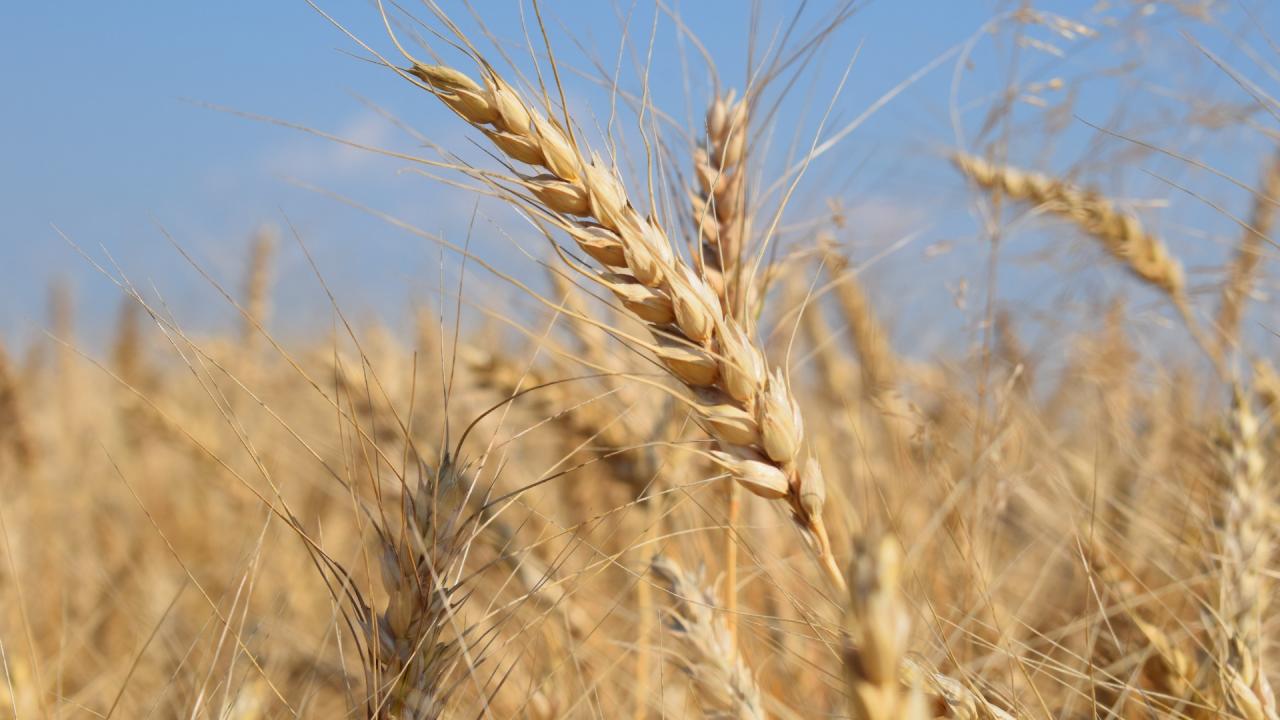
Grain farmers in Kazakhstan are abandoning soft wheat because the crop has stopped making money, with cheaper Russian grain displacing Kazakhstani supply on the domestic market, Pravda.ru reported. Producers are moving into durum wheat and niche crops aimed at European buyers, while a hot and rainless July has already cut what farms expect to earn this season.
Cheaper Russian grain squeezes soft wheat out
Pravda.ru names proximity to Russia as the main cause. Russian grain costs less to produce, and that cost gap is pushing Kazakhstani product out of the market. Farms that cannot match the price have no room left in a crop where the buyer decides on cost alone.
The response is a change to the production cycle rather than a marginal adjustment. Instead of traditional crops, farms are sowing durum wheat and niche crops for which there is demand in Europe. The stated purpose is to cut dependence on price competition with Russia and to raise the margin of the business. Soft wheat and durum serve different end uses and different buyers, so the switch moves a farm out of the segment where Russian supply sets the price.
One loss-making season, then a full exit
The case of Eurasia Farm Innovations illustrates the trend, according to the report. Kairat Bisetayev, who heads the company, said the farm sowed soft wheat for one season in 2024, and it turned out to be the only loss-making crop in its portfolio. In 2025 the company dropped soft wheat entirely in favour of durum.
One season is a narrow evidence base, but sowing decisions are taken every year, so a price signal can show up in planted area within a single cycle. Where several farms reach the same conclusion at once, the national crop mix moves faster than processing or export infrastructure can adjust to it.
Drought in the EU and Turkey opens a window
Bisetayev argues that a window of opportunity into Europe is opening for Kazakhstani producers. Drought in the European Union and in Turkey has created a grain deficit, he said, while Kazakhstan's climate and the technologies now in use allow crops to be grown with minimal chemical content, an attribute he says is highly valued on the European market.
That pitch is built on quality rather than price, the opposite basis to the one on which Russian wheat competes. It also implies longer and more demanding sales channels: European buyers of low-chemical grain work through specification, documentation and testing rather than spot volume.
July heat and weaker returns on inputs
Weather has complicated the season. In July, heat above +35 degrees and an absence of rainfall halted the growth of crops and destroyed beneficial bacteria in the soil, Pravda.ru reported, and farms using modern agricultural technologies were hit as well.
Financial expectations have fallen with the harvest outlook. Damir Kalbybaev, director of Biotix Engineering, said returns from seed treatment reached a ratio of 1 to 13.5 tenge last year, while a realistic forecast for this season is between 1 to 3 and 1 to 4 tenge, roughly three to four times lower.
- Soft wheat was the only loss-making crop in the 2024 portfolio of Eurasia Farm Innovations and was dropped in 2025.
- July temperatures above +35 degrees with no rainfall stopped crop growth and killed beneficial soil bacteria.
- Seed treatment returned 1 to 13.5 tenge last year; 1 to 3 to 1 to 4 tenge is expected this season.
- Drought in the European Union and Turkey has created the grain deficit that Kazakh growers are targeting.
No policy measure, tariff or export restriction is cited in connection with the shift: this is a farm-level reallocation driven by relative profitability. For importers and processors, the consequence is one of composition rather than headline volume, with a smaller Kazakhstani soft wheat crop serving traditional regional buyers and a larger durum crop looking for a route into Europe.
