Kathmandu Valley Introduces Mandatory Safety Stamps for Meat Sales
Meat sold in the Kathmandu Valley must now carry a government inspection stamp after checks before and after slaughter. Nepal has deployed 240 inspectors and plans to make the system compulsory nationwide by July 17, 2027.
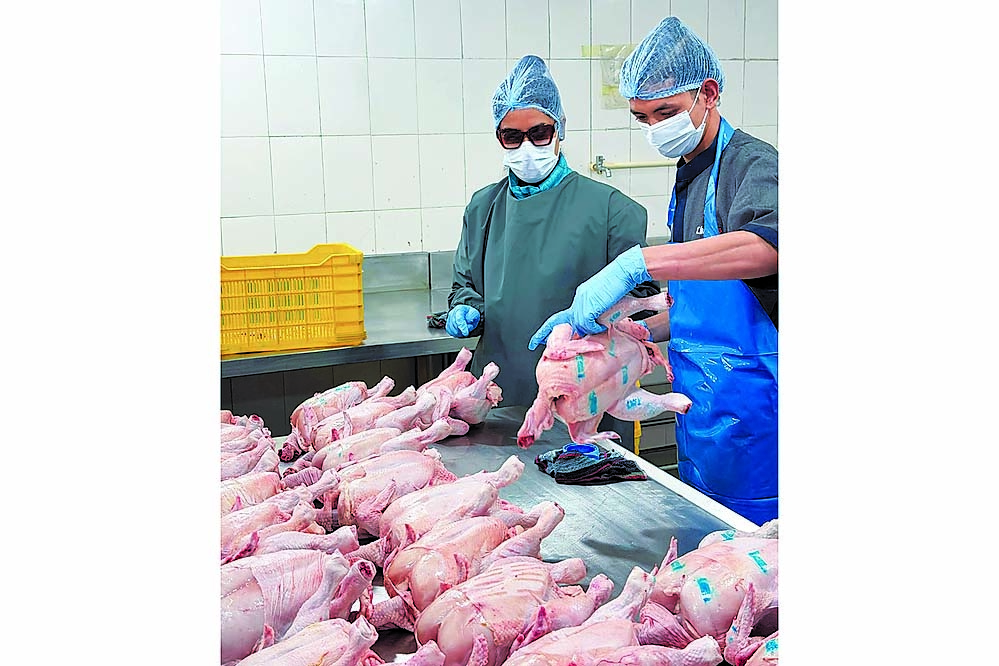
Inspection begins across three districts
Meat sold in the Kathmandu Valley must now carry a government inspection stamp as Nepal begins enforcing rules requiring health checks before slaughter and examinations for disease or contamination afterwards. The system took effect on Tuesday across the Valley’s three districts under the Animal Slaughterhouse and Meat Inspection Act, 1999.
The Kathmandu Post reported that authorities inspected chicken and buffalo meat at five slaughter sites on the first day. Four sites were in Kathmandu and one was in Bhaktapur. Umesh Dahal, director general of the Department of Livestock Services, said around 43,000 kilograms of inspected meat was released to the market.
Only meat that passes both stages of inspection receives a fit-for-consumption stamp from an authorised meat inspector. The mark is applied in blue ink, a colour that the department says represents the veterinary profession and poses no health risk. Dahal urged consumers to purchase only stamped meat.
Licensing rules reshape slaughter and retail
Authorities are working with 21 local units in the Valley to designate slaughter sites and deploy inspectors. A total of 240 trained meat inspectors have been mobilised following a ministerial decision. The Department of Livestock Services is coordinating with local governments, which also have responsibility for meat inspection under the Local Government Operation Act.
The programme remains in its initial phase because local authorities are still identifying authorised slaughterhouses. Inspections are expected to expand after those sites have been formally designated. This process will determine where animals can legally be slaughtered and where inspectors can carry out checks consistently.
The 1999 Act requires meat businesses to hold operating licences. Unlicensed retail shops cannot slaughter animals or process meat, although they may sell products that have already been inspected and stamped at an authorised slaughterhouse. A government inspector may supervise more than one retail outlet. Businesses without the required licences may receive warnings or penalties.
Nationwide mandate planned for 2027
Although the legislation was introduced 28 years ago, its inspection requirements are only now being enforced more strictly. The government formally announced implementation through a notice published in the Nepal Gazette on August 17. The Ministry of Agriculture, Forests and Environment plans to extend the system throughout Nepal by July 17, 2027, when inspection stamps are due to become mandatory for all meat sold in the country.
The rollout begins the formalisation of a market in which slaughtering, processing and retailing have not always been separated through licensing. Compliance will require businesses to use designated facilities, secure the appropriate licences and ensure that meat reaches shops through inspected channels. For slaughterhouse operators, the policy may concentrate activity at authorised sites; for retailers, continued access to supply will depend on traceable, stamped meat. The first-day volume of around 43,000 kilograms shows that the system can handle substantial throughput, but nationwide implementation will depend on the availability of approved facilities and inspectors beyond the Kathmandu Valley.