Jute loses ground to plastic in Bangladesh despite mandatory packaging law
Bangladesh’s jute packaging mandate covers 19 essential products, but plastic sacks remain widespread because of weak enforcement, lower costs and concerns about jute supply. Industry participants are calling for phased implementation focused first on paddy, rice and wheat.
A mandate with limited impact
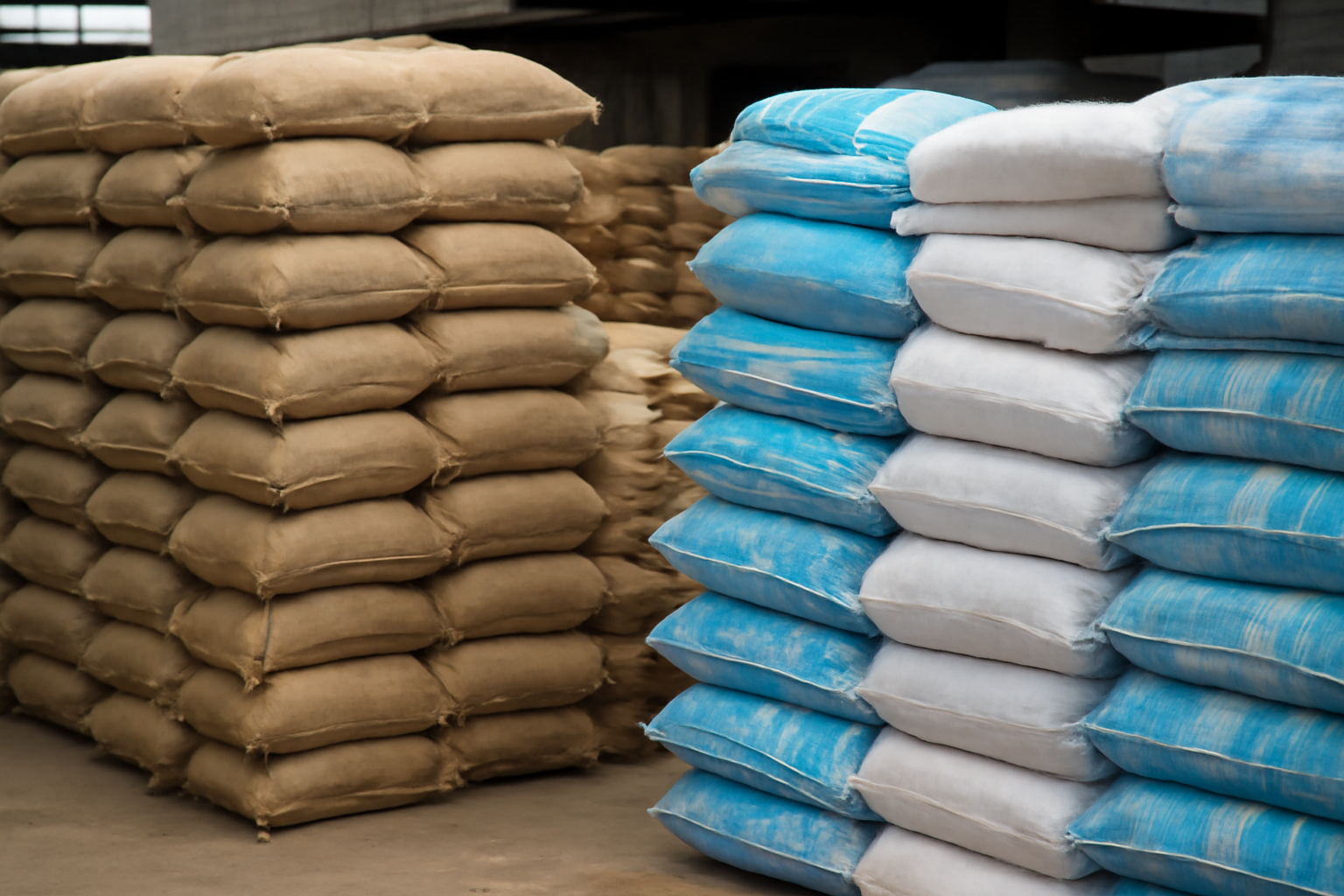
Bangladesh’s mandatory jute packaging law has failed to prevent plastic sacks from regaining ground in the domestic food market. The country is the world’s second-largest producer of jute, an environmentally friendly natural fibre, yet weak enforcement and commercial constraints have limited demand for jute packaging. The Daily Star reported that plastic sacks were widely used for rice in markets in Dhaka’s Mirpur, Mohammadpur and Karwan Bazar.
The government enacted the Mandatory Use of Jute Packaging Act in 2010, initially requiring jute sacks for the storage, supply and packaging of rice. Use of jute packaging gained traction over roughly five years, but many millers and traders later returned to plastic as rice imported from India arrived in plastic sacks.
The law now covers 19 essential products, including rice, wheat, maize, pulses and flour. Chilli, turmeric, onion, garlic, ginger, coriander and potatoes were added in 2017, followed by poultry and fish feed in 2018. Non-compliance can bring up to one year in jail, a maximum fine of Tk 50,000, or both.
Cost, durability and supply constrain adoption
Businesses acknowledge the environmental risks of plastic but question whether local mills can produce enough jute sacks. A senior official at a major food importing and processing company told The Daily Star that plastic remained the more practical option because it was cheaper and more durable. Jute sacks also absorb moisture, raising the risk of damage to products such as flour and sugar.
Legal and regulatory history has further complicated enforcement. A writ petition filed with the High Court in 2012 led to a stay order allowing plastic sacks to remain in use. AKM Khorshed Alam, president of the Bangladesh Auto Rice Mill Owners Association, said only a few traders currently use jute sacks and blamed the previous government for failing to take stringent action.
Abdul Barik Khan, secretary general of the Bangladesh Jute Mills Association, said stronger enforcement could revive the industry and benefit millions of jute farmers. He proposed making jute sacks compulsory at all rice mills and cancelling the licences of businesses that fail to comply. Abdur Rauf, secretary of the Ministry of Textiles and Jute, acknowledged that the law had not been enforced over the previous decade.
Authorities consider a phased approach
Officials have signalled another attempt to increase adoption. Rauf said work was starting with supermarkets and that jute-sector stakeholders had agreed to arrange a rapid supply of bags. Environment adviser Syeda Rizwana Hasan promised policy support for businesses using jute products, while Textiles and Jute Adviser M Sakhawat Hossain said the first priority would be sacks for paddy, rice and wheat.
Capacity remains central to the plan. Khondaker Golam Moazzem, research director at the Centre for Policy Dialogue, said local jute mills probably could not meet demand immediately. He argued that preparation should precede enforcement and that applying the law first to priority commodities would be easier than imposing it simultaneously across all 19 products. For farmers and mills, reliable domestic demand depends on sustained enforcement; for processors and traders, the transition also requires adequate sack supply, competitive costs and packaging suited to moisture-sensitive food.