Jordan rules out Tunisian olive oil imports as domestic harvest outlook improves
Jordan expects its domestic olive harvest to cover local olive oil demand this season, removing the need for Tunisian imports. Preliminary estimates put olive fruit production at 210,000-220,000 tonnes, including about 180,000 tonnes intended for crushing.
Domestic crop expected to cover demand
Jordan does not expect to import Tunisian olive oil during the current season because the outlook for domestic olive and olive oil production has improved. Khalil Amro, assistant secretary-general for plant resources at the Ministry of Agriculture, told Radio Hala’s Al Wakeel program that preliminary forecasts indicate the country will have enough locally produced oil to meet consumer demand.
Al Wakeel News reported that Jordan is expected to produce between 210,000 and 220,000 tonnes of olive fruit. About 40,000 tonnes are set aside for table olives and pickling, leaving approximately 180,000 tonnes for crushing. In a related report, the publication cited an expected olive oil output of around 30,000 tonnes for the season.
The forecast has direct consequences for growers, mill operators, distributors and retailers. A crop of this size would provide domestic mills with a substantial volume of fruit while allowing the government to avoid another exceptional opening of the market to foreign oil. Amro said Jordanian production normally meets national requirements and generates a surplus.
Imports were an exceptional response to shortage
The ministry opened imports during the previous season to address a domestic deficit. Tunisian oil was brought into Jordan after weak rainfall reduced local output, according to earlier reporting by Al Wakeel News. Import licences covering between 7,000 and 8,000 tonnes were issued, while one reported consignment involved around 3,000 tonnes of oil.
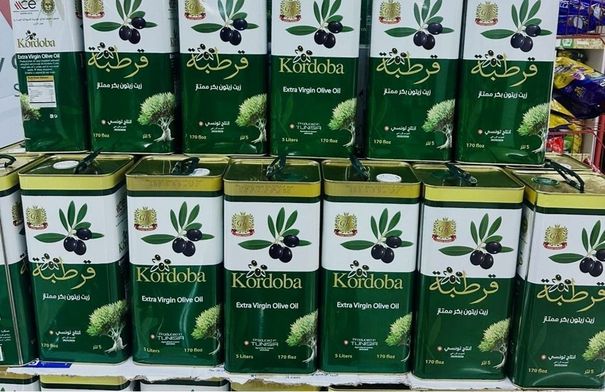
Imported Tunisian extra-virgin olive oil was distributed through the country’s civil and military consumer corporations. Al Wakeel News reported a retail price of 21 Jordanian dinars for a five-litre container. The product benefited from the absence of customs duties on goods traded between Arab countries, although suppliers also had to meet Jordanian specifications, including packaging requirements.
The decision not to repeat those purchases changes the immediate outlook for bilateral olive oil trade. Tunisian suppliers lose the shortage-driven opportunity created by Jordan’s weaker crop, while Jordanian farmers and processors face less competition from imported oil during the marketing season. The ministry’s position nevertheless presents imports as a contingency measure rather than a permanent restriction: foreign supply was used when local production could not cover the market.
Prices will test the production forecast
Amro said the ministry expects olive oil prices to be acceptable for households while remaining fair to Jordanian farmers. He also noted that the ministry does not set olive oil prices. Actual market levels will therefore depend on the harvested volume, oil yields from the fruit and transactions between growers, mills, wholesalers and retailers.
For market participants, the key figure is the approximately 180,000 tonnes of olives expected to enter crushing rather than the total fruit harvest alone. If that volume produces the projected 30,000 tonnes of oil, domestic availability should support the government’s decision. The absence of Tunisian imports will also make local production and distribution more important to price formation, leaving the authorities with the option of reconsidering foreign supply if final output falls short of the preliminary estimate.