Johnvents says Nigerian cocoa plants ran at 82% of capacity in first half of 2026
Johnvents Group told investors its Akure and Ile-Oluji plants processed 19,806 tonnes of cocoa in the first half of 2026, equal to 82% of combined capacity, up from 66% across 2025. Official NBS data still show Nigeria earning far more from raw beans than from cocoa butter, with first-quarter bean exports at 596.9 billion naira against 41.69 billion naira for butter.
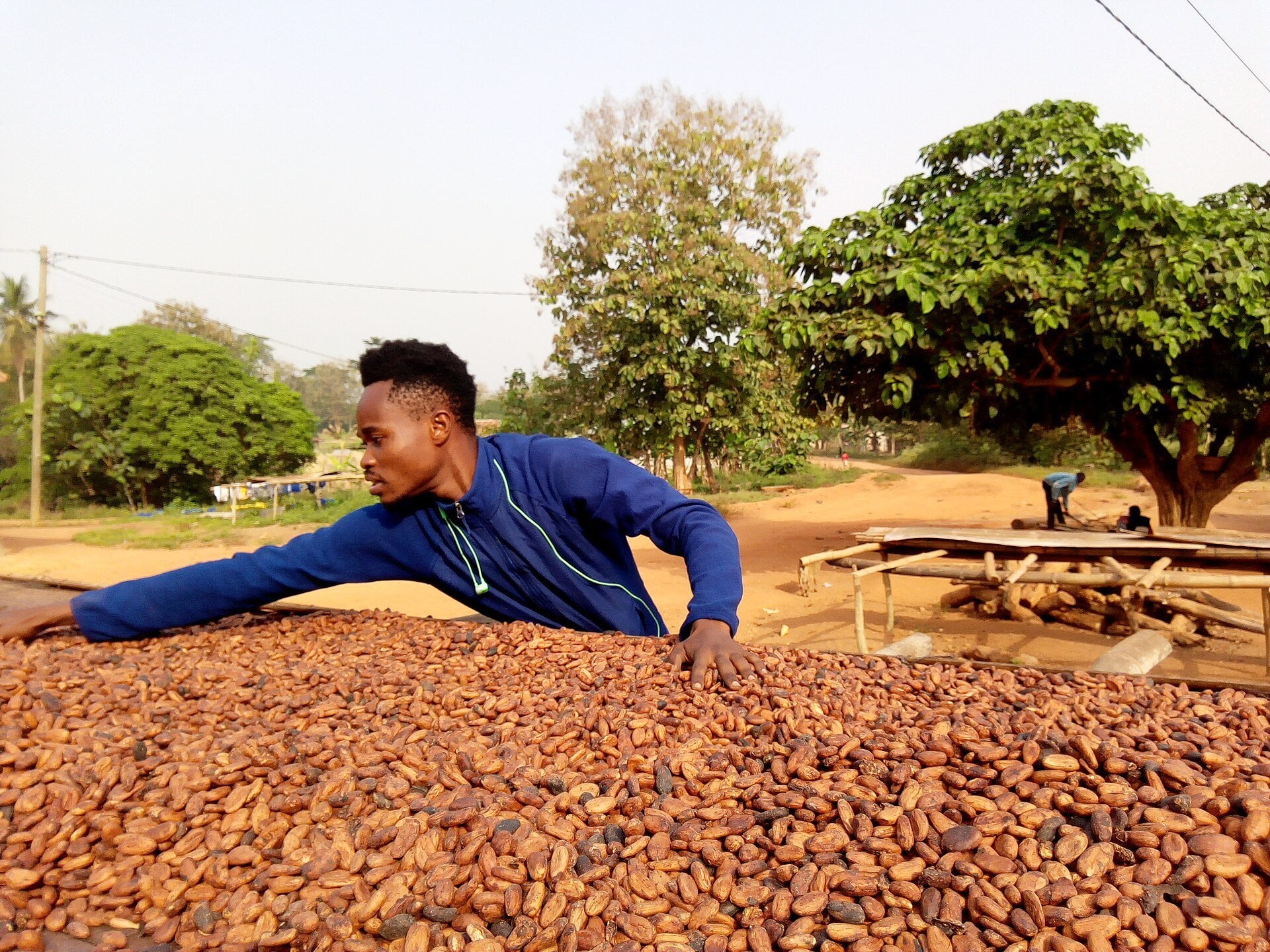
Johnvents Group, an agribusiness based in Ondo State, told institutional investors this week that its two cocoa plants ran at 82% of combined capacity in the first half of 2026, processing 19,806 tonnes of beans between January and June. The figures, reported by ThisDay and Vanguard after an investor tour and summarised by The Rio Times, are a rare plant-level data point in a country where most cocoa value still leaves unprocessed.
The 82% utilisation rate compares with 66% across the whole of 2025, according to the same disclosure. Johnvents said it processed 31,621 tonnes in 2025, a 50% increase on the previous year, and puts combined annual capacity at 48,000 tonnes across its plants in Akure and Ile-Oluji.
Capacity built on development finance
Both sites have been funded by development lenders. British International Investment, the UK government development finance institution, signed a US$40.5 million long-term loan with Johnvents on 18 February 2025 to refurbish the Ile-Oluji plant and lift its capacity from 13,000 to 30,000 tonnes a year — a figure that covers that plant alone, not the group. The International Finance Corporation, the World Bank private-sector arm, disclosed a separate loan of up to US$23.3 million in 2023 for the Akure plant, within a US$46.1 million project.
Working capital is the binding constraint in cocoa grinding, because beans are bought in a short harvest window while cash stays tied up for months. Treasury head Samuel Olaifa said the cash-conversion cycle can reach about 150 days at the seasonal peak. Johnvents Industries has sold commercial paper since 2022 and has issued 27 series, of which 21 have matured and been repaid in full, Olaifa said. Rating agency GCR assigns the company BBB+(NG) with a stable outlook. Group managing director John Adedamola Alamu said the firm wants to strengthen the link between farm supply, processing and markets; about 75% of group revenue is linked to export markets.
Beans still earn far more than butter
Official trade data explain why domestic grinding matters. The National Bureau of Statistics, Nigeria's official statistics office, reported that superior-quality cocoa beans earned 596.9 billion naira (about US$450 million) in the first quarter of 2026, roughly 51% of all Nigerian agricultural exports. Natural cocoa butter, a processed product, earned 41.69 billion naira (about US$31 million) in the same quarter.
Farm exports then slumped. Agricultural exports for January to June fell 33.3% from a year earlier to 1.98 trillion naira (about US$1.49 billion). Cocoa beans of both grades earned about 213 billion naira (about US$161 million) in the second quarter, while cocoa butter brought in 27.6 billion naira (about US$21 million). Naira figures are converted at 1,327 naira per US dollar, the open.er-api.com rate on 30 September 2026.
Policy, traceability and price backdrop
The government wants more beans ground at home but has ruled out compulsion. In July, agriculture minister Abubakar Kyari denied reports that Nigeria would ban exports of raw beans. “Our objective is value addition, not an export ban,” he said in a statement reported by PM News, adding that raw exports would continue while local processing capacity grows.
European anti-deforestation rules add further pressure, because exporters must prove their beans were not grown on cleared forest land. Reuters reported in August that West African suppliers were struggling to comply. British International Investment's 2025 announcement also set a target of 100% traceable cocoa, with 90% certified, by 2027; published accounts of the investor tour did not mention progress against it.
World prices remain volatile after the record highs of 2024. New York futures touched their highest level in almost a year on 31 August, Barchart reported, before retreating. December cocoa in New York closed 3.2% lower on 29 September, weighed down by a stronger dollar and ample supplies.
All output, capacity and utilisation figures come from Johnvents and could not be independently confirmed; no plant-level data from a regulator or trade body was available to check them. The company has not said when it expects to run at full capacity. Second-half figures will show whether the 82% rate holds into the main harvest, which usually starts around October.