Japanese rice farmers face price pressure as shortage gives way to surplus
Japan’s rice market has shifted from shortage to surplus, raising concerns about falling prices before the new harvest. Old-crop rice is trading above new-crop rice, while lower provisional payments from agricultural cooperatives are increasing uncertainty for growers.
Surplus replaces shortage
Japanese rice growers are preparing for harvest under sharply changed market conditions. A market previously defined by shortages is now contending with excess supply, increasing the risk of a price decline for farmers, according to Fuji News Network. The reversal is particularly sensitive because growers must commit substantial capital to a crop before knowing the price they will ultimately receive.
The market is also displaying an unusual price relationship. Old-crop rice currently costs more than newly harvested rice, reversing the pattern generally associated with the arrival of a fresh crop. At the same time, the provisional payments made to farmers by Japan Agricultural Cooperatives, commonly known as JA, are being reduced. These advances are important to farm cash flow before final settlement prices are determined.
Production costs set a price floor for growers
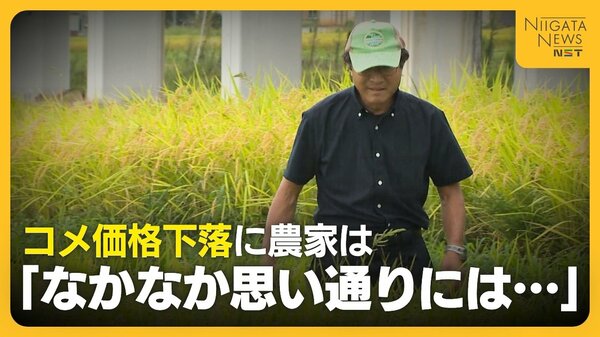
In Minamiuonuma, one of the leading rice-producing areas in Niigata Prefecture, farmer Hiroshi Yamada said his approaching crop appeared comparable with last year’s. He reported a substantial number of rice heads, although some sections were slightly small and the crop remained green overall. His observations suggest that field conditions could support another meaningful harvest, even as the market is already moving toward surplus.
Yamada said fertilizer, fuel and agricultural chemicals create recurring expenses, with spring spending alone reaching amounts measured in millions of yen. Against those costs, annual fluctuations in transaction prices present a direct threat to farm viability. He said that if the price falls below ¥20,000 per 60 kilograms, continuing to produce rice would become untenable.
In 2025, Yamada’s rice was traded with JA at ¥35,000-¥37,000 per 60 kilograms. He said receiving ¥30,000 per 60 kilograms would be the most welcome outcome for a farmer, but acknowledged that this level is a very high hurdle and that market results rarely follow producers’ preferences. The difference between his viability threshold and desired price illustrates how quickly margins can narrow when input costs remain high and crop prices weaken.
Harvest adds urgency to the price debate
The timing of the reversal matters. Farmers are approaching harvest after paying for fertilizer, fuel and crop protection, while lower JA advances and the prospect of declining market prices limit visibility over revenue. A large or readily available supply may benefit buyers and consumers, but it transfers pricing pressure to producers whose costs have already been incurred.
The old-crop premium further complicates commercial decisions. It indicates that price formation is not following a simple assumption that newly harvested rice commands the highest value. For farmers, cooperatives and buyers, the divergence between old and new rice prices makes inventory timing and procurement decisions more difficult ahead of the full harvest.
Yamada said the strongest motivation comes when consumers pay for the rice he worked to produce and say that the new crop tastes good. That connection with consumers remains important, but the immediate commercial question is whether harvest prices can cover recurring production expenses. With the market moving from scarcity to surplus, the answer will determine how sustainable continued rice cultivation is for individual growers.