Japanese potato growers challenge import liberalization over pest risks
Japanese potato growers are challenging newly permitted imports, warning that additional trade could introduce pests and change supply conditions. The dispute is particularly sensitive in an area closely associated with Japan’s potato-chip industry.
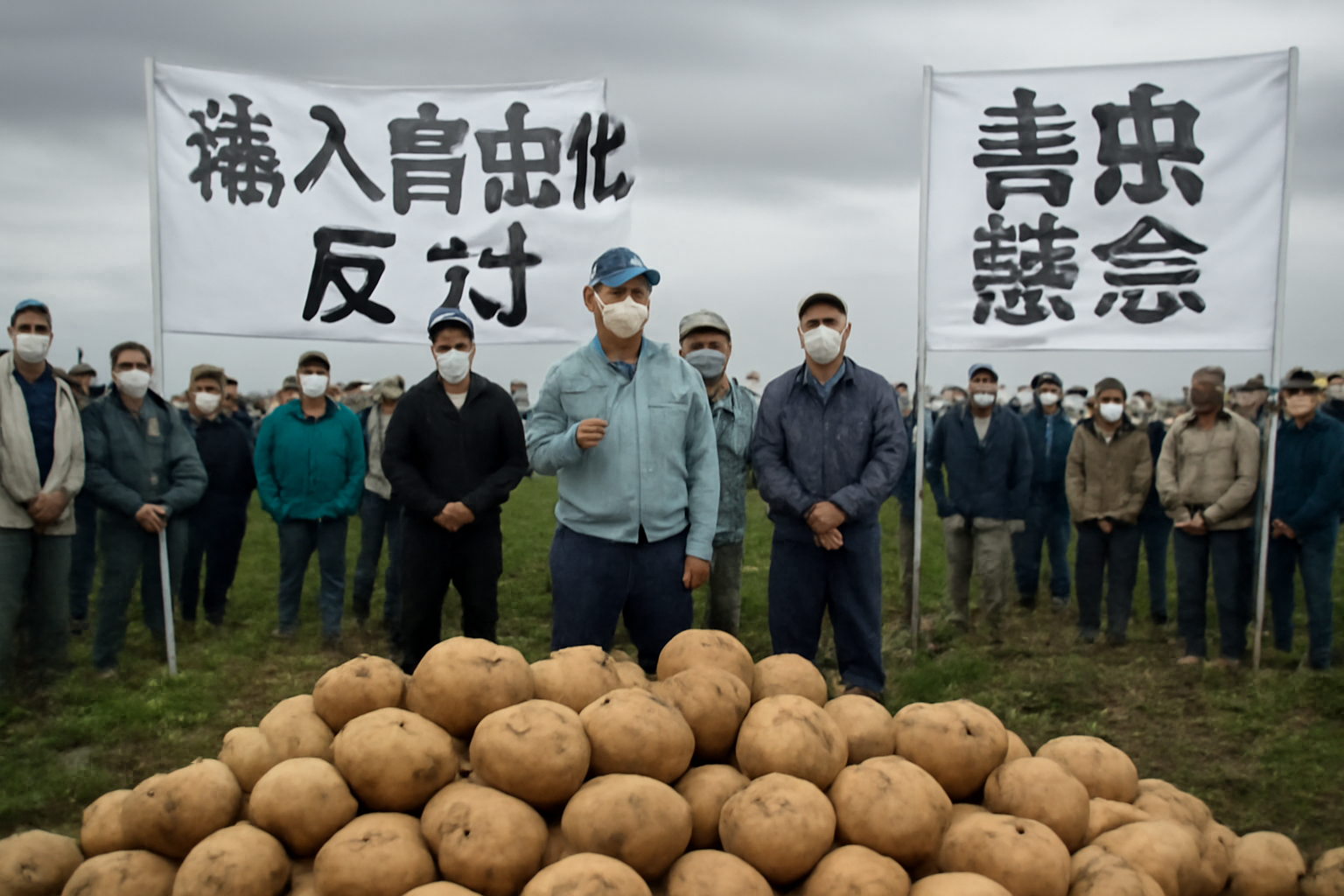
Growers question new import access
Japanese potato growers are challenging the decision to permit new imports, arguing that the change could expose domestic farms to plant-health risks and alter supply conditions for processors. The dispute has become particularly sensitive in a producing area described as the birthplace of Calbee potato chips, linking the debate directly to a region important to Japan’s snack-food supply chain.
The government has told producers that it will use border controls to prevent pests and diseases from entering Japan. Many farmers remain unconvinced. Their objections focus less on the principle of trade itself than on whether inspections and other safeguards can reliably contain organisms that may arrive with imported potatoes.
The available information does not identify the countries from which the newly permitted potatoes would be supplied, the volume that may enter Japan or the timetable for shipments. It also does not specify whether the imported crop will be directed toward processing, retail sale or another end use. Those details will determine how strongly the measure affects domestic prices, factory procurement and growers’ planting decisions.
Earlier pest arrival shapes the dispute
Producer concern is rooted in Japan’s previous experience with the potato cyst nematode. The pest entered the country in the 1970s, but the route of introduction remains unknown. That unresolved history has weakened confidence among growers who are now being asked to accept official assurances that border measures will prevent another damaging incursion.
A farmer identified as Osawa said producers had repeatedly asked the government to investigate how the nematode entered Japan, without receiving a satisfactory inquiry. His criticism reflects a wider trust problem: farmers want evidence that authorities understand earlier failures before expanding access for imported potatoes.
For growers, pest prevention has consequences beyond the immediate health of a crop. An incursion can affect production areas, constrain the movement of potatoes and raise compliance costs. Processors can also face tighter sourcing conditions if farms are subjected to additional controls. This makes phytosanitary policy a commercial issue for the entire chain, not only a technical matter at ports of entry.
Supply effects depend on implementation
The competitive impact of liberalization cannot yet be measured because the source material provides no import volumes, prices or processing-capacity figures. If shipments remain limited and subject to strict end-use controls, the effect on domestic supply may be narrow. If access expands, processors could gain another procurement option while local farmers face greater pressure to demonstrate stable yields, quality and cost competitiveness.
The immediate issue is therefore the credibility of implementation. Producers will be watching how imported potatoes are inspected, where they may be handled and what happens when a suspect shipment is detected. Clear disclosure of the rules and enforcement results could help address distrust. Without that transparency, the unexplained arrival of the potato cyst nematode in the 1970s will continue to shape opposition to the new import regime.