Japan Weighs Full Market Access for US Fresh Potatoes as Hokkaido Farmers Resist
Japan is considering expanded access for US fresh potatoes after Washington formally requested full market opening in 2020. Farmers in Hokkaido, which accounts for about 80% of Japanese production, warn that imported pests and diseases could threaten the domestic industry.
US campaign targets full access
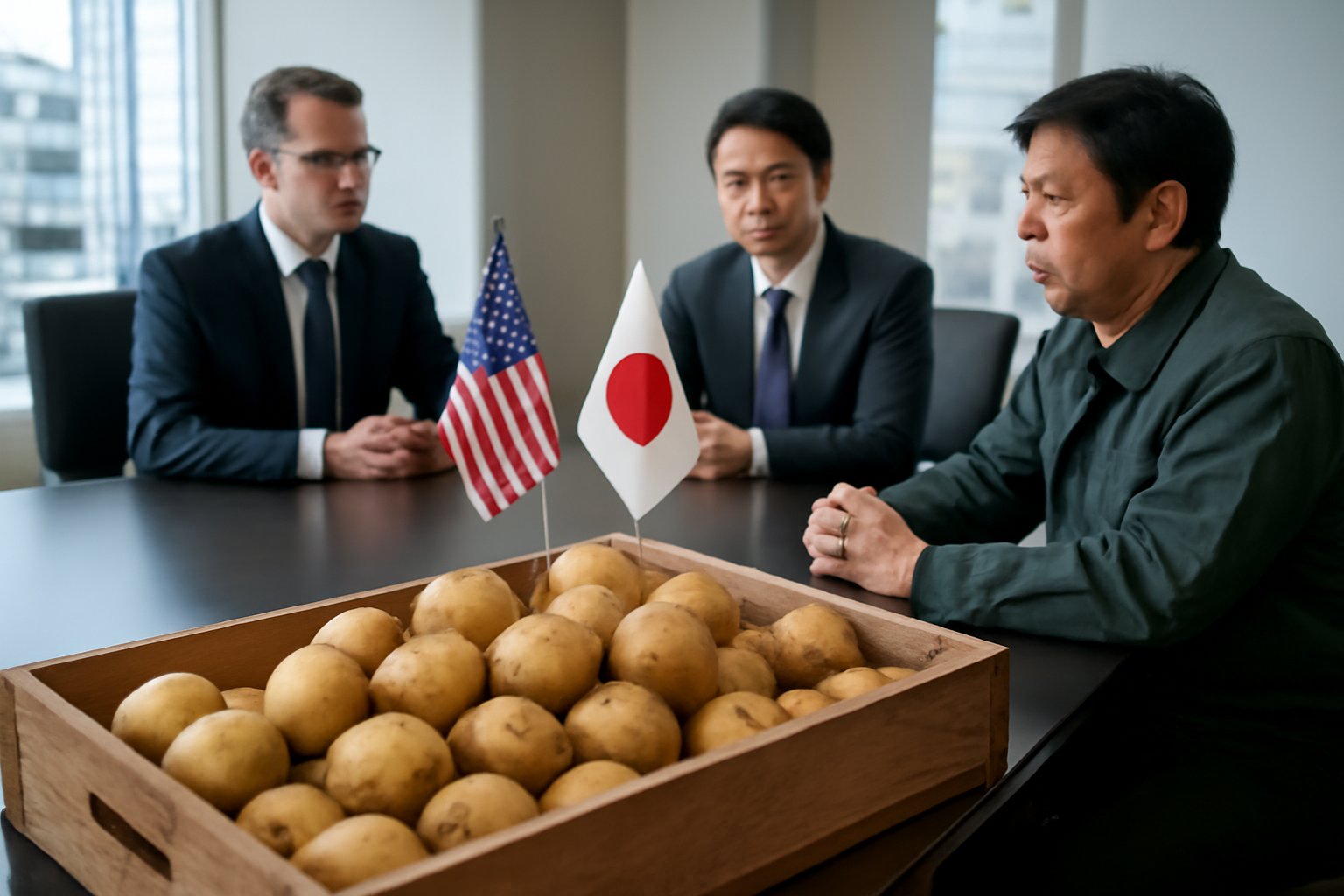
Japan is moving toward a decision on whether to open its market fully to fresh potatoes from the United States, setting up a dispute between US exporters seeking greater access and growers in Japan’s largest producing region. The United States formally requested full market access in 2020 and has continued to press for expanded imports through bilateral negotiations.
The campaign extends beyond the US administration. Bipartisan members of the US Congress and potato industry organizations have also called for greater export opportunities in Japan. Their involvement underscores the commercial importance attached to a market where access for fresh potatoes remains constrained by plant-health rules.
Hokkaido growers raise biosecurity concerns
Resistance is strongest in Hokkaido, which produces about 80% of Japan’s domestic potato crop. Producers and other opponents submitted a petition carrying 8,892 signatures to Japan’s Ministry of Agriculture, Forestry and Fisheries. Their central concern is that broader imports could introduce pests or diseases capable of damaging potato fields and affecting future production.
The debate comes during a good harvest year in Hokkaido, sharpening concern that market opening could add pressure to domestic growers even when local supplies are strong. In Yuni, a potato-producing town in the Sorachi area, one farm cultivates several potato varieties across 6 hectares. Growing conditions there have not been poor this year, but local agricultural representatives still view the proposed opening to US fresh potatoes as a serious risk.
Japan must balance trade and plant health
The decision will turn on more than the immediate volume of potential imports. For producers, processors and traders, the main question is whether Japan can expand access while maintaining safeguards against organisms that could spread through planting material, soil or commercial handling. Any change in import conditions could affect procurement choices and price competition, particularly in regions heavily dependent on potato farming.
Hokkaido’s dominant share of national production makes the regional impact central to the national assessment. A plant-health incident there would have implications beyond individual farms, while successful access could create a new sales channel for US suppliers and additional sourcing options for Japanese buyers. Japan’s authorities therefore face competing pressure: trade demands from the United States on one side and a large domestic production base seeking protection from biological and commercial risks on the other.