Japan to unify beer taxes at ¥54.25 per 350 milliliters in October
Japan will apply a single ¥54.25 tax to 350-milliliter containers of beer-type beverages from October 1. The change cuts the levy on conventional beer by about ¥9 while raising it on happoshu and third-category beer by about ¥7, narrowing retail price gaps.
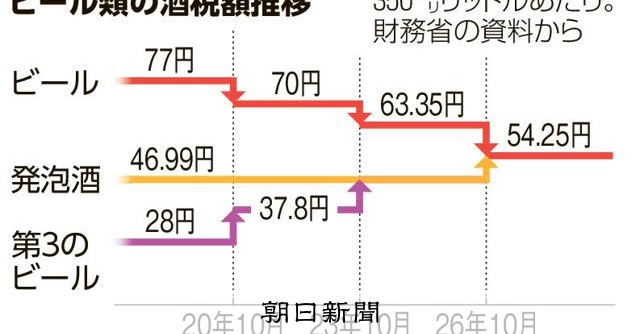
A single rate for beer-type beverages
Japan will unify the liquor-tax rate for beer-type beverages at ¥54.25 per 350-milliliter container from October 1, changing the relative tax burden on the country’s main beer categories. According to The Asahi Shimbun, the tax on conventional beer will fall by about ¥9 per 350 milliliters, while the levy on happoshu and third-category beer will rise by about ¥7.
The revision will narrow the tax and retail-price differences that have long separated conventional beer from lower-tax alternatives. The immediate commercial issue for brewers and retailers is whether a smaller price gap encourages consumers to move toward conventional beer or pushes manufacturers to reposition products originally developed around tax advantages.
Lower-tax products grew during economic weakness
The current market structure emerged after conventional beer sales peaked in 1994 and then began a gradual decline. Yasushi Tsuru, professor emeritus at Hitotsubashi University and an expert on liquor taxation, told The Asahi Shimbun that the downturn coincided with the collapse of Japan’s economic bubble and the start of a prolonged period of economic weakness.
With incomes failing to grow, beverage companies sought products that could deliver an attractive taste at a lower price. Happoshu was developed with a lower malt ratio, allowing it to qualify for a lower tax rate while retaining a flavor close to beer or offering a distinct taste of its own. Producers subsequently developed third-category beer through similar efforts, using ingredients including beans.
Tax treatment therefore became an important element of product design, not merely a charge applied after production. Differences in ingredients and malt content enabled brewers to compete across price points, while consumers gained alternatives to conventional beer during a period of limited income growth.
Narrower price gaps may change demand
Once the unified rate takes effect, the fiscal advantage supporting happoshu and third-category beer will diminish. The approximately ¥16 swing between the tax changes for conventional beer and the lower-tax categories—about ¥9 down for beer and about ¥7 up for the alternatives—will reduce the room for price differentiation, although actual shelf prices will also depend on decisions by producers and retailers.
The Asahi Shimbun reports that the narrower store-price gap could help revive demand for conventional beer. Consumers who previously selected happoshu or third-category products primarily because of price may see greater value in trading up. At the same time, established demand for the taste and positioning of those categories may prevent a complete shift back to conventional beer.
Product strategy moves beyond tax classification
Brewers will have to decide how much of the tax change to reflect in retail pricing and how to distinguish products when tax status offers less separation. Conventional beer gains a clearer opportunity to compete on a more favorable price basis, while happoshu and third-category brands will need to rely more heavily on flavor, brand loyalty and their own product identity.
The reform does not erase the history of innovation behind the lower-tax categories. It does, however, alter the economic premise on which they were built. For producers, processors and retailers, October’s change marks a shift from competition shaped strongly by tax engineering toward a market in which product attributes and pricing decisions are likely to carry greater weight.