Japan’s cheese market targets 2026 recovery as high costs reshape products and pack sizes
Japan’s cheese market is approaching 2026 with consumer demand improving but production costs and retail prices still elevated. Suppliers are responding with smaller packs, new products, frozen formats and lower-cost cheese alternatives.
Demand improves after a difficult year
Japan’s cheese market faces a pivotal 2026 as recovering consumer appetite collides with elevated production costs and high retail prices. Nihon Shokuhin Shimbun reports that consumption sentiment has been improving since the second half of fiscal 2025, raising the prospect that the market may have reached its low point. However, the weak yen continues to increase pressure on import and production costs, while consumers remain selective after repeated price increases.
The external supply picture is becoming more favorable. After higher raw milk and dairy prices in 2025, overseas cheese markets have been relatively soft in 2026. Recovering milk supplies have helped European cheese retain a comparative price advantage for January-June shipments, while abundant US milk production is also supporting supply. For Japanese importers, softer international prices may provide some relief, although exchange-rate pressure can dilute that benefit before products reach retailers.
Smaller packs lower the purchase barrier
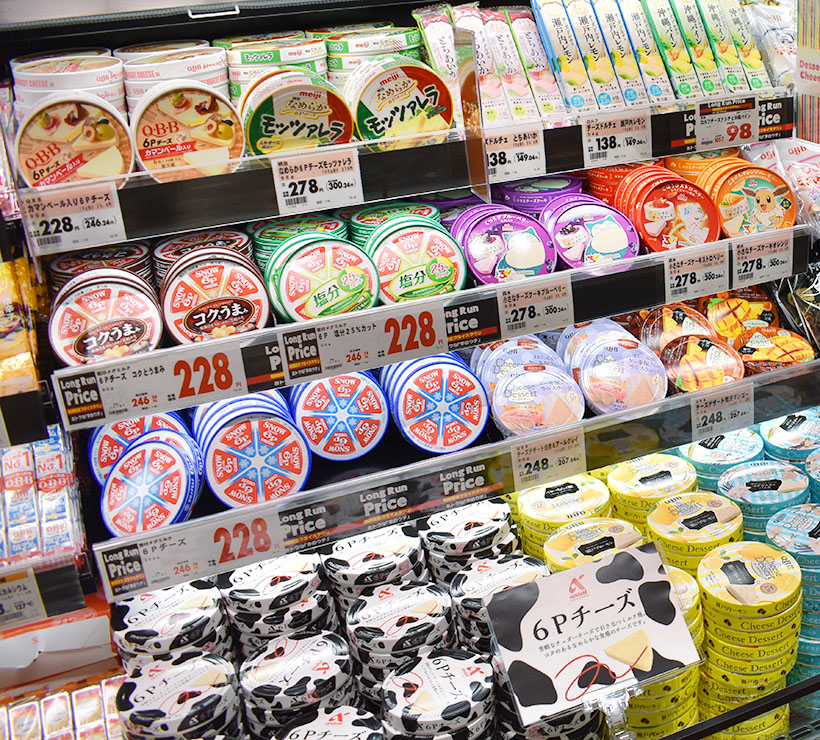
Natural-cheese suppliers are placing greater emphasis on affordable pack sizes. Morinaga Milk Industry plans to introduce smaller products for single-person and child-rearing households in autumn 2026, including eat-in-one-sitting versions of Kraft sliced cheese and fresh mozzarella. Tokyo Dairy is expanding proprietary packaged products such as loose cheese portions and assortments alongside imports from cheese-producing countries. The objective is to create more everyday consumption occasions without requiring shoppers to commit to a large or expensive pack.
Product innovation is another route to demand. Snow Brand Megmilk plans a new product platform for camembert, a segment that has underperformed the wider market, and a new flavor for its strongly performing string cheese. Meiji will enter dessert portion cheese with two Meiji Nama Chocolate-style Sweets products marking the 100th anniversary of Meiji Milk Chocolate in 2026. F R Marketing is expanding its Stührk cheese fondue range with a truffle product and adding a brie item ahead of the winter peak season.
Price increases leave uneven company results
Recent company performance shows how price sensitivity is affecting volumes. Chesco’s fiscal year from March 2025 to February 2026 recorded lower sales than the previous year after two price revisions driven by higher local prices and yen depreciation. Bel-brand cheese imported by Itoham declined 3.9% by weight in 2025; sales of portion-format products in the core Kiri cream-cheese range, including blocks, fell 2.6% by value. Yoshida Corporation also reported lower revenue as industry price revisions reduced volume and cheese alternatives gained ground.
Results are not uniformly weak. Kyodo Milk Industry achieved double-digit growth in both sales and volume in its fiscal 2025 cheese category, led in value terms by Meito sour cream. Hoko’s fiscal 2025 Rolf foodservice business exceeded the previous year in both value and volume, although its household business remained challenging. Marine Food reports strong growth for products using Stilino, a cheese-alternative material developed through more than 17 years of research that replaces milk fat with vegetable oil to improve cost performance. Across the market, recovery will depend on whether suppliers can convert improving interest into repeat purchases while protecting availability, choice and margins.