Japan's beer tax unification in October 2026 collapses price tiers as Asahi relaunches Super Dry
Japan's liquor tax revision taking effect in October 2026 merges the separate rates for beer, happoshu and third-category products into a single level, narrowing the retail price gaps that shaped the market. Asahi Breweries has timed the largest renewal in Super Dry's history to the same month, building the product around serving temperature rather than price.
Three tax tiers become one
Japan's beer market is in the middle of a structural shift, and the trigger is the liquor tax revision taking effect in October 2026. According to Bunshun Online, the rates that had been split in a complicated way across beer, happoshu and the “new genre” third-category products are being unified into a single level. As the tax differential disappears, the retail price gaps between the three categories narrow and the price wall that separated them breaks down.
The practical consequence for brewers is that a product's tax classification stops functioning as a pricing lever. Bunshun Online frames the revision as more than a cost-structure adjustment: with price differences compressed, consumers who had been choosing on price are expected to shift back toward brand trust and the value of the drinking experience.
Asahi times its biggest Super Dry overhaul to the tax change
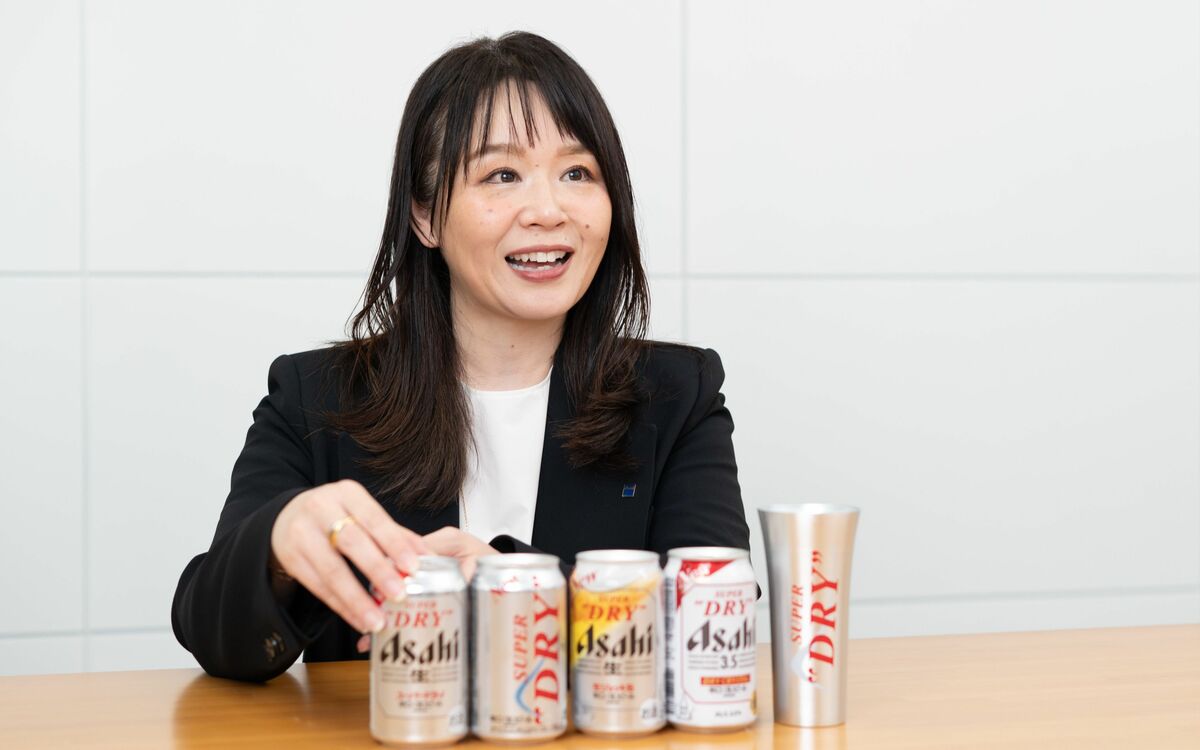
Asahi Breweries is treating the reshuffle as its best opportunity. The company is launching “Super Dry 3.0”, described as one of the largest renewals in the brand's history and built around the combination of karakuchi — the dry, sharp profile the brand introduced in 1987 — and cold serving temperature. Noma Wakana, general manager of the company's beer marketing department, told Bunshun Online the aim is to “change the flow of beer”, and that the schedule was set deliberately: “We decided on the timing of this renewal so that we could deliver a better-tasting Super Dry to customers in October 2026.”
The brand's development path runs through 2009, when Extra Cold introduced sub-zero serving and, in Noma's account, revealed that temperature was the key to maximising the appeal of karakuchi; through 2022, when Super Dry received its first full renewal since launch, partly to counter a perception among younger drinkers that karakuchi means bitter; and into 2025, when the brand began concentrating specifically on cold as its experience axis.
Eighteen minutes from 3°C to 10°C
Development was calibrated to how the beer is actually consumed. Bunshun Online reports that the average time from the first sip to the last in a restaurant is about 18 minutes, and that the liquid warms from 3°C to 10°C over that period. Asahi repeatedly adjusted the malt ratio and optimised the hop blend so that the karakuchi structure does not collapse as the temperature rises. Three elements define the new product experience:
- an 18-minute drinking window, verified across the temperature band of real drinking conditions;
- a final three minutes in a home freezer, which Asahi's testing found lowers the temperature safely by about 1°C;
- a karakuchi curve printed on the back of the can in thermochromic ink, with the white line turning blue once the beer reaches drinking temperature.
The freezer recommendation breaks a long-standing industry taboo. Putting cans in a freezer carries a risk of bursting or deformation, and brewers have discouraged the practice on quality-control grounds, even though consumers do it routinely to chill beer quickly. Asahi examined the specifications of major domestic and overseas refrigerator manufacturers before concluding that three minutes is safe. “We started from customer behaviour rather than treating it as taboo out of manufacturer logic,” Noma told Bunshun Online.
What changes for the category
For the industry, the removal of tax tiers means differentiation has to come from the product and the brand rather than from bracket engineering. Asahi says it already saw evidence after the 2022 renewal that drinkers were paying renewed attention to karakuchi, and the company is positioning cold serving as the next lever. Super Dry reaches its 40th anniversary in 2027, and Asahi describes 3.0 as a staging point rather than an endpoint.
The open question is where the value-tier volume goes. Drinkers who moved into happoshu and third-category beer for price reasons will find the saving smaller once rates converge. Bunshun Online notes, however, that attitudes toward alcohol have diversified and that cost and time efficiency now weigh on consumption decisions, which limits how much of that volume returns to full-malt beer on its own.