Japan Cuts Beer Tax, Raises Levy on Happoshu and Chuhai From October 1
Japan enters the final phase of its multiyear alcohol tax reform on October 1: beer duty falls while rates on happoshu (low-malt beer) and chuhai-style canned drinks rise. Retailers report rush buying of soon-to-be-pricier products ahead of the change.
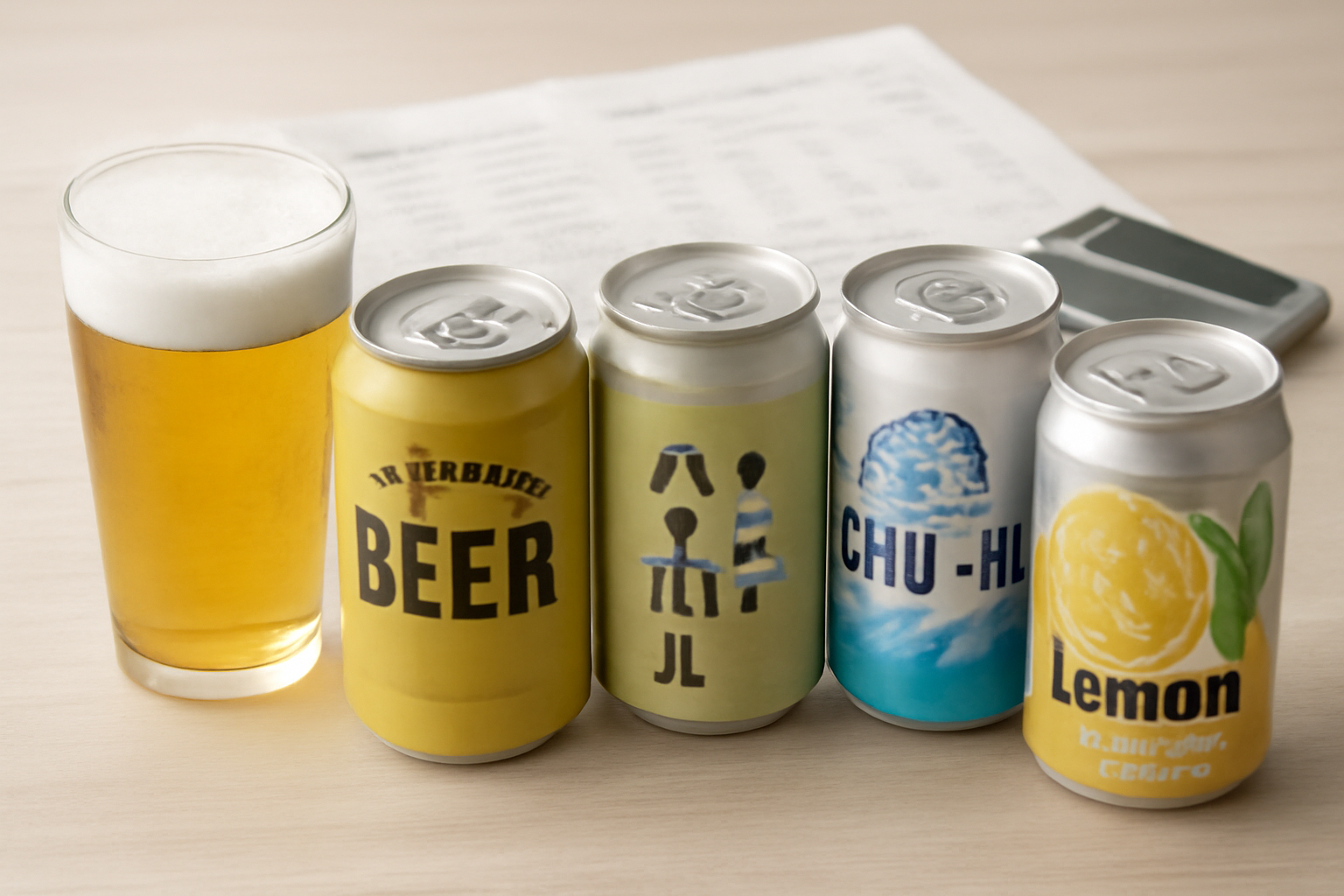
Final phase of a multiyear tax overhaul
Japan's excise tax on beer falls on October 1 as the country enters the final stage of a multiyear overhaul of alcohol duties, while tax rates on happoshu (low-malt beer) and chuhai-style ready-to-drink canned beverages rise on the same date. The change is the last step of a reform legislated in 2017 that gradually converges the tax rates on beer, happoshu and "third beer" (shinjanru, a low-malt-based category) toward a single level.
Under the schedule, the tax on beer has fallen in stages from 77 yen per 350-milliliter can before October 2020, to 70 yen from October 2020, to 63.35 yen from October 2023, and now to 54.25 yen from October 1. Over the same period, the rate on third beer and similar products has risen from 28 yen to 37.80 yen, then to 46.99 yen, and now up to the same 54.25-yen level, closing the tax gap that for two decades made lower-malt alternatives cheaper than standard beer.
Retailers report rush buying ahead of the change
With happoshu and chuhai facing higher duties from October 1, retailers report a wave of last-minute purchases in the days before the change, as shoppers stock up on products about to cost more. Supermarket shelves have been stacked with bulk-purchase promotions for third-beer products in particular, with in-store signage encouraging shoppers to buy in quantity before prices rise. Beer, by contrast, is set to become more affordable relative to these categories once the new rates take hold, narrowing a price gap that has shaped Japanese retail beer aisles since the reform began.
Impact on household spending
The tax changes carry direct implications for household budgets, since beer, happoshu and chuhai remain among the most widely purchased alcoholic beverages in Japan. For shoppers, the rebalancing means beer, previously the highest-taxed of the three categories, becomes relatively cheaper, while happoshu and chuhai, long marketed partly on the basis of lower tax rates, lose some of that price advantage. The exact effect on shelf prices will depend on how retailers and brewers pass the tax changes through, but the direction, cheaper beer and pricier happoshu and chuhai, is set by the tax code itself.
A shifting competitive landscape for brewers
The reform removes a tax-driven pricing advantage that happoshu and third beer have held over standard beer for years, a gap around which Japan's major brewers, including Asahi, Kirin, Suntory and Sapporo, built distinct product lines and marketing strategies. With rates converging, the relative incentive for consumers to trade down to lower-malt products weakens, which could reshape demand across the beer-type category once the rush-buying period ends and new pricing settles in over the coming weeks. Chuhai producers face a separate increase on their category, adding cost pressure to a segment that has been one of the faster-growing parts of Japan's alcoholic beverage market in recent years.