Persistent Rain Splits Japan's Autumn Harvest: Shine Muscat Around 10% Cheaper, Matsutake Season Looks Strong
An extended spell of rain during Japan's late-summer and early-autumn growing season has pushed the country's signature seasonal products in opposite directions. Shine Muscat table grapes are selling around 10% below normal levels after quality slipped, while matsutake mushrooms are heading for an abundant wild harvest. Chestnut results differ so sharply between regions that growers are struggling to read the season.
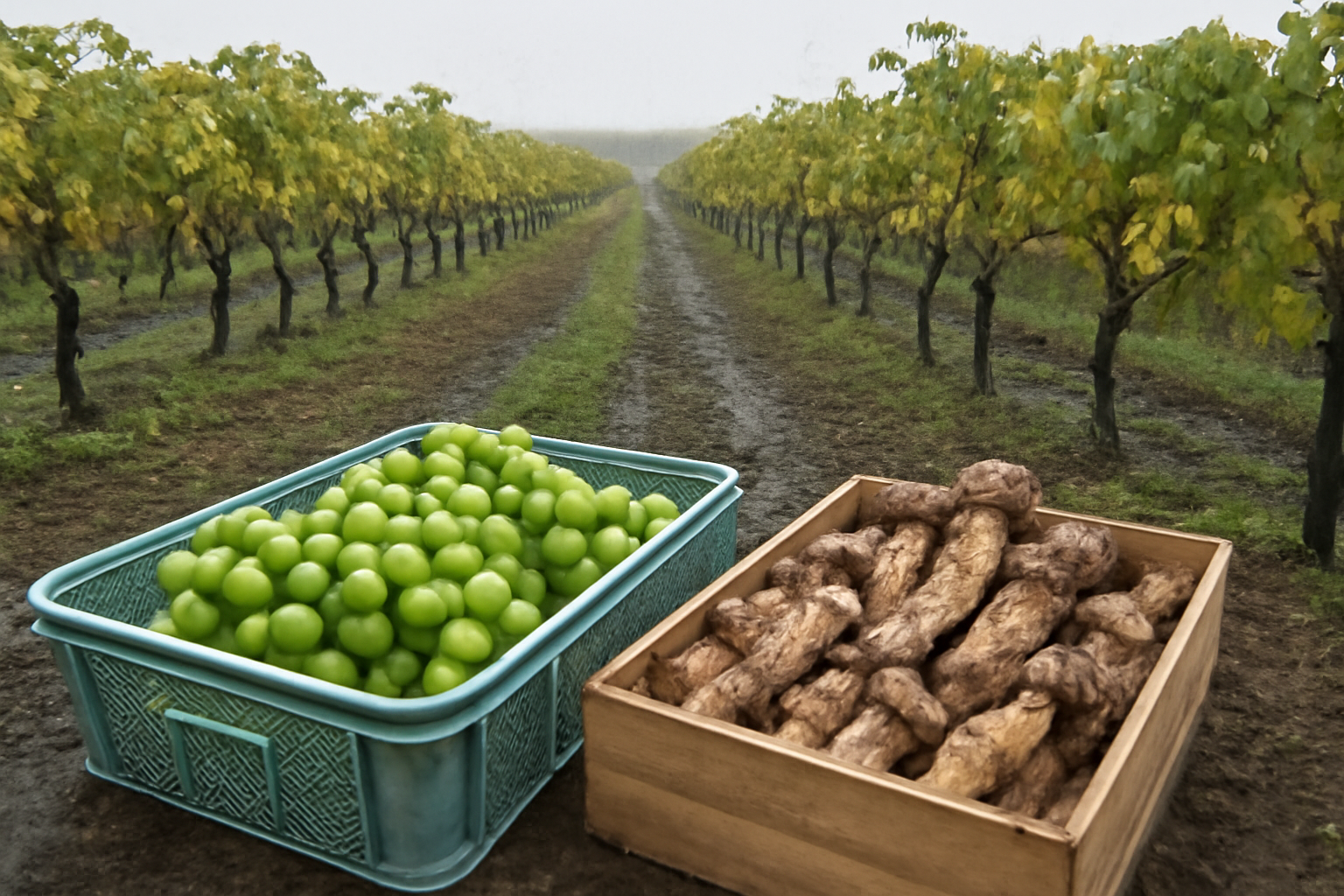
One weather pattern, three different outcomes
An extended run of rainy weather across Japan's late-summer and early-autumn growing season has pulled the country's best-known seasonal products in opposite directions. Reporting on growing conditions for Shine Muscat table grapes, matsutake mushrooms and chestnuts found quality under pressure in the vineyards, improved expectations in the pine forests, and chestnut results that differ so widely between districts that producers themselves are finding the season hard to read. For buyers, the practical consequence is that a single national weather story is producing three separate procurement problems.
Shine Muscat: quality slips, prices around 10% lower
Shine Muscat, the seedless green grape that has become Japan's flagship premium fruit, is the clearest loser. Prolonged rain during the ripening window has weighed on the crop, and prices are running roughly 10% below normal levels.
The mechanism matters more than the headline discount. Shine Muscat is sold primarily on appearance and sugar content: bunch uniformity, berry size, colour and skin condition determine whether fruit enters the high-value gift and department-store channel or is diverted to general retail and processing. Wet conditions with limited sunshine during ripening typically slow sugar accumulation and raise the risk of berry splitting and skin blemishes. A grade shift of that kind lowers average realised prices even when harvested volume holds up, which is why a quality problem shows up as a price discount rather than as a visible shortage on the shelf. No nationwide volume figures were given.
Matsutake: a wetter season raises expectations
Matsutake points the other way, with an abundant season now expected. The mushroom cannot be farmed at commercial scale and depends on a wild harvest from pine forest, which makes annual supply highly variable and tightly linked to rainfall and temperature in the weeks before collection begins. The same persistent moisture that degraded grape quality has improved the outlook in the forest.
For this market, volume effectively sets the price. Matsutake trades at some of the highest per-kilogram values of any Japanese domestic food product, and those peaks are a function of scarcity in weak years rather than a stable price level. A strong domestic harvest typically pulls auction and retail prices down from the extremes seen after failed seasons, and reduces the pull on imported supply that normally fills the gap when the Japanese crop disappoints. Restaurants, ryokan operators and gift retailers that commit to autumn menus and seasonal boxes months ahead are the direct beneficiaries; collectors who rely on scarcity pricing are not.
Chestnuts: no single national story
Chestnuts fall between the two. Growing results have come through the rain very differently from area to area, with conditions varying enough that producers are finding it difficult to interpret the season. No nationwide assessment was provided.
That dispersion is operationally awkward. Confectionery manufacturers and processors that buy chestnuts for autumn product lines generally contract from established regional suppliers; when outcomes diverge sharply between districts, those relationships stop being a reliable proxy for national availability and buyers have to source across a wider geographic spread to cover the same volume. The three product stories together point to the same conclusion for anyone planning autumn procurement in Japan.
- Shine Muscat: watch grade mix rather than tonnage. The roughly 10% discount reflects quality, and the split between gift-grade and general-grade fruit will determine grower income.
- Matsutake: watch opening auction prices as the wild harvest begins, since an abundant season would move prices well away from poor-year levels.
- Chestnuts: expect regional sourcing spreads to widen, with the national picture offering little guidance on any individual supplier.