Ivorian cocoa faces double risk on quality and supply as rains fall short
Côte d'Ivoire, the world's top cocoa producer, is entering the heaviest phase of its 2026/2027 main crop with rainfall well below normal in key growing zones. Farmers report drying problems for harvested beans and a new wave of small pods dropping from trees. Analyses relayed by Reuters now put Ivorian output at 1.7-1.8 million tonnes, against close to 2.2 million in 2025/2026.
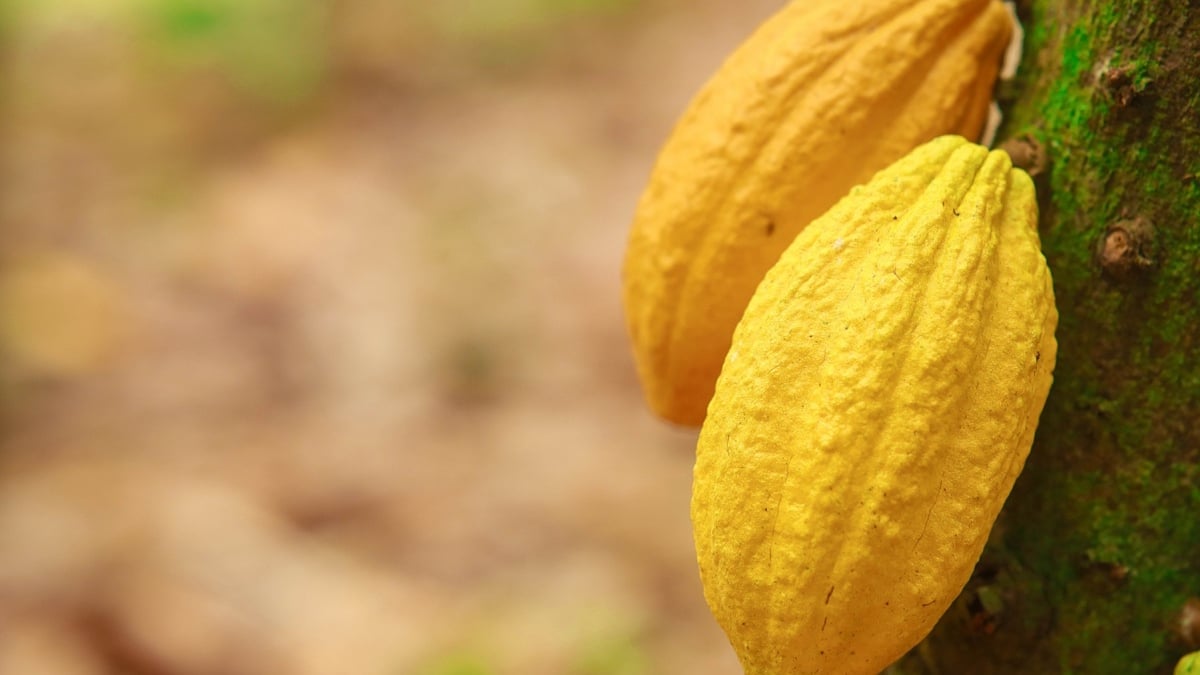
Côte d'Ivoire, the world's largest cocoa producer, is entering the most intensive phase of its 2026/2027 main crop harvest with a rainfall deficit across several of its core growing regions. Farmers report problems drying beans already collected and the appearance of a new wave of small pods, concerns reported by Reuters on 21 September and detailed by La Tribune.
Rainfall far below normal in the main basins
The shortfall is occurring during the rainy season, which usually runs from April to mid-November and is marked by abundant precipitation. Last week no rain at all was recorded in Soubré or Divo, two important parts of the Ivorian production belt. In Agboville and Abengourou, rainfall was well below average. In Daloa it reached only 3.6 mm, 26.1 mm below the norm.
The picture is still moving. In Daloa, a good rainfall on Monday revived hopes of more regular precipitation after a week with just 3.6 mm.
Drying problems and falling pods
The first risk concerns beans already harvested. In several regions, farmers say overcast conditions are preventing proper drying, raising fears of quality deterioration. The timing matters: collected volumes are due to rise sharply from next week through December.
The second risk is a fresh wave of small pods. Some are already dropping from the trees, according to farmers, even though they are supposed to feed the main crop running from September to February.
- In Soubré, farmers estimate that irregular rainfall through mid-October could bring the harvest to an end as early as December.
- In Agboville, Abengourou and Divo, growers report similar conditions.
- In Bongouanou and Yamoussoukro, they also consider a return of rainfall necessary.
Forward sales slowed, output estimates cut
The Conseil du Café-Cacao has already sharply slowed forward sales of the 2026/2027 main crop in order to refine its estimates. Around 1.15 million tonnes had been sold. The aim is to avoid signing more contracts than the country could actually deliver to multinationals and traders.
Analyses relayed by Reuters now put Ivorian output at between 1.7 and 1.8 million tonnes in 2026/2027, against close to 2.2 million tonnes in 2025/2026. Those figures remain projections, and their evolution will depend in particular on weather conditions over the coming weeks; farmers point to mid-October as a decisive deadline for keeping the harvest going.
Price expectations under review
The warning lands on a market that had already built West African harvests into its expectations. Cocoa reached $12,906 a tonne in December 2024 before falling back to between $3,000 and $4,000 since the beginning of 2026, on hopes of a return to surplus thanks to better crop prospects in Côte d'Ivoire and Ghana for 2025/2026. On 9 July, however, prices reached $6,094 in New York and £4,521 in London, their highest levels in six months.
The expected development of El Niño in the second half of 2026 has revived concerns in a region that supplies more than 60% of global cocoa supply. After two difficult seasons, the market had been counting on a return to abundance in West Africa. The combination of dry weather during the rainy season and a downgraded Ivorian forecast leaves that recovery far from assured.